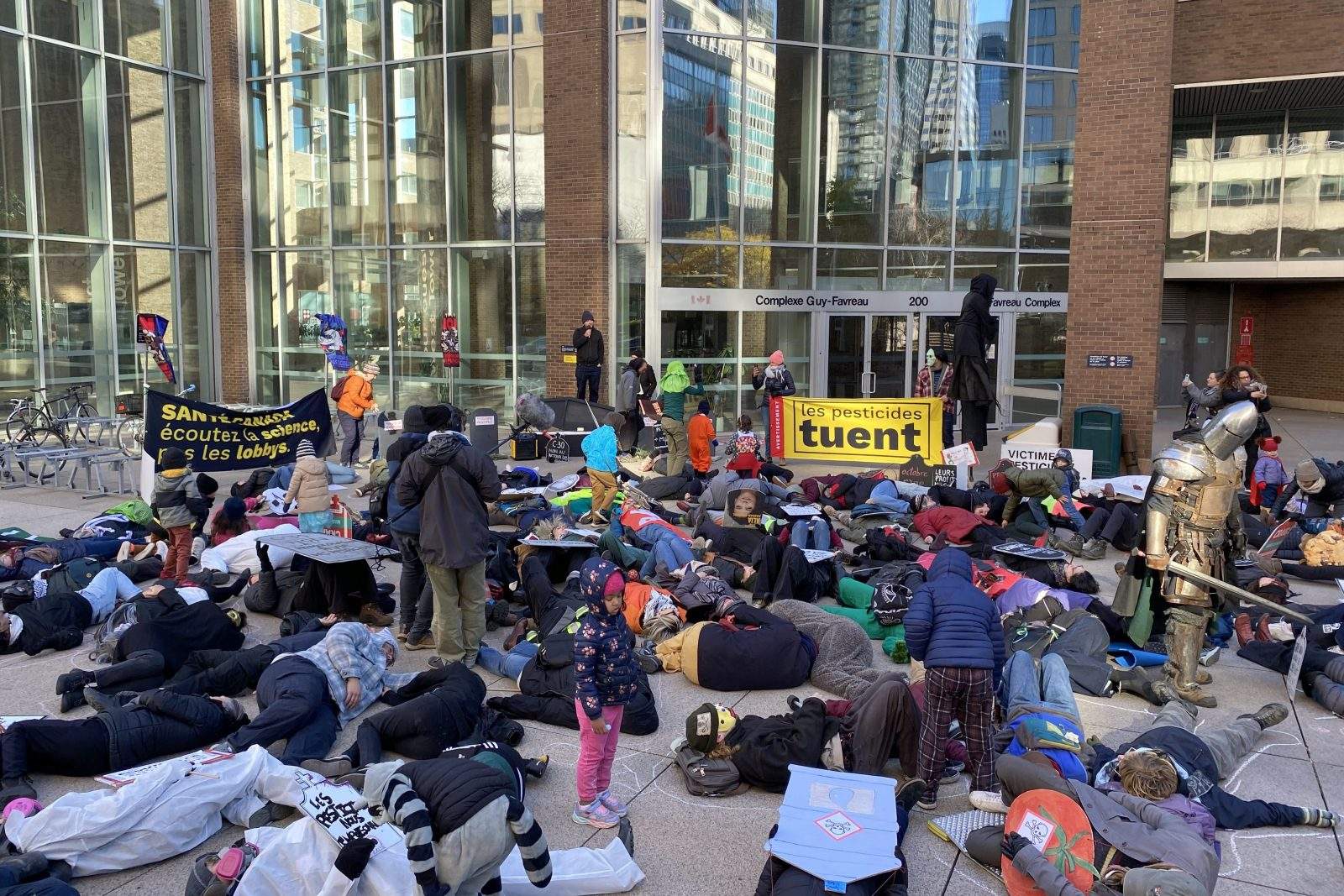
Dozens of people lying motionless on the concrete in downtown Montreal looks jarring at first glance. That's the entire point. When environmental activists stage a "die-in" over pesticide use in Quebec, they aren't just trying to block traffic or get a quick photo for local news. They're forcing commuters, politicians, and chemical lobbyists to confront the gap between what Montreal bans on paper and what still gets sprayed across the province's agricultural heartland.
Montreal actually has some of the strictest municipal pesticide rules in North America. Back in 2022, the city rolled out a sweeping ban on dozens of synthetic chemicals, including glyphosate, neonicotinoids, and chlorpyrifos, across both public and private property. If you're a homeowner in Plateau-Mont-Royal or Verdun, you can't legally spray Roundup on your driveway weeds anymore. Yet protesters keep hitting the streets, lying down outside government offices and chemical distributor headquarters. Why? Because city limits don't stop airborne drift, contaminated waterways, or the massive agricultural runoff flowing straight out of the Montérégie and Lanaudière regions.
What Sparked the Montreal Pesticide Die-Ins
A die-in is old-school civil disobedience. Activists used the tactic heavily during the ACT UP protests of the 1980s and climate demonstrations over the last decade. In Montreal, environmental coalitions—often bringing together groups like Vigilance OGM, Équiterre, and local bee-keeping associations—use the format to symbolize the quiet collapse of pollinator populations and the long-term human health risks tied to chronic chemical exposure.
You don't stage a public die-in unless standard lobbying has stalled. For years, Quebec environmental advocates have pushed the provincial Ministry of the Environment to match Montreal's urban restrictions with tough rural enforcement. Instead, they've watched pesticide sales in Quebec climb over the past decade, even after the province introduced its Pesticide Management Code reforms requiring agronomic prescriptions for high-risk chemicals like atrazine and certain neonicotinoids.
The frustration comes down to enforcement and loopholes. Requiring a prescription sounds great in a press release. In practice, thousands of prescriptions get signed off routinely, and water sampling across Quebec's agricultural rivers consistently detects mixtures of multiple active pesticide ingredients at once. When activists lie on the pavement in Montreal, they're calling out that exact contradiction.
The Real Gap Between Montreal Rules and Quebec Farms
People outside the environmental space often assume Montreal's ban solved the problem locally. It didn't. Municipal bylaws only cover urban landscaping, parks, and residential lawns. Agriculture is governed at the provincial and federal levels, and that's where the overwhelming volume of synthetic chemicals actually goes.
Consider how close major farming zones sit to the island of Montreal. The St. Lawrence River, the Richelieu River, and Lake Saint-Pierre absorb runoff from hundreds of thousands of hectares of corn and soy crops. According to long-term monitoring by Quebec's Ministère de l'Environnement, de la Lutte contre les changements climatiques, de la Faune et des Parcs (MELCCFP), rivers draining intensive agricultural basins routinely contain dozens of different pesticide compounds simultaneously.
- Glyphosate remains the single most widely sold active ingredient in Quebec agriculture, largely tied to herbicide-tolerant corn and soybean rotations.
- Neonicotinoids (like clothianidin and thiamethoxam) have seen sharp reductions in seed-coating applications after regulatory tightenings, yet replacement chemicals—such as diamides—are rapidly taking their place in soil and water samples.
- Atrazine, banned in the European Union since 2004 over groundwater contamination concerns, continues to show up in Quebec surface water monitoring despite provincial restrictions.
That's why protesters target Montreal. Montreal is the media hub, the political nerve center, and the place where urban voters live—voters who rarely see the sprayers operating twenty miles south of the Champlain Bridge.
Why Activists Focus on Corporate Influence and Federal Regulators
If you look closely at the signs and speeches at Montreal pesticide demonstrations, they rarely aim solely at farmers. Most seasoned environmental organizers in Quebec know better than to demonize growers who are locked into tight grain margins and seed-company contracts. Instead, the protests zero in on two targets: agrochemical manufacturers and Health Canada's Pest Management Regulatory Agency (PMRA).
The PMRA decides which pesticides are legal across Canada and sets Maximum Residue Limits (MRLs) on food. Over the past few years, the agency has faced intense criticism from scientists, journalists, and parliamentary committees over transparency and industry influence. When Health Canada proposed raising allowable glyphosate residue limits on certain imported crops a few years back, public backlash in Quebec was fierce enough to force a temporary freeze on MRL increases.
Then there's the whistleblower history inside Quebec itself. In 2019, agronomist Louis Robert was fired from Quebec's Ministry of Agriculture after leaking internal documents showing how private agrochemical industry interests interfered with public pesticide research. That scandal blew the lid off how policy was actually getting made behind closed doors. Every die-in in Montreal since then carries the shadow of that affair. People remember that public science was sidelined until someone risked their career to expose it.
What Most People Get Wrong About Pesticide Protests
Critics love to paint protesters lying on Montreal sidewalks as anti-science urbanites who don't understand how food gets grown. Honestly, that's a lazy caricature.
First, many of the groups organizing these actions work directly with organic and transitional grain farmers across Quebec. They aren't demanding that farmers stop producing food tomorrow. They're pushing for structural shifts that make non-chemical weed and pest management financially viable—things like crop diversification subsidies, independent agronomic advice free from chemical sales commissions, and real buffer zones along waterways.
Second, the debate isn't really about acute poisoning from eating an apple. Regulators test for acute toxicity all the time. The real scientific battleground is cocktail effects—what happens when low doses of 15 or 20 different herbicides, fungicides, and insecticides mix together in river water, soil microbiomes, and human bloodstreams over twenty years. Current regulatory testing evaluates chemicals one by one, not in the real-world mixtures found in Quebec's rivers.
Third, people think these protests fail if no law changes the next morning. Street theater like a die-in isn't designed to pass a bill by Tuesday. It keeps pesticide reform in the news cycle during municipal and provincial budget talks, pressures institutional investors, and reminds mayors across the Greater Montreal Area—like those in Laval, Longueuil, and Brossard—to tighten their own local rules.
What You Can Actually Do About Pesticide Exposure in Quebec
Watching protesters lie on concrete in downtown Montreal raises an obvious question: what does this mean for your daily life, and what can you actually do besides scroll past the photos?
- Check your municipality's specific pesticide bylaw. If you live on the Island of Montreal, strict bans apply to almost all synthetic outdoor pesticides, with rare exceptions for severe infestations like emerald ash borer or poison ivy. If you live in off-island suburbs, rules vary wildly by town. Report illegal commercial spraying to 311—municipal inspectors rely heavily on citizen complaints because they don't patrol neighborhoods proactively.
- Audit your lawn care and landscaping contracts. Many landscaping companies still default to chemical treatments unless you explicitly demand organic or mechanical alternatives. Ask for the exact active ingredients and PMRA registration numbers before anyone sprays your yard.
- Prioritize organic on high-residue produce. You don't need to buy everything organic to cut your dietary exposure. Focus your grocery budget on crops known to carry multiple pesticide residues, such as strawberries, spinach, apples, and locally grown conventional grains where possible, or buy directly from Quebec ecological farms through networks like the Réseau des fermiers de famille.
- Support independent agronomic research and local watchdogs. Organizations like Vigilance OGM and Équiterre publish accessible breakdowns of Quebec's annual pesticide sales reports and track upcoming Health Canada public consultations on chemical re-evaluations.
- Submit comments during PMRA public consultations. Health Canada legally has to review public submissions before renewing approvals for major active ingredients. Most consultations receive only a handful of responses from ordinary citizens compared to hundreds of pages from chemical trade groups.
Montreal's pesticide die-ins look dramatic because the underlying problem is invisible. You can't see parts per billion of atrazine in tap water or watch a wild bee colony quietly fail to overwinter ten kilometers outside the city. Until provincial enforcement catches up with Montreal's municipal standards, activists are going to keep hitting the pavement to make sure nobody gets to pretend the issue is solved.