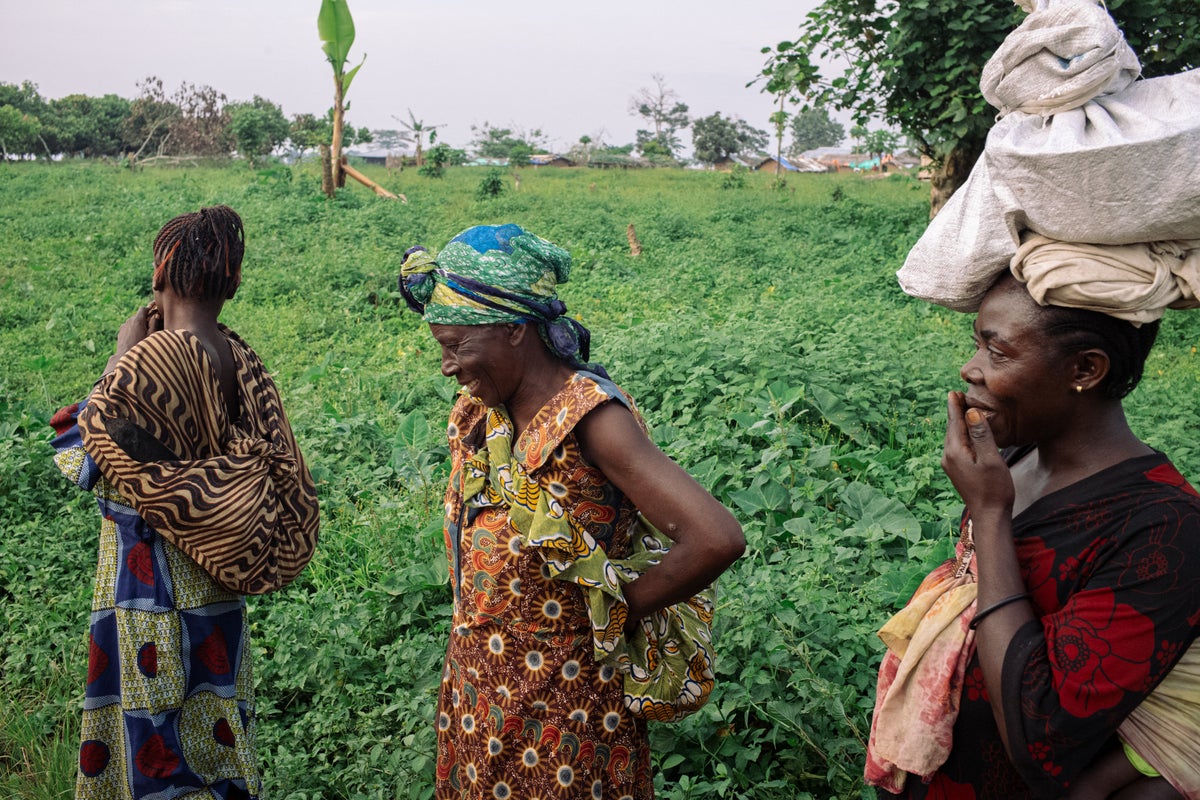
We talk about global supply chains, fertilizer shortages, and erratic climate patterns like they're abstract math problems. They aren't. When a shock hits the food system, the actual safety net isn't a policy paper in Washington or Geneva. It's a woman working a piece of land she likely doesn't legally own, using tools not built for her, trying to feed her family and sell the surplus.
The United Nations designated 2026 as the International Year of the Woman Farmer. It sounds nice. It looks great on a press release. But if you think this is just a feel-good campaign about inclusion or checking a corporate diversity box, you are completely missing the economic reality. Meanwhile, you can explore related stories here: Why Dinesh Trivedi in Dhaka changes everything for India and Bangladesh.
Putting women smallholders at the absolute center of agricultural policy isn't a charity project. It's an aggressive strategy for survival.
The Shock Absorbers of the Global Food System
Look at lower-income countries. Women are responsible for producing up to 80 percent of the food. Yet they are systematically locked out of formal agricultural markets, financial systems, and property ownership. To see the complete picture, check out the excellent analysis by Associated Press.
This mismatch creates a massive vulnerability when global crises hit. When a pandemic disrupts trade, or war spikes the price of synthetic fertilizer, the agricultural system relies on these smallholders to adapt. But they are fighting with one hand tied behind their backs.
Data from the Food and Agriculture Organization (FAO) shows that closing the gender gap in farm productivity and agricultural wages could reduce global food insecurity for roughly 45 million people. It could also boost global gross domestic product by an estimated $1 trillion. We are leaving a trillion dollars and millions of lives on the table because of structural inertia.
When men migrate to cities for industrial work, women stay behind to manage the land. They handle the household, the crops, the water sourcing, and the immediate climate risks all at once. They do the actual physical work of keeping local food economies alive during structural adjustments and food price spikes.
Moving Past the Token Upgrades
Most traditional development aid misses the mark. Giving a community a high-tech tool or a bag of hybrid seeds doesn't fix a broken system. If a woman farmer can't get a bank loan because she doesn't have a land title to use as collateral, she can't scale her production. If a solar drying machine is designed without her input, it might just add three hours of extra labor to her already packed day.
The fix requires integrated models. We need combinations of local ecological practices, real financial access, and peer-to-peer training.
Look at what happens when you actually fund women-led agricultural networks instead of dropping top-down solutions. In southern Ecuador, smallholders with the Association of Agroecological Producers of Cotopaxi are using specific soil restoration techniques to fight erratic rainfall and rising temperatures. In Rwanda, women are utilizing Azolla, a fast-growing aquatic plant, as livestock feed. This simple switch cuts their feed costs by nearly a third while naturally enriching the local soil.
Over in Nepal, goat-farming cooperatives representing 300,000 smallholders, mostly women, changed how their animals feed. Instead of letting livestock graze on communal lands—which was causing massive deforestation and soil erosion—they planted cultivated fodder on 16,000 hectares. They reversed local environmental degradation while securing their own supply chains.
These aren't hypothetical case studies. They are concrete examples of local risk management.
Why Post Harvest Loss is a Gender Issue
We waste a third of the food produced globally. In places like Kenya or Niger, half of all harvested vegetables never make it to a market. They rot in transit or spoil in poor storage conditions. The foods that spoil fastest are exactly what vulnerable communities need most: nutrient-dense fruits, leafy greens, dairy, and eggs.
The technology to stop this already exists. We have hermetic storage bags, small-scale processing equipment, solar food dryers, and biodigesters that turn agricultural waste into biofertilizer.
But these tools stall out because of how agricultural finance is structured. Women perform up to half of all post-harvest labor worldwide, but they receive less than 10 percent of agricultural funding. If a financial product requires a formal land title to secure a loan for a biodigester, the woman doing the actual work cannot buy it.
When you remove that barrier, the returns are immediate. Organizations like CARE International have proven this by linking village savings and loan associations directly to agricultural technology markets. When a woman farmer can buy a biodigester or a solar dryer through a cooperative credit line, she cuts her waste, creates her own fertilizer, and protects her income from the next market shock. It turns a fragile homestead into a resilient micro-enterprise.
What Needs to Change Right Now
Stop treating women farmers as a vulnerable demographic that needs assistance. Treat them as the primary executives of rural food systems. If you want to invest in food supply resilience, you bypass the top-heavy distribution networks and fund the actual point of production.
First, reform the collateral requirements for agricultural credit. Financial institutions must accept cooperative guarantees, cash-flow histories, or crop-yield projections instead of demanding formal land deeds that legal systems deny to women.
Second, redirect agricultural research funding toward local, low-input solutions like seed banks for climate-stressed crop varieties and decentralized processing tools. High-input, resource-heavy farming models are the first to collapse when global supply chains snap.
Finally, shift training models to women-led field schools. Peer-to-peer networks scale faster and have higher adoption rates because the technology is vetted by the people who actually use it every single day. Resilience isn't something built in a lab. It's built on the ground, one farm at a time.