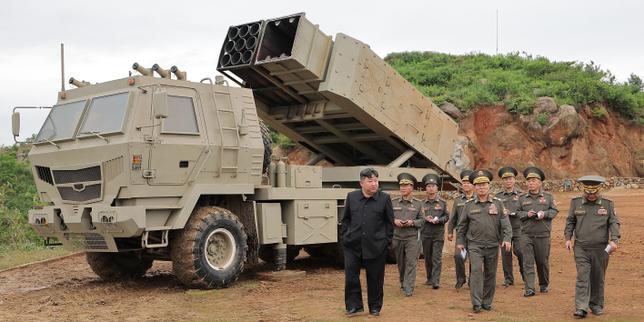
North Korea just announced a new missile system test. The state media machine is bragging about it. Western analysts are scrambling to decipher the satellite imagery. Pyongyang claims this new technology will completely alter its offensive capabilities. But if you look past the propaganda and the sensationalized headlines, the reality is far more nuanced.
Most media outlets simply copy and paste military press releases. They tell you what happened, but they rarely tell you why it matters or what is actually happening behind the scenes. This isn't just about a single launch. It's about a calculated geopolitical strategy.
Pyongyang thrives on creating strategic ambiguity. By testing components rather than full missiles, they keep intelligence agencies guessing. Let's break down what this latest development really means for regional security and why the standard narrative gets it wrong.
The Strategy Behind the New North Korean Missile System
State media reported the test as a massive success. They claim it involves a fresh management system designed to improve control and accuracy. Western observers often mistake these announcements for simple saber-rattling. It is much more than that.
North Korea needs to validate its engineering. They are moving away from older, unreliable liquid-fuel tech. They want solid-fuel systems that can launch at a moment's notice. This specific test focused on the internal guidance and control mechanisms.
Recent Development Timeline:
- Early Phase: Testing of individual solid-fuel engines on static stands.
- Mid Phase: Integration of new guidance computers and flight control surfaces.
- Current Phase: Active flight testing of the unified control architecture.
If you can't steer the rocket, the payload is useless. Pyongyang is trying to solve its accuracy problem. South Korean defense officials noted that the flight path showed unusual maneuvers. This suggests they are trying to bypass regional missile defense systems like THAAD.
Why the Tech Matters More Than the Explosions
We often see footage of smoke and fire. That is what grabs attention. The real threat hides in the software and the telemetry data. This new system reportedly utilizes advanced digital architecture to adjust trajectories mid-flight.
Think about traditional ballistic missiles. They follow a predictable arc. If you know the starting point and the speed, you can calculate where it will land. That makes them easy to intercept.
Modified control systems change the equation entirely. A missile that can shift its path during the terminal phase is a nightmare for defense planners. Japan's Ministry of Defense expressed serious concern over the irregular trajectory observed during the tracking phase. They aren't worried about a random explosion in the sea. They are worried about unpredictability.
Reading Between the Lines of State Propaganda
You cannot take KCNA statements at face value. They exaggerate constantly. They claim total perfection. They want the world to think they possess unstoppable military power.
Look at the imagery they released. The photographs show specific modifications to the launch vehicle. The steering fins look different. The exhaust plume indicates a specific burn rate. These details don't lie, even if the commentators do.
The primary audience for these tests is often internal. The regime faces severe economic stagnation. Food shortages remain a chronic issue. A flashy military success distracts the population. It builds national pride. It reinforces the leadership's grip on power.
The external audience is Washington and Seoul. North Korea wants leverage. They want sanctions relief, but they refuse to give up their nuclear program to get it. They believe that showing off a highly advanced control system forces the US to negotiate on Pyongyang's terms.
The Regional Response and What Happens Next
South Korea immediately convened its National Security Council. They condemned the launch as a clear violation of UN Security Council resolutions. They promised to step up joint military exercises with the United States.
This reaction is predictable. It happens after every single test. The cycle never changes.
- North Korea launches a missile or tests a system.
- State media proclaims a historical breakthrough.
- The US and its allies condemn the action and hold a meeting.
- New sanctions are discussed but rarely enforced effectively.
- Joint military drills serve as a counter-demonstration of force.
The problem is that this cycle achieves nothing. Sanctions have failed to stop the weapons program. The technology keeps advancing despite total economic isolation. They find ways to source components. They use cyber operations to fund their programs. They adapt.
Navigating the New Security Landscape
We have to accept a harsh reality. North Korea is not going to denuclearize. The focus must shift from prevention to containment and deterrence.
Relying on old defense models will not work against erratic trajectories. Regional powers must upgrade their tracking networks. Japan is already looking into counter-strike capabilities. South Korea is developing its own independent missile defense layer.
Watch the upcoming regional military exercises closely. The response from the US will tell you exactly how dangerous they consider this new system to be. If we see an increase in strategic asset deployments, like stealth bombers or nuclear submarines, then the intelligence community is genuinely worried. Keep your eyes on the telemetry reports and the hardware changes, not the political rhetoric. That is where the real story lies.