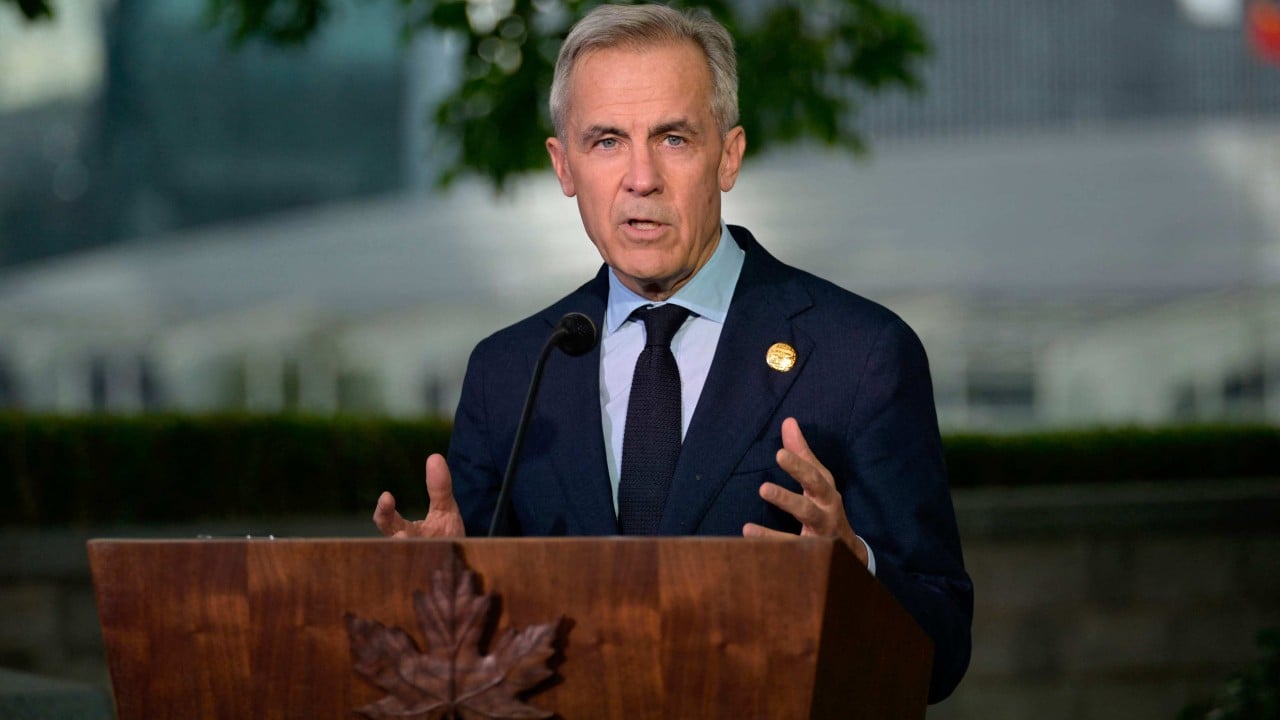
Diplomacy rarely moves in straight lines. When Canadian Prime Minister Mark Carney stood before reporters and declared "real progress" in repairing fractured China-Canada relations, the reaction across North America was immediate and predictable. Pundits in Washington raised eyebrows. Critics in Ottawa cried foul. Everyone immediately started asking the same question: Is Canada drifting out of the American orbit to cozy up to Beijing?
Hold on. Look at the actual mechanics of global trade, and that narrative falls apart fast.
Carney isn't abandoning the United States, and Washington doesn't actually have a reason to panic. What we're watching is a calculated exercise in economic survival by a former central banker who understands balance sheets better than political theater. Canada's economy relies overwhelmingly on its southern neighbor, yet ignoring the world's second-largest economy has proved disastrous for Canadian farmers, energy producers, and exporters. Carney's message is simple. Ottawa can stabilize commercial ties with Beijing without compromising North American security.
Why Mark Carney Wants a China-Canada Thaw Right Now
To understand why Ottawa is extending an olive branch, you have to look at the last seven years of diplomatic deep freeze.
Relations between Canada and China hit rock bottom in late 2018. Canadian authorities arrested Huawei executive Meng Wanzhou on a U.S. extradition warrant, and Beijing retaliated days later by detaining Canadians Michael Kovrig and Michael Spavor. Trade barriers followed swiftly. China slapped massive restrictions on Canadian canola, pork, and beef, costing agricultural producers billions of dollars in lost revenue.
Even after the detainees came home in 2021, the relationship stayed toxic. Allegations of Chinese foreign interference in Canadian elections, coupled with Ottawa's decision to slap a 100 percent tariff on Chinese-made electric vehicles in 2024 to mirror Washington's protectionist stance, kept the temperature sub-zero.
Carney inherited a diplomatic dead end. Having previously led both the Bank of Canada and the Bank of England, he views foreign policy through the lens of risk management and capital flows. You can't run a G7 export economy while refusing to speak to your second-largest trading partner.
During recent high-level engagements—including discussions on the sidelines of major international summits and bilateral ministerial meetings—Carney emphasized pragmatic engagement. He called the momentum "real progress," pointing to reopened lines of communication on climate policy, agricultural market access, and basic consular protocols.
It's not a love fest. Far from it. Carney has been blunt about ongoing disagreements over human rights, cyber espionage, and market distortion. Still, talking beats shouting across a closed border.
The Washington Factor and Why the US Shouldn't Worry
Whenever a Canadian prime minister mentions progress with Beijing, alarm bells ring inside the Beltway. American lawmakers worry about a "backdoor" into the North American market. They fear Chinese state-backed companies could use Canadian soil to bypass U.S. tariffs, or that Ottawa might soften its stance on telecommunications security and critical minerals.
Carney anticipated this exact pushback. His assurance that the United States has "no need to worry" isn't just polite diplomatic reassurance—it's backed by hard economic math.
Let's look at the numbers:
- Roughly 75 percent of all Canadian exports go directly to the United States.
- Bilateral trade between the U.S. and Canada exceeds $900 billion annually, making it one of the largest commercial relationships on earth.
- By comparison, Canadian exports to China account for less than 5 percent of Canada's total outbound trade.
Canada isn't trading a $900 billion lifeline for a fractional market across the Pacific. It would be economic suicide.
Shared Security Architecture Remains Untouched
Beyond trade statistics, Canada and the United States are locked together at the hip on defense and intelligence. Both nations are founding members of NATO, partners in the Five Eyes intelligence-sharing alliance, and joint operators of NORAD, which monitors and defends North American airspace.
Carney knows full well that any move threatening Five Eyes intelligence security or undermining the United States-Mexico-Canada Agreement (USMCA) would trigger immediate retaliation from Washington. With the mandatory joint review of USMCA dominating North American trade policy in 2026, Ottawa has zero incentive to antagonize the White House or Congress.
In fact, a more stable China-Canada relationship actually helps Washington. When Beijing targets Canadian agriculture or critical minerals with retaliatory tariffs, American firms often feel the downstream supply chain shock. Keeping basic trade channels open prevents unnecessary economic collateral damage across the continent.
What "Real Progress" Actually Looks Like on the Ground
Political slogans are cheap. If you want to know whether Carney's reset actually means anything, watch the sectors where Canadian businesses have been bleeding cash.
Agriculture and Agri-Food
Western Canadian farmers have borne the brunt of Beijing's anger for years. Canola, wheat, barley, and pork producers depend heavily on Asian demand. When China launches anti-dumping investigations or revokes export licenses over technicalities, prairie towns feel it immediately. Real progress here means predictable customs clearance, science-based phytosanitary rules, and an end to arbitrary import bans used as political leverage.
Climate and Clean Energy Supply Chains
China dominates global processing for lithium, cobalt, and rare earth elements, alongside solar panel and battery manufacturing. Canada holds massive reserves of those exact raw critical minerals. While Ottawa blocks Chinese state-owned enterprises from buying up Canadian mining companies on national security grounds, the two countries still share an obvious interest in global decarbonization standards and green finance. Carney, who spent years as the UN Special Envoy on Climate Action and Finance, sees climate cooperation as one of the few safe lanes for bilateral dialogue.
Consular Access and People-to-People Ties
Before the pandemic and the diplomatic freeze, hundreds of thousands of tourists and tens of thousands of international students moved between China and Canada every year. Direct flights dropped to a fraction of their pre-2019 levels, stranding families and hurting Canadian universities that rely on international tuition. Restoring commercial flight routes and predictable visa processing isn't glamorous, yet it's the backbone of normal diplomatic relations.
The Risks Carney Still Has to Navigate
Calling a thaw "real progress" carries serious political risk at home and abroad. Carney is walking a tightrope with heavy crosswinds.
First, domestic skepticism in Canada runs deep. Following public inquiries into foreign interference and ongoing concerns over transnational repression against diaspora communities in Toronto and Vancouver, many Canadians view Beijing with deep distrust. If Carney appears too eager to accommodate Chinese officials without securing tangible concessions—like dropping tariffs on Canadian canola or halting cyber intrusions—opposition parties will tear him apart.
Second, Washington's patience has strict limits. Regardless of who occupies the Oval Office, bipartisan consensus in the U.S. favors aggressive containment of Chinese industrial overcapacity. If Canada deviates too far from American tariff walls on electric vehicles, steel, aluminum, or semiconductors, U.S. trade representatives will demand answers during USMCA negotiations. Carney has to prove that Ottawa's alignment with Washington on core national security issues remains rock solid, even while Canadian trade ministers shake hands in Beijing.
Third, Beijing plays a long game. Chinese diplomats frequently attempt to drive a wedge between the United States and its closest allies by offering selective commercial rewards to countries that soften their rhetoric. Carney has spent decades dealing with sovereign wealth funds and central banks in Asia; he isn't naive about how Beijing operates. Still, translating cordial summit meetings into binding commercial protections is notoriously difficult.
How Businesses and Investors Should Read This Shift
If you run a business exposed to North American or Asia-Pacific supply chains, don't mistake a diplomatic thaw for a return to 2015. The era of unrestricted globalization is dead, and Carney isn't trying to resurrect it.
Instead, treat this development as a shift from total hostility to managed competition.
- Expect targeted sector openings, not blanket free trade. Agricultural exporters, consumer goods brands, and clean-tech firms focusing on non-sensitive components stand to gain the most from lower diplomatic friction.
- Assume strict national security screening will stay. If your deal involves artificial intelligence, quantum computing, telecommunications infrastructure, or critical mineral extraction, Ottawa will continue blocking Chinese state-linked capital.
- Keep USMCA compliance front and center. Any Canadian manufacturer sourcing inputs from China must verify rules-of-origin requirements rigorously. Washington will scrutinize supply chains closely to ensure Chinese goods aren't slipping into the U.S. tariff-free through Canadian assembly plants.
Mark Carney is doing what pragmatic leaders do when ideology collides with economic reality. He's compartmentalizing. You can maintain an ironclad security alliance with Washington, push back against foreign interference at home, and still talk business with Beijing when it puts money back into Canadian workers' pockets. Washington doesn't need to lose sleep over Ottawa talking to China—because when the chips are down, geography and $900 billion in trade always win.