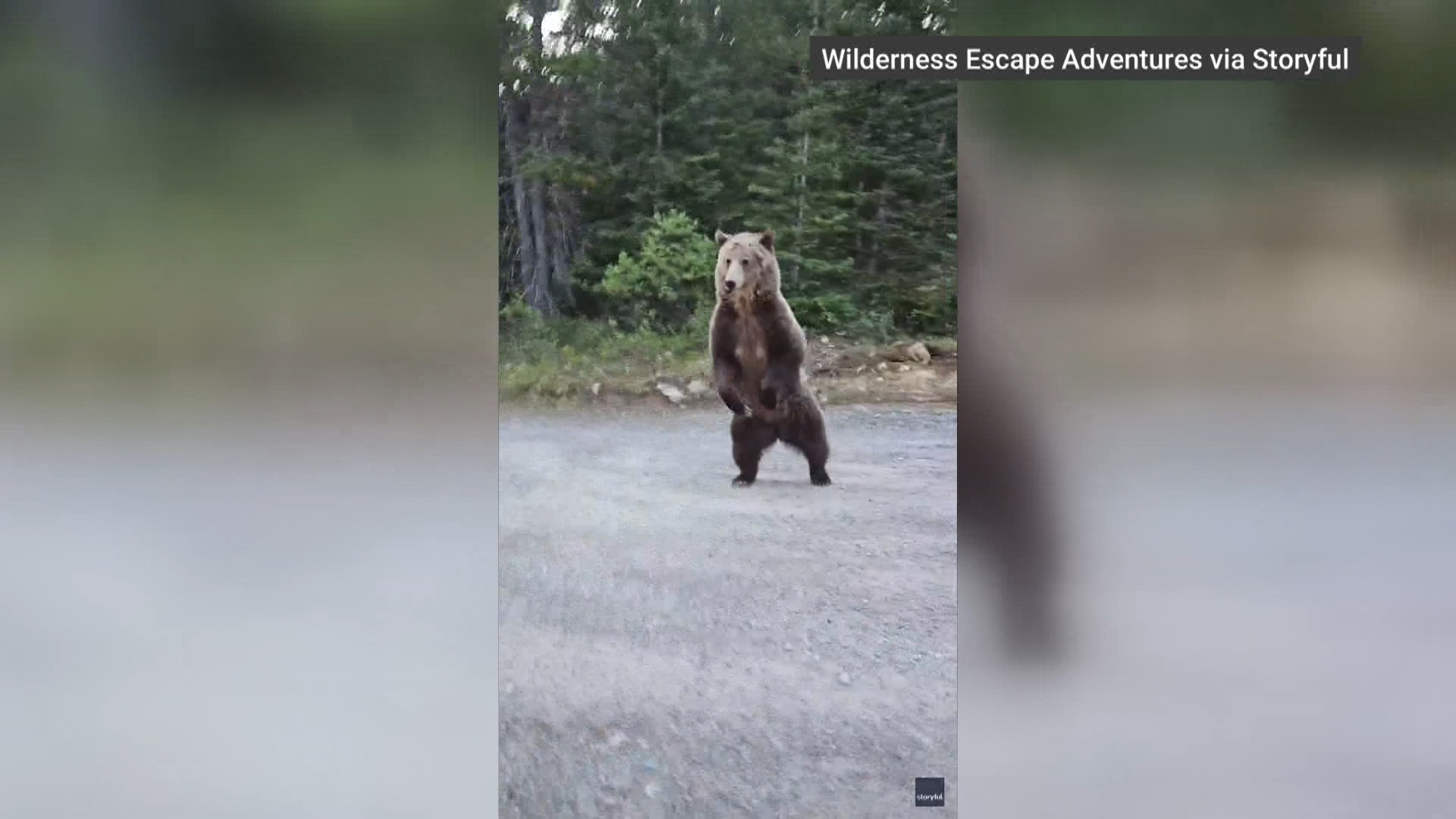
A viral video is ripping across social media showing a juvenile grizzly bear stalking, circling, and lunging at a woman and her dog in Alberta’s Kananaskis Country. The footage is intense. The woman, Jessie Oakes, was walking her Dutch shepherd, Skoki, near Mount Shark Road and Highway 742 just before 6 a.m. on Wednesday, June 24, 2026. For nearly a minute and a half, she held up her phone, recording the apex predator coming within feet of her, rearing on its hind legs, and locking its focus directly onto her pet.
Internet commenters are already splitting into predictable factions. Half are praising her "ice-cold" camera skills and calling her a hero for protecting her dog. The other half are playing armchair quarterback, throwing out aggressive critiques about what she did wrong. Meanwhile, you can find other developments here: Why the Israel Lebanon Framework Agreement is Not a Peace Deal Yet.
Both sides are missing the real point. This encounter wasn't a standard, defensive wildlife meeting. It was a terrifying look at a predatory behavior shift that happens when human pets enter bear territory. It also highlights a massive mistake that almost cost two lives.
The Myth of the Aggressive Grizzly
When people see a bear rear up or charge, they assume the animal is angry or defending its territory. But wildlife experts looking at the Kananaskis video see something completely different. To explore the complete picture, check out the recent analysis by The Washington Post.
Kim Titchener, the founder of Bear Safety & More, analyzed the bear’s body language. The grizzly wasn't huffing, snapping its jaws, or making the deep, guttural warning moans typical of a defensive mother protecting cubs or a carcass. It was dead silent. It repeatedly maneuvered around Oakes to get a cleaner angle at her dog, Skoki.
The grizzly wasn't defending anything. It was hunting.
Our domestic dogs share a massive chunk of DNA with wolves, a natural competitor to bears. To a young, opportunistic grizzly, a dog looks like two things: an invading threat or an easy lunch. In this specific case, the bear clearly perceived the leashed shepherd as a food source.
When the dog turned its back, the bear lunged. When Oakes yelled, the bear paused but didn't retreat. This was a non-defensive, predatory approach.
Understanding this distinction changes the rules of survival. If a bear defends a carcass or cubs, you back away slowly and show you aren't a threat. If a bear treats you or your pet as prey, you stand your ground, make yourself massive, and fight back with everything you have.
The Phone Fallacy and the Missing Safety Tool
Oakes did a lot of things right under extreme pressure. She kept her dog on a short leash. If Skoki had been off-leash, he likely would have run, triggering the grizzly’s chase instinct instantly. She would have lost her dog, or the dog would have run back to her with a 400-pound predator hot on its heels. She also kept moving toward safety, eventually throwing her coffee mug at the animal and taking shelter in a nearby glamping tent.
But she made two critical errors that could have ended in tragedy.
First, she didn't have bear spray.
Oakes later admitted she had left it behind because she was only a minute's walk from her residence. "There is no excuse for that," she told reporters. She's right. Bear encounters don't wait for you to reach the deep backcountry. This occurred right by Mount Engadine Lodge and the Rummel Lake Trail trailhead—areas heavily trafficked by people. Alberta Parks immediately slapped a severe bear warning on the entire zone, banning tents in two nearby campgrounds to enforce hard-sided camper use only.
Second, she prioritized filming.
Clutching a smartphone to capture a viral video limits your physical capability. You have one hand occupied. Your eyes are filtering reality through a five-inch screen instead of tracking peripheral threats. Titchener noted that carrying bear spray gives hikers the confidence to stand their ground aggressively. Holding a phone does the exact opposite; it splits your focus when you need to be entirely present.
How to Survive a Predatory Bear Encounter
If you hike, run, or camp in Western Canada or the American Northwest, you are entering a space where you are no longer at the top of the food chain. Here is exactly what you need to do if you find yourself facing a non-defensive grizzly that is tracking you or your pet.
- Ditch the camera. Your life is worth more than social media engagement. Keep both hands free to deploy safety tools.
- Keep pets tight. Never let your dog off-leash in bear country. A loose dog is either bait or a catalyst for an attack.
- Stand your ground. If the bear is silent and tracking you, do not run. Running triggers a chase response that you cannot outrun. Grizzlies can hit 35 miles per hour.
- Get your spray out early. Don't wait until the bear is within arm's reach. Pop the safety clip off your bear spray canister when the animal enters a 30-foot radius. Aim low to account for wind drift and create a wall of red pepper fog.
- Get loud and large. Raise your arms. Group up with anyone nearby. Use a deep, commanding voice. Oakes used phrases like "stop" and "go away," which helped maintain a boundary, but backing those words up with a deployed deterrent is what actually ends the threat.
If you encounter a bear or notice aggressive wildlife behavior in the Kananaskis region, immediately report the sighting to Kananaskis Emergency Services at 403-591-7755.
For a closer look at how fast these trail situations escalate and how hikers react under pressure, you can watch this Grizzly follows couple along popular trail in terrifying encounter. This video captures another actual face-to-face encounter in Kananaskis where hikers had to aggressively defend their space against a stalking bear.