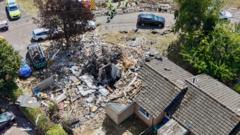
An explosion doesn't just destroy walls. It shatters lives in a fraction of a second. When a suspected gas blast tore through a bungalow in Newton Longville, the immediate aftermath dominated local headlines. But the real tragedy unfolded quietly days later inside a hospital room, turning a critical injury update into a fatality report.
We talk endlessly about home security, fire alarms, and break-in prevention. We rarely talk about the invisible, ticking time bombs hidden behind our kitchen cabinets and floorboards until it is far too late.
The Silent Danger Lurking Under Your Floorboards
Gas leaks are terrifyingly ordinary. You might smell rotten eggs, or you might smell nothing at all if the odorant has faded or your sense of smell isn't sharp. Most structural gas explosions don't happen because of dramatic pipe ruptures in movies. They happen because of tiny, undetected micro-leaks in aging fittings, poorly installed cookers, or worn-out rubber hoses connecting appliances to the mains supply.
In a bungalow, the risk profile changes compared to multi-story houses. Single-story properties often have extensive crawl spaces or concrete slabs where gas can pool silently if ventilation fails. Because gas is heavier than air in many common domestic scenarios, it settles at ground level, hugging the floor, creeping along hallways, and filling confined spaces until a stray spark from a refrigerator compressor or a light switch sets it off.
You don't get a warning countdown. You get a sudden detonation that blows out exterior walls and collapses roofs.
Why Hospital Outcomes After Blasts Are So Grim
When emergency responders pull someone from the wreckage of a suspected gas blast, surviving the initial physical collapse is only the first hurdle. The medical reality of severe blast injuries is brutal.
Explosions cause multi-system trauma. Blast lung injuries, severe thermal burns, and closed head trauma are standard complications. Even when a patient is conscious and stable immediately following an incident, internal injuries can rapidly compound. Fluid loss, inhalation burns, and secondary infections claim lives days after the event.
Emergency medicine can work miracles, but the human body can only take so much blunt force and cellular damage. When police confirm that a hospitalized victim has passed away days after an explosion, it exposes the hidden tail of destruction that initial news reports gloss over.
How to Actually Protect Your Home Right Now
Stop trusting that your nose is enough to keep you safe. Gas safety requires active prevention, not passive hope.
First, get your appliances checked annually by a certified professional. If you use natural gas or LPG, do not skip this. A certified technician tests working pressure, checks flame stability, and inspects ventilation pathways that homeowners routinely block with boxes or furniture.
Second, install modern digital gas detectors alongside your smoke alarms. Traditional smoke detectors will not alert you to a gas accumulation before it reaches explosive concentrations. Modern dual-sensor detectors react to combustible gases well before lower explosive limits are met, giving you time to evacuate.
Third, know where your emergency shut-off valve is located. Can you turn it off in the dark? Do you have the right wrench handy? If you ever suspect a leak, do not flip light switches, do not use your phone inside the house, and get outside immediately.
Check your connections today. A five-minute inspection beats a lifetime of regret.