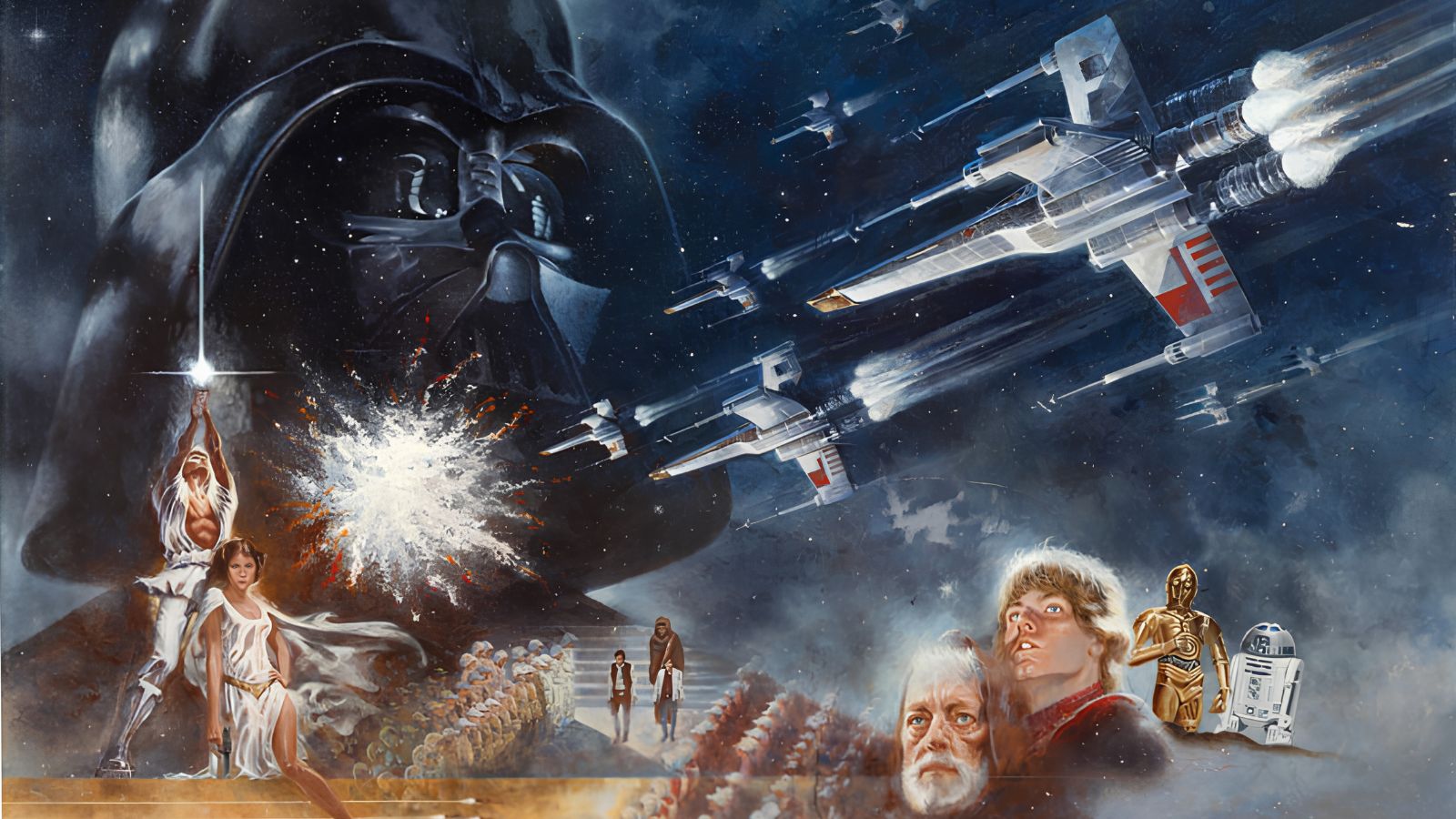
Most fans assume a screen-worn Darth Vader helmet sits comfortably at the top of the Star Wars memorabilia pyramid. It doesn't. Not even close.
The record books got completely rewritten across 2025 and 2026, and the hierarchy of expensive Star Wars auction items looks nothing like it did a few years ago. While a screen-used Darth Vader mask and helmet cleared seven figures in 2019, it currently sits in sixth place. A battered camera flash handle wielded by Vader in The Empire Strikes Back and Return of the Jedi just shattered every franchise record in November 2026, selling for $4.875 million. Meanwhile, you can find related events here: Darth Vader’s Record-Breaking Lightsaber Sale Is Actually a Warning Sign for Collectibles.
If you're tracking this market, buying into it, or just trying to understand why a piece of 1950s photography equipment outsold a full-sized R2-D2 unit, you need to look past nostalgia. High-end collectors don't just buy cool props. They buy screen-matched provenance, emotional turning points, and irreplaceable craftsmanship.
Why Screen Matching Changes Everything in Star Wars Auctions
Before looking at the 10 priciest sales, you have to understand the single biggest mistake casual observers make when evaluating Star Wars props. They treat all production items as equal. They aren't. To explore the complete picture, we recommend the excellent analysis by The Hollywood Reporter.
During filming in the late 1970s and early 1980s, prop departments made multiple versions of almost every hero item. There were lightweight rubber stunt weapons for wide shots, static belt hangers for walking scenes, and detailed "hero" props for close-ups. Later, Lucasfilm also produced promotional tour costumes that traveled to theaters and conventions.
A promotional Darth Vader touring helmet sells for around $75,000 to $80,000. A screen-matched helmet actually worn by David Prowse on set sells for over $1.1 million. That gap comes down to photo-matching—analysts zooming in on high-definition film frames to match exact paint chips, glue drips, scratches, and asymmetrical imperfections on the physical object to the exact frames you see in the theater. Without that forensic match, a prop is just a cool artifact. With it, it's cinema history.
The 10 Most Expensive Star Wars Items Ever Sold at Auction
The market for original trilogy artifacts has exploded, especially as the franchise approaches its 50th anniversary in 2027. Here is how the top 10 confirmed public auction sales actually stack up right now, ranked from the tenth priciest all the way to the undisputed king.
10. Original Chewbacca Headpiece — $172,200
Sold through Heritage Auctions in 2013, this screen-used Wookiee mask was worn by the late Peter Mayhew across the original trilogy. Built over a fiberglass skull with hand-knotted yak hair and articulated jaw mechanics, it was one of only five original heads created for the productions. Honest collectors know costume masks made of organic hair and foam latex are notoriously fragile, which makes surviving examples in intact condition nearly impossible to find on the open market.
9. Production-Made Snowtrooper Helmet — $276,750
Imperial Stormtrooper armor shows up at auction fairly regularly, usually fetching between $100,000 and $645,000 depending on completeness. Cold-weather gear from the Battle of Hoth is a completely different story. In August 2012, an original The Empire Strikes Back Snowtrooper helmet—complete with its distinctive white vinyl face shield and green lenses—more than tripled its pre-sale estimate. Because so few survived the harsh filming conditions in Finse, Norway, it remains one of the rarest trooper pieces ever offered.
8. C-3PO Light-Up Head — $1,058,400
For decades, complete screen-used C-3PO components rarely surfaced outside private archives. That changed in March 2026 when Propstore auctioned an original light-up C-3PO head from The Empire Strikes Back in Los Angeles. Estimated at $350,000 before the sale, fierce bidding pushed it past the seven-figure mark. Constructed of fiberglass with working internal eye illumination, it proved that main-cast droids carry massive financial weight even without the rest of the suit.
7. Darth Vader Screen-Worn Helmet and Mask — $1,125,000
Here is the piece everyone expects to be number one. In September 2019, Profiles in History sold an original Darth Vader helmet and facemask worn by David Prowse during the filming of The Empire Strikes Back. Made of painted fiberglass with foam rubber interior padding, it carried an initial estimate of $250,000 to $450,000 before blowing past $1.1 million. As Heritage Auctions and Profiles in History records confirm, it remains the highest price ever paid for Star Wars headgear, yet six other items have now left it behind.
6. Kenner Rocket-Firing Boba Fett Prototype — $1,342,000
You don't need screen time to command seven figures—sometimes a safety recall is even better. In 1979, Kenner designed a 3.75-inch Boba Fett action figure with a spring-loaded backpack missile. Before it hit store shelves, toy executives scrapped the firing mechanism out of fear children might choke on the tiny red projectile. Roughly a hundred hand-painted prototypes escaped the factory via employees. In 2024, an AFA-graded J-slot variant became the most expensive vintage toy ever sold at auction, proving that toy nostalgia rivals actual film props.
5. Hero Gold Leader Y-Wing Filming Miniature — $1,550,000
Before CGI took over filmmaking, Industrial Light & Magic built physical models out of kit-bashed model train and battleship parts. In 2024, Heritage Auctions sold one of only two hero Y-Wing miniatures constructed for the Death Star trench run in A New Hope. Measuring over two feet long and fitted with internal lighting for its engine nacelles, this model survived decades in private hands before fetching $1.55 million in Dallas.
4. Complete R2-D2 Assembled Unit — $2,760,000
Back in June 2017, a full-sized, 43-inch R2-D2 unit shattered the movie memorabilia ceiling at Profiles in History. Built using original screen-used components salvaged from the original trilogy as well as The Phantom Menace and Attack of the Clones, this droid wasn't a static display statue. It featured functioning mechanical parts and authentic production wear. For five years, R2-D2 stood unchallenged as the priciest Star Wars artifact on earth.
3. Hero Red Leader X-Wing Filming Miniature — $3,135,000
Lost for decades, this 20-inch X-Wing starfighter miniature was rediscovered in the garage of late Oscar-nominated modelmaker Greg Jein. Used during the climactic Death Star battle in 1977's A New Hope, the model features working servo motors to open and close its S-foil wings plus internal cockpit and engine lights. When Heritage Auctions brought it to market in October 2023, it easily topped a separate Red Leader X-Wing sold by Propstore a year earlier for $2.39 million.
2. Luke Skywalker's Lightsaber and Severed Hand Rig — $3,750,000
For a brief four-month stretch in 2026, Luke Skywalker held the prop crown. Sold by Heritage Auctions in July 2026, this lot paired Mark Hamill's screen-used dueling lightsaber from The Empire Strikes Back with the special-effects severed hand rig used at the end of the Cloud City duel. Built from a vintage Graflex camera flashgun and retained by makeup legend Stuart Freeborn until 1994, the set included the spring-loaded prosthetic hand cast directly from Hamill's wrist.
(Note: Tom Jung's original 1977 half-sheet poster painting also sold for $3.875 million in December 2025—making it the most expensive piece of Star Wars promotional artwork ever sold, though collectors separate 2D illustration art from physical screen-used props.)
1. Darth Vader's Hero Dueling Lightsaber — $4,875,000
The Dark Lord finally reclaimed his throne in November 2026. Sold at Heritage Auctions in Dallas during an event that generated nearly $8 million overall, Darth Vader's primary dueling lightsaber from The Empire Strikes Back and Return of the Jedi hammered for a staggering $4.875 million.
Originally constructed from a 1950s British Micro-Precision Products camera flash head, the hilt was customized with seven black plastic T-track grips, decorative wires, and a magnifying strip stripped from an old calculator. It shows honest battle scars—cracks, scratches, and a partially broken guard from real on-set stunt clashes with Mark Hamill. Auctioneers estimated it would clear $1 million. Instead, collectors treated it as the ultimate symbol of cinema's greatest plot twist: the exact weapon Vader held moments before telling Luke, "No, I am your father."
What Actually Drives These Million-Dollar Prices
If you look closely at those top 10 sales, a clear pattern emerges. Aesthetic perfection doesn't win at this level. Story equity does.
Think about why Vader's scratched, cracked lightsaber beat his pristine promotional helmets by more than four million dollars. A lightsaber isn't just a prop; it's the physical extension of the character's identity. When bidders compete for the Cloud City dueling sabers, they aren't buying metal tubes and rubber grips. They're buying ownership of the single most famous scene in modern pop culture.
Supply scarcity amplifies that emotional pull. In the 1970s, nobody at Fox or Lucasfilm thought Star Wars props would become fine art. Crew members tossed pieces into dumpsters, took them home as souvenirs, or cannibalized parts for sequels. The few hero items that survived in private hands—like Greg Jein's X-Wing or Stuart Freeborn's Luke Skywalker rig—represent irreplaceable relics from a pre-digital era of filmmaking. Once a billionaire collector or a museum like the Lucas Museum of Narrative Art locks one away, it rarely comes back to market.
How to Spot Real Value If You Collect Star Wars Memorabilia
You obviously don't need $4.8 million to participate in Star Wars collecting, and honestly, chasing screen-used hero props is a rich person's game riddled with fakes. Counterfeit "production-made" helmets and forged George Lucas letters flood secondary marketplaces every week.
If you want to build a collection that actually holds or grows its value without getting burned, apply the exact same principles seven-figure bidders use at Heritage and Propstore:
- Demand third-party photo-matching or ironclad chain of custody. Never trust a generic Certificate of Authenticity printed by an unknown dealer. Look for documented provenance tracing directly back to a named crew member (like ILM modelmakers or costume supervisors) or independent forensic verification from specialists like Propstore or the Star Wars Prop Collectors community.
- Prioritize key moments over background obscurity. A background cantina alien mask might be genuinely screen-used, but its value ceiling is low because nobody remembers it. Focus on recognizable characters, iconic vehicles, or pivotal scenes—even if that means buying high-grade vintage Kenner figures, original 1977 Style A theatrical posters, or graded first-print Marvel comics instead of props.
- Check auction archives before placing a single bid. Use public databases from Heritage Auctions and Propstore to compare realized prices against current asking prices. Never confuse an auction house's low pre-sale estimate with actual market value—as Vader's $1 million estimate turning into $4.875 million proved, estimates are designed to attract bidders, not predict the ceiling.