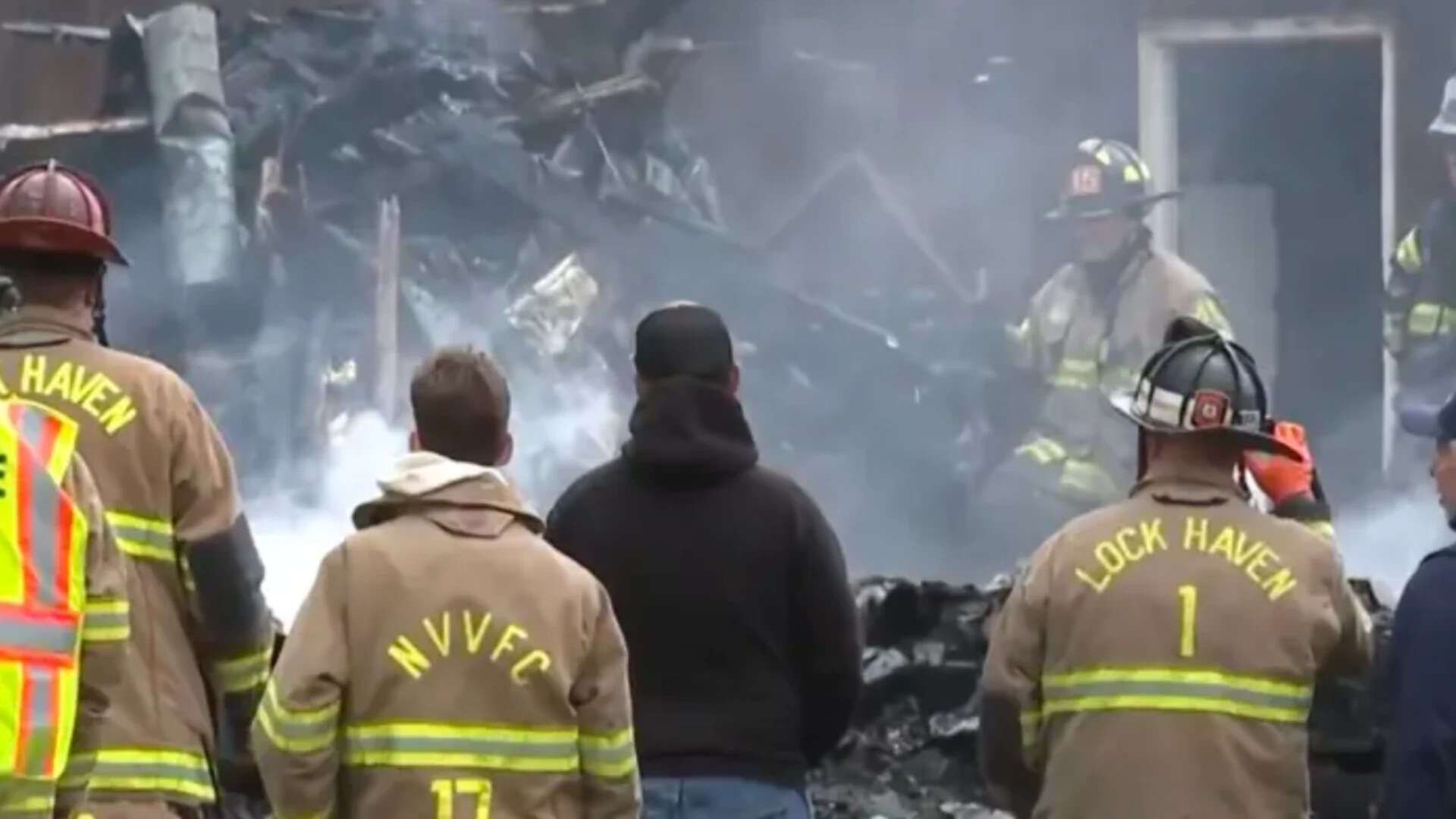
Seven people are dead in Pennsylvania because a house didn’t just burn—it blew apart. A mother and her six children lost their lives when their home in a rural stretch of the state became a pile of charred rubble in seconds. This isn't just a local tragedy. It’s a terrifying reminder of how fast a residential structure can turn into a bomb. When you hear about a "house explosion," your mind probably goes to a gas leak. Sometimes that's exactly what it is. Other times, it's something more complex. Regardless of the cause, the result in this case was a total loss of life that has left an entire community reeling.
The scale of this disaster is hard to wrap your head around. It wasn't a small kitchen fire that got out of hand. Neighbors reported a blast so violent it shook windows miles away. By the time first responders arrived, there was no "saving" the building. It was already gone. They weren't fighting a fire to save a house; they were sifting through remains to find a family. Meanwhile, you can explore related stories here: The Architect of a Fragile Peace.
Why some houses explode while others just burn
Fire is predictable. It needs fuel, heat, and oxygen. Most residential fires grow at a steady rate, giving people at least a slim window to escape. An explosion is different. It's an instantaneous release of energy. For a house to explode like the one in Pennsylvania, there has to be a buildup of combustible gas or vapor.
Natural gas and propane are the usual suspects. They're heavier or lighter than air depending on the type, but they both love to pool in confined spaces. Basement corners. Attic crawlspaces. Inside wall cavities. Once the concentration of gas in the air hits what experts call the "Lower Explosive Limit," all it takes is one tiny spark. A light switch. A refrigerator motor kicking on. A pilot light. To see the bigger picture, check out the excellent article by TIME.
Then, everything goes. The walls are pushed outward by a pressure wave that travels faster than the human eye can track. This ruins the structural integrity of the home immediately, often causing the roof to pancake down on anyone inside. In the Pennsylvania tragedy, the explosion was followed by an intense "ball of fire" that consumed what little was left of the frame. This dual-threat—the blast and the subsequent inferno—is why the survival rate in these incidents is so low.
The devastating reality for rural Pennsylvania families
Rural areas face a unique set of risks that urban centers don't deal with as often. Many homes in these parts of Pennsylvania rely on propane tanks or heating oil rather than municipal gas lines. Propane is stored in large pressurized tanks on the property. If a line underground corrodes or a fitting on the tank fails, that gas can seep into the soil and follow plumbing pipes right into the basement.
The distance from fire stations also plays a massive role. In a city, help might be three minutes away. In rural PA, it might be fifteen or twenty. When a house explodes, every second counts, but even the fastest volunteer fire department can't do much if the structure is already flattened before they've even paged the crew.
We also have to talk about the age of these homes. Pennsylvania is full of beautiful, older houses that have been standing for a century. But their bones are dry wood. Their wiring is sometimes outdated. Their gas lines might be decades old. These homes weren't built with modern fire-blocking materials. They were built to last, sure, but they were also built to burn hot and fast once they catch.
Lessons from the Pennsylvania fire marshal investigations
State fire marshals have a grim job after a blast like this. They aren't looking for who to blame yet; they're looking for the "origin and cause." This involves digging through layers of ash to find the specific valve, appliance, or wire that failed.
What we've seen in past investigations of similar Pennsylvania disasters is often a "perfect storm" of mechanical failure and environmental factors. For example, if the ground shifts during a hard freeze and thaw cycle—something PA is famous for—it can snap a gas line. If the home doesn't have a gas detector (which is different from a smoke detector), the family has no way of knowing they're sleeping inside a ticking clock.
Most people don't realize that smoke detectors are useless against a gas leak. They only trip when there is actual particulate matter in the air. By then, it's too late. You need a dedicated combustible gas detector. They're cheap. They plug into a wall outlet. And yet, almost no one has them. That’s a mistake that costs lives.
How to actually protect your family from a residential blast
You can’t control everything, but you can control your home's vulnerability. If you live in a house with gas or propane, you’re responsible for its maintenance. Don't wait for a smell to check your systems.
- Install gas detectors on every level. Put them near your furnace, your water heater, and your kitchen. If they go off, don't investigate. Just run.
- Know the "rotten egg" smell. Utilities add mercaptan to gas so you can smell it. If you catch even a faint whiff of it, don't turn on a light. Don't use your phone inside. The tiny electrical arc inside a phone or a switch is enough to trigger a blast.
- Annual inspections are mandatory. Have a pro look at your lines. It costs a hundred bucks and could save your life.
- Clear the area around your meters and tanks. If you have an external propane tank, keep brush and debris away from it. If it’s a gas meter, make sure it’s protected from vehicle impacts or falling ice.
The Pennsylvania tragedy is a heartbreaking story of a mother and six children who didn't get a chance to fight. They were caught in an event that was over before they likely even knew it started. We owe it to their memory to stop treating home safety like a chore we can put off until next year. Check your detectors today. Call an inspector if your stove has been acting up. Don't assume it's "just an old house smell." It might be the only warning you ever get.



:strip_icc()/pic2513216.jpg)