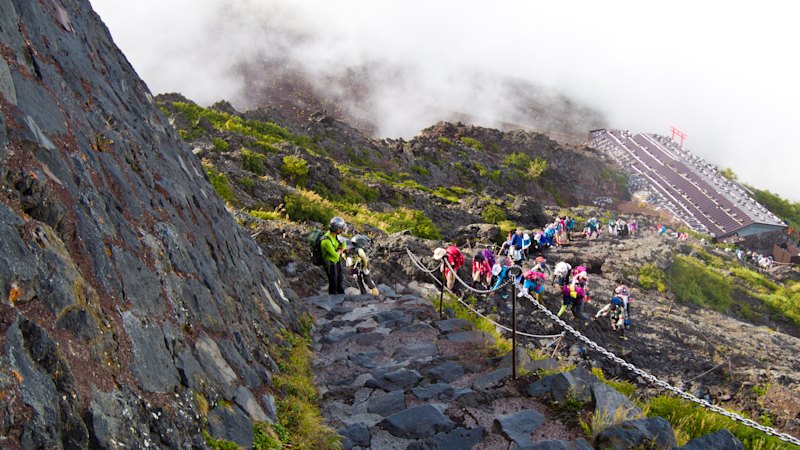
Mount Fuji doesn't care about your parenting schedule. It does not care that you have a summit sunrise to catch or a tight itinerary to maintain. When a father reportedly abandoned his young son alone on the slopes of Japan's most famous peak for hours, it shocked emergency responders and exposed a deeply disturbing trend in outdoor recklessness.
You've probably heard bits of the story. A dad wanted to climb higher. His kid couldn't keep up. So, instead of turning back, the adult made the unthinkable choice to tell his child to stay put while he pushed toward the summit. That is not ambition. That is negligence. Also making waves recently: Stop Blaming Bad Weather For Every Cargo Ship Sinking Off The Coast.
The Brutal Reality of Mount Fuji Weather
Most tourists view Mount Fuji as a glorified walking hill during the summer climbing season. They wear sneakers, carry convenience store bento boxes, and assume the well-marked trails make it foolproof. They are dead wrong.
Weather on Fuji changes in minutes. Clear blue skies turn into freezing, whiteout fog faster than you can check a weather app. Temperatures at the summit regularly drop below freezing even in July and August. Hypothermia does not wait for a father to retrace his steps down a mountain. Further details regarding the matter are covered by Reuters.
When you leave a child sitting unattended on an active volcano, you aren't just risking a lost kid. You're risking a tragedy. High-altitude winds can easily knock a small child off balance. Sudden rockfalls happen without warning. Altitude sickness strikes adults and children alike, causing confusion, dizziness, and vomiting.
Why Do Climbers Make This Mistake?
Summit fever is real. It is a psychological trap that blinds otherwise rational people to obvious danger. You spend months planning a trip, booking flights, buying gear, and training your legs. The peak is right there. It is just a few hundred meters higher.
That tunnel vision causes hikers to ignore red flags. They ignore blisters, exhaustion, worsening weather, and—most tragically—the physical limits of their companions. When traveling with children, your timeline becomes irrelevant. Their safety dictates the pace. If they cannot make it, you turn around. Period.
Rescue teams on Mount Fuji deal with hundreds of stranded or injured hikers every single year. Many of these calls stem from sheer poor planning and the dangerous assumption that Japan's mountains are theme park attractions equipped with safety nets everywhere.
What Mountain Safety Actually Requires
If you plan to tackle high-altitude peaks with family, you need a reality check. Sticking to a strict itinerary matters far less than bringing everyone down the mountain alive.
- Turnaround times are non-negotiable. Set a strict time to head back down, regardless of how close you are to the top.
- Weight distribution matters. Never separate your emergency gear, water, and warm layers from the person who might need them most.
- Listen to complaints. If a child says they are too cold or too tired, take it seriously immediately.
Leaving a child behind on a mountain isn't a parenting lapse. It's an emergency waiting to happen. Mountains command respect, and Fuji demands humility. If you can't climb it together, you stay together, or you stay home.