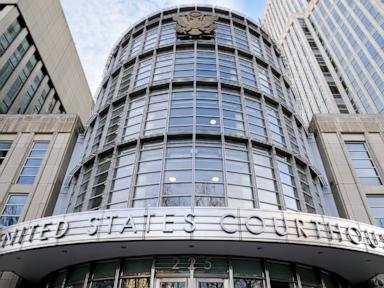
The smell of stale coffee and damp wool coats still clings to my memory whenever I walk past a federal courthouse. Years ago, I sat in a fluorescent-lit waiting room in downtown Miami, holding a manila folder so tightly my knuckles turned white. Inside that folder was my cousin’s entire existence—translated, notarized, stamped in triplicate, and yet somehow weightless against the whim of a pen stroke in Washington.
Waiting.
That is the real currency of the American immigration system. Not dollars, not legal briefs, not even border walls. Just endless, suspended time where your life sits in a holding pattern above a runway that might disappear before your wheels touch down.
Right now, hundreds of thousands of Venezuelans are living inside that exact holding pattern. And once again, their fate—their work permits, their apartments, their children’s school enrollments, their literal physical presence on American soil—has landed back on the marble steps of the United States Supreme Court.
To a casual reader skimming morning headlines, a legal dispute over Temporary Protected Status (TPS) looks like dry administrative chess. A federal agency makes a designation. A subsequent administration tries to revoke it. A lower court issues an injunction. The Solicitor General files an emergency appeal. Lawyers argue over statutory interpretation and the Administrative Procedure Act while justices ask pointed questions about executive authority.
Strip away the Latin phrases and the procedural posture, however, and you find something far rawer. You find a fundamental question about whether a promise made by the United States government means anything once the political winds shift.
The Architecture of a Temporary Life
Consider a hypothetical family—let us call them the Mendozas—living in a two-bedroom apartment in Doral, Florida, or perhaps Katy, Texas. Mateo was a civil engineer in Caracas before hyperinflation turned his monthly salary into the equivalent of a carton of eggs and political dissent turned his neighborhood into a surveillance grid. Elena taught elementary school. When they arrived in the United States, they did not sneak across a river in the dead of night; they presented themselves, followed the rules, paid the filing fees, submitted their fingerprints to the Department of Homeland Security, and waited.
When the federal government granted Temporary Protected Status to Venezuelans, it offered the Mendozas a lifeline.
Think of TPS not as a golden ticket, because it is not. It provides no path to citizenship. It grants no green card. Think of it instead as a wooden bridge built over a raging canyon during an earthquake. The government looked at Venezuela—a country shattered by economic collapse, authoritarian crackdowns, and humanitarian crisis—and acknowledged a simple, undeniable truth: sending people back there was unconscionable. So it built the bridge. It handed Mateo and Elena work authorization cards and said, Cross over. Build a life. Pay taxes. Raise your kids. Stay safe until the storm passes.
They did everything asked of them. Mateo took a job managing logistics for a regional construction firm. Elena became a bilingual teacher’s aide. They bought a used Honda Civic on credit. Their eight-year-old daughter learned to recite the Pledge of Allegiance without an accent and joined a local soccer league. They became woven into the economic and social fabric of their community—not as shadows, but as documented, vetted, tax-paying neighbors.
Now imagine standing in the middle of that wooden bridge while two crews of engineers argue over whether to saw through the support beams.
That is what happens when the fight over Venezuelan deportation protections returns to the Supreme Court. Every filing, every stay, every emergency docket order sends a shockwave straight through living rooms across the country. If the Court sides with efforts to terminate or narrow those protections, Mateo’s work permit does not gradually fade away. On a specific calendar date, it simply ceases to be valid. His employer, bound by federal I-9 verification laws, has no choice but to let him go by Friday afternoon. Without his paycheck, the rent on the two-bedroom apartment becomes impossible by the first of the month. Without legal status, the family slips overnight from lawful, documented residents into the crosshairs of Immigration and Customs Enforcement.
How the Legal Tug-of-War Actually Works
To understand why this case keeps bouncing back to the highest court in the land, you have to understand the friction built into the 1990 statute that created Temporary Protected Status.
Congress designed TPS to be a humanitarian safety valve. The law empowers the Secretary of Homeland Security to designate a foreign country for TPS if conditions there prevent its nationals from returning safely—whether due to ongoing armed conflict, an environmental disaster like an earthquake or hurricane, or "extraordinary and temporary conditions."
Here lies the trapdoor hidden inside the law.
The statute gives the executive branch vast discretion to grant TPS, and it also instructs the Secretary to periodically review country conditions and terminate the designation if those conditions no longer exist. Yet the same statute contains a clause stating that there is no judicial review of any determination by the Secretary with respect to the designation, termination, or extension of TPS.
Read that again. On paper, Congress tried to insulate these decisions from endless litigation.
In practice, that clause ignited a constitutional firestorm. When an administration moves to strip protections from hundreds of thousands of people—not because the crisis in their homeland miraculously resolved, but because the White House wants to shrink humanitarian programs—civil rights attorneys push back. They argue that an administration cannot ignore reality, violate federal rulemaking procedures, or act out of discriminatory animus while hiding behind a "no judicial review" shield.
Lower courts have repeatedly wrestled with this tension. District judges look at the evidence on the ground in Venezuela—a nation still gripped by severe political repression, fractured infrastructure, and mass displacement—and ask how any reasonable official could claim it is safe for mass returns. When those judges block the termination of protections, the federal government rushes to the Supreme Court, arguing that unelected district judges are usurping the president’s constitutional authority over foreign policy and border enforcement.
And so the pendulum swings. Up to the appellate court. Down for an injunction. Up to the Supreme Court’s emergency docket—often called the "shadow docket"—where monumental decisions affecting hundreds of thousands of human lives can be issued in brief, unsigned orders without full oral argument.
I remember the exact feeling of reading one of those terse legal updates on my phone years ago. My hands shook so badly I dropped the device onto the kitchen tile. To a Supreme Court clerk, a three-sentence stay order is routine procedural housekeeping. To the person holding a fading Employment Authorization Document, those three sentences dictate whether they can drive their child to school tomorrow without risking detention.
The Invisible Economy of Uncertainty
There is a quiet, corrosive cost to this legal limbo that never shows up in government statistics or Supreme Court briefs. Economists can tally the billions of dollars TPS holders contribute to Gross Domestic Product, Social Security, and Medicare. They can count the tens of thousands of Venezuelan workers filling critical labor shortages in healthcare, hospitality, construction, and logistics.
What nobody can quantify is the psychological tax of living in 18-month increments.
When your legal existence expires every year and a half, you stop planning for the future. You do not start the small business you sketched out on napkins. You hesitate before signing a two-year lease. You keep a go-bag packed in the back of the closet, right behind the winter coats, containing birth certificates, vaccination records, and enough cash for an emergency bus ticket or a lawyer’s retainer.
You learn to live with a low-grade hum of panic vibrating beneath every ordinary moment. A knock on the door at 7:00 AM stops your heart. A police cruiser pulling behind you at a red light makes your palms sweat, even when your tail lights work and your registration is current. You check immigration news forums at two in the morning, trying to decode the syntax of a circuit court ruling as if your life depended on it—because it does.
Critics of Temporary Protected Status often point to the first word in its name: Temporary. They argue, not without logic, that a program meant to last a year or two has morphed into a de facto permanent residency for people who bypassed traditional visa queues. They contend that allowing courts to freeze terminations ties the hands of future presidents, making leaders reluctant to offer humanitarian relief in the first place if they know it can never be undone.
That argument deserves to be taken seriously. A system where "temporary" never ends strains public trust and invites political backlash.
Yet look at the reality on the other side of that ledger. The word temporary assumes that the catastrophe prompting the flight will actually subside. Venezuela did not experience a brief hurricane; it suffered a systemic collapse that has driven nearly eight million people—roughly a quarter of its entire population—out of the country. You cannot demand that people return to a burning house simply because the timer on your stopwatch ran out.
Nor can you pretend that deporting hundreds of thousands of Venezuelan nationals is even logistically straightforward. For years, diplomatic relations between Washington and Caracas have been fractured, sporadic, and transactional. Even when the United States holds a valid deportation order against a Venezuelan citizen, putting them on a plane requires cooperation from a regime that frequently weaponizes repatriation flights for geopolitical leverage. Stripping TPS from people who cannot practically be deported does not empty the country; it simply takes documented, tax-paying workers and pushes them underground into the shadow economy, where employers can exploit them and families live in perpetual terror.
What the Justices Are Really Weighing
When the Supreme Court takes up a dispute over Venezuelan deportation protections, the justices sit behind a mahogany bench draped in crimson velvet, insulated from the noise outside. Their job is not to play social worker or diplomat. Their job is to interpret the text of federal statutes and police the boundaries between the branches of government.
Still, the law does not exist in a vacuum. Every ruling leaves fingerprints on the real world.
If the Court validates broad executive power to terminate TPS with minimal judicial oversight, the immediate aftermath will be swift and brutal. Hundreds of thousands of work permits will evaporate. Businesses in South Florida, Texas, New York, and Illinois will suddenly lose vetted employees overnight. Families with U.S.-citizen children will face an agonizing choice: fracture the household, or take an American-born child back to a country struggling with basic electricity, clean water, and political freedom.
Conversely, if the Court affirms that federal agencies must follow rigorous administrative standards and face meaningful judicial review before upending hundreds of thousands of lives, it buys something precious: breathing room. Not permanence. Not citizenship. Just the guarantee that the government cannot pull the rug out from under people on a whim without proving that conditions in their homeland have genuinely changed.
I think back often to that waiting room in Miami, to the scuffed linoleum floors and the soft murmur of prayers whispered in Spanish while clerks called out case numbers over a crackling intercom. Back then, I believed the law was a solid thing, like granite—something you could stand on and trust to hold your weight if you followed every rule.
Years of watching families rise and fall on technicalities taught me otherwise. For immigrants caught in the gears of American policy, the law is not granite. It is weather. You wake up each morning, look toward Washington to see which way the clouds are moving, and pray the sky does not fall before dinner.
Somewhere tonight, in a quiet apartment lit by the blue glow of a television screen, a father is double-checking the expiration date printed in tiny black ink on a plastic work card, while his daughter sleeps down the hall under a blanket covered in cartoon stars.