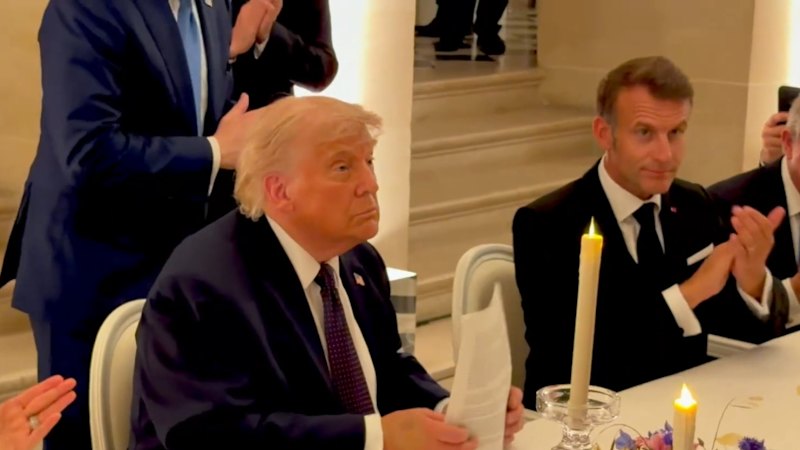
The ink is dry, the flags are lined up, and the global diplomatic press corps is collectively hyperventilating. Yesterday’s signing of the comprehensive peace framework between Washington and Tehran is being hailed as a historic realignment of Middle Eastern geopolitics. The mainstream narrative says that this deal resolves forty-seven years of cold war, stabilizes global oil markets, and neutralizes the single biggest flashpoint for a potential third world war.
It is a beautiful fiction. It is also entirely wrong.
When you spend two decades advising energy funds and navigating the sanctions evasion networks that actually move liquidity through the Persian Gulf, you learn to read between the lines of diplomatic press releases. The lazy consensus surrounding this treaty assumes that state behavior changes because a piece of paper was signed in Geneva. It assumes that the structural animosities between an expansionist, ideological system in Tehran and a declining, over-leveraged security guarantor in Washington can be dissolved by a photo-op.
This treaty does not end the conflict; it merely privatizes it.
The Fatal Premise of the "Normalized Market"
The most egregious error in the current analysis belongs to the energy economists. The consensus view predicts that lifting secondary sanctions will immediately dump two million barrels per day of Iranian crude onto the formal global market, permanently crushing oil prices and stabilizing Western inflation.
This view ignores how the gray market actually operates. Iran has not been locked out of the global energy market; it has simply been selling its crude at a steep discount to East Asian refiners via a network of ghost tankers, ship-to-ship transfers in the South China Sea, and front companies in Dubai and Singapore.
Imagine a scenario where a massive, multi-billion-dollar shadow supply chain suddenly has its legal restrictions lifted. What happens? The discount disappears. The crude that was secretly feeding illicit refining networks at $15 below Brent crude now commands full market price. The flows do not magically double; they merely shift from the ledger of shadow banks to the ledger of transparent ones.
The Western consumer gains no relief. In fact, by legitimizing Iranian production, the treaty allows Tehran to formalize its output cuts alongside OPEC+ partners, artificially maintaining a higher price floor than they could ever achieve while desperate for under-the-counter liquidity. The idea that this treaty is a deflationary miracle for the West is a fundamental misunderstanding of commodity mechanics.
Dismantling the Consensus: The Flawed Premise of Foreign Direct Investment
The second major misconception is the belief that Western multinationals will rush to develop Iran’s massive, under-capitalized South Pars gas fields. Mainstream business outlets are already drafting lists of European and American energy firms poised to win multi-billion-dollar infrastructure contracts.
They are forgetting the primary rule of corporate risk management: compliance teams always outlive diplomats.
No sensible general counsel at a major Western firm is going to approve a ten-year capital investment project in a country where the entire legal framework can be instantly reversed by an executive order from the next U.S. administration. The threat of "snapback" sanctions remains embedded in the treaty text. For a multinational corporation, that is a structural poison pill.
Instead of Western capital driving Iranian modernization, the treaty clears the way for Chinese state-owned enterprises to formalize their 25-year strategic accord with Tehran. China does not fear Western compliance risk because its state entities operate with explicit sovereign immunity from the American financial system. Washington has not opened Iran to global commerce; it has legally handed an energy monopoly to its primary geopolitical rival.
[Traditional View]: US-Iran Treaty -> Western Corporate Access -> Market Normalization
[The Reality]:      US-Iran Treaty -> Risk Mitigation Deadlock -> Chinese Monopoly Capitalization
The Asymmetric Warfare Contradiction
The central pillar of the peace plan is the verifiable reduction of Iran's regional proxy networks. The treaty dictates that Tehran must cease funding and arming non-state actors across Yemen, Iraq, Syria, and Lebanon in exchange for the unfreezing of $120 billion in sovereign assets.
This assumes that Iran uses proxies out of luxury rather than survival.
Asymmetric warfare is the only defense mechanism the Iranian state possesses against a conventionally superior coalition of the United States and its regional allies. The Islamic Revolutionary Guard Corps (IRGC) does not maintain these networks because they are cheap or convenient; it maintains them because they push the defensive perimeter of the state hundreds of miles away from its physical borders.
To believe that Tehran will dismantle its regional leverage because it received access to its own frozen cash is to misunderstand the nature of ideological regimes. The influx of tens of billions of dollars does not incentivize disarmament; it funds the professionalization of these exact networks. The cash will not go toward building schools in Tabriz; it will go toward upgrading the guidance systems of the drone fleets currently stationed along the Red Sea.
We have seen this playbook before. When the Joint Comprehensive Plan of Action (JCPOA) was implemented in 2015, regional proxy spending spiked by an estimated 30 percent across the northern Levant. Money is fungible, and state survival always takes priority over domestic economic reform.
The Downside to the Contrarian Reality
To be intellectually honest, challenging this peace plan means acknowledging the brutal alternative. The status quo of maximum pressure and counter-sanctions was devastating to the Iranian middle class and pushed the regime closer to the nuclear threshold than ever before. Acknowledging that this treaty is an illusion does not mean arguing that the previous policy of economic warfare was a success.
The uncomfortable truth is that there is no policy that results in a stable, democratic, pro-Western Iran within the next decade. The choice was never between war and peace; the choice was between a volatile, overt conflict and a subsidized, covert one. This treaty simply institutionalizes the latter.
Actionable Strategy for a Post-Treaty Economy
For enterprise leaders and global asset allocators, navigating this new environment requires ignoring the political theater and focusing on structural capital flows.
- Short Western Logistics, Long Maritime Security: The treaty will not pacify shipping lanes like the Bab al-Mandeb or the Strait of Hormuz. In fact, as state-sponsored friction shifts to non-attributable gray-zone operations, private maritime security, hull insurance underwriting, and supply chain redundancy software will see unprecedented demand.
- Hedge Against Sovereign Retaliation: Do not invest directly in Iranian infrastructure. Instead, look to secondary infrastructure plays in Oman and the United Arab Emirates, which will act as the clearinghouses for newly legitimized Iranian capital.
- Ignore the Oil Price Drop: Any immediate sell-off in Brent crude driven by treaty headlines is a sentiment-driven buying opportunity. The structural deficits in global refining capacity and OPEC production discipline remain entirely unchanged by a signature in Switzerland.
The media will spend the next month analyzing the symbolism of the handshake. The markets will spend the next six months pricing in a peace dividend that will never arrive. The smart money is already positioning for the inevitable realization that the geopolitical architecture of the Middle East cannot be re-engineered by an executive signature.
The conflict hasn’t ended. It just changed its accounting software.


