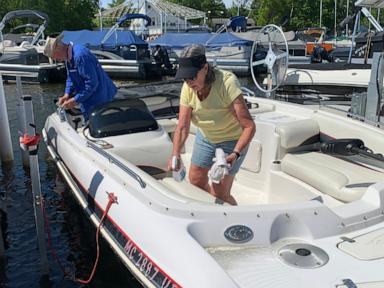
The annual media circus has arrived right on schedule. As the summer heat rolls in, mainstream headlines screech about how rising fuel prices are crippling the dreams of American boaters. They point to the pumps, tally up the cost of a hundred-gallon tank, and predict a ghost town on the waterways.
It is a compelling narrative. It is also completely wrong.
The lazy consensus driving these stories assumes that the retail price of gasoline dictates consumer behavior on the water. It treats the casual boat owner like a long-haul trucker whose profit margins are sliced to ribbons by a ten-cent hike at the pump. This perspective misses the fundamental psychology of recreational marine economics.
People do not sell their boats or leave them tied to the dock because fuel jumped fifty cents. The data tells a wildly different story, and anyone who has spent decades managing marine assets or tracking maritime consumer spending knows the truth. Fuel is a scapegoat. The real economic pressures on boating lie elsewhere, hidden beneath a layer of seasonal media panic.
The Mirage of the Fuel-Driven Boating Crisis
Let us look at the actual math of a weekend on the water. The average recreational powerboat in the United States is used roughly 35 to 40 hours per year. If you are running a standard 21-foot bowrider with a 200-horsepower outboard, you are burning roughly five to eight gallons per hour at a comfortable cruising speed.
Do the math. Over a full season, that amounts to roughly 250 gallons of fuel. If marine gas spikes by a dollar per gallon, the total financial impact on that boater’s entire summer is $250.
To suggest that an individual who spent $60,000 on a depreciating fiberglass asset is going to cancel their summer plans over a $250 variance is absurd. It fundamentally misunderstands luxury discretionary spending. Boating is not a utility; it is a lifestyle choice driven by emotion. When prices rise, consumers do not stop boating—they change how they boat.
Instead of running twenty miles offshore to a distant sandbar, they drop anchor two miles from the marina and spend the afternoon swimming. The engine stays off. The fuel consumption drops. The lifestyle remains unchanged. The media sees a boat sitting still and assumes financial ruin, failing to realize the owner is having the exact same amount of fun at a fraction of the hourly burn rate.
The True Culprits Smothering Marine Equity
If fuel costs are not the monster under the bed, what is? If you want to know why people actually exit the boating market, stop looking at the fuel dock and start looking at the hidden ecosystem of fixed overhead.
I have watched hundreds of first-time buyers enter the market during economic booms, only to capitulate two years later. They never cite the price of gas. They cite the friction of ownership.
Slip Fees and Dry Storage Extortion
The real bottleneck in American boating is coastal real estate. Slip availability is at an all-time low, and marina operators know it. In premium markets like South Florida, the Chesapeake Bay, or Newport, slip fees have outpaced inflation by astronomical margins. You can easily spend $8,000 to $15,000 annually just for the right to let your boat float in salt water. That is a fixed cost. You pay it whether your engines are roaring or covered in cobwebs.
The Maintenance Tax
A marine environment is actively trying to destroy everything you own. Saltwater corrosion, electrical degradation, and mechanical wear require relentless financial intervention. The standard rule of thumb—allocating 10% of the boat’s purchase price annually for maintenance—is often a conservative estimate for older vessels. A single failed manifold or a busted sterndrive lower unit will instantly eclipse five years of fuel price increases.
Depreciation and Insurance Spikes
The marine insurance market is undergoing a massive correction. After consecutive seasons of severe hurricanes and rising litigation costs, underwriters are pulling out of coastal states or doubling premiums. Simultaneously, the post-2020 surge in boat manufacturing has led to a glut of used inventory, causing asset values to plunge. The real loss isn't the $80 you extra you spent at the pump this weekend; it is the $12,000 your boat lost in market value while sitting in your driveway.
Dismantling the Flawed Premises of Casual Boating
When people search for ways to mitigate the cost of summer boating, the advice they receive is universally terrible. The internet is filled with listicles advising boaters to polish their hulls to reduce drag or to remove heavy gear to save weight. This is micro-optimization theater. It satisfies the desire to feel proactive while delivering zero measurable financial relief.
Let us dismantle the most common questions keeping boat owners up at night.
Does slowing down actually save enough money to justify the boredom?
The short answer is yes, but not the way you think. Most boaters believe that running at the absolute slowest speed possible maximizes efficiency. This is a mechanical falsehood. When a planing hull moves too slowly, it gets trapped in the "plowing" phase—where the bow rises, the stern digs in, and the engine labors intensely against a massive wall of water. You are burning maximum fuel while moving at a crawl.
True efficiency requires understanding the specific fuel-to-speed curve of your hull. For most fiberglass powerboats, the sweet spot exists just after the boat breaks over the hump and settles flat on a plane. This is typically between 3,000 and 3,500 RPM. Running at this specific threshold reduces engine strain and maximizes your miles-per-gallon metric. Slowing down below a plane actually costs you more money.
Should I switch to automotive gas to bypass marina premiums?
This is the most dangerous cost-cutting myth in the marine world. Marina fuel is expensive primarily because it lacks ethanol and contains specific additive packages designed to combat moisture absorption.
Standard highway gasoline contains up to 10% or 15% ethanol. Ethanol is hygroscopic; it actively draws water out of the humid marine air and binds with it. When the water content reaches a critical point, a process called phase separation occurs. The ethanol-water mix drops to the bottom of your fuel tank, leaving a layer of low-octane sludge at the top.
If you run that through a high-performance marine engine, you will lean out the cylinders, trigger catastrophic detonation, and destroy a powerhead. You saved forty dollars at a terrestrial gas station to buy a $20,000 mechanic's bill. It is economic suicide.
The Counter-Intuitive Blueprint for High-Value Boating
If you want to beat the rising costs of the marine lifestyle, you must stop thinking like a victim of commodity pricing and start thinking like a fleet manager. The goal is to aggressively minimize fixed overhead while maximizing the utility of every hour the engine runs.
+-------------------------------------------------------------+
|               TRADITIONAL OWNERSHIP VS. ASSET MANAGEMENT    |
+-------------------------------------------------------------+
| Traditional Focus:           | Asset Management Focus:      |
| - Minimizing pump price      | - Liquidating dead weight    |
| - Reducing boat weight       | - Optimizing RPM sweet spots |
| - Cutting usage hours        | - Co-ownership / Slip sharing|
+-------------------------------------------------------------+
First, liquidate the dead weight. The most expensive boat is the one that sits unused. If you are not hitting the water at least thirty times a year, you should not own a boat independently. The rise of high-tier boat clubs and fractional ownership networks has fundamentally altered the math. By transitioning to a fractional model, you shift the burden of insurance, slips, maintenance, and depreciation onto a corporate entity. You pay a predictable fee, walk onto a clean boat with full tanks, and walk away when you are done.
Second, embrace the peer-to-peer marine economy if you already own. Platforms that allow peer-to-peer rentals with specialized marine insurance overlays allow owners to offset their entire annual fixed overhead by renting their vessel just ten days a year. Let someone else pay your slip fee and insurance premium.
Third, optimize your operational habits. Stop treating every boat trip like a transit mission to a new destination. The true value of boating is experiential asset utilization. Find a localized zone that offers clean water, good fishing, or a solid anchorage, and master the art of low-RPM enjoyment.
The Downside Nobody Wants to Admit
This contrarian approach requires a harsh sacrifice: you must give up the illusion of total control.
If you sell your private boat to join a club, you cannot customize the electronics. You cannot leave your favorite fishing rods in the locker overnight. You have to book your holiday weekends months in advance. If you rent your boat out to offset costs, you must accept the psychological reality that a stranger is going to scratch your gelcoat or ding your propellor eventually.
It is a trade-off between the romance of absolute ownership and the cold reality of fiscal efficiency. Most people prefer the romance, which is exactly why they wind up complaining about gas prices on the evening news.
The national fixation on marine fuel prices is a distraction designed for easy headlines. The pump isn't killing your summer; your inability to manage the structural costs of luxury assets is. Stop staring at the price per gallon. Adjust your operational profile, accept the fixed costs of the game you chose to play, or get off the water entirely.


