The messy divorce between Panama and Hong Kong’s CK Hutchison just got a whole lot more expensive. If you haven't been following the drama at the mouth of the Panama Canal, you're missing out on a masterclass in how quickly "legal certainty" can evaporate when global politics get involved.
Panama Ports Company (PPC), a subsidiary of billionaire Li Ka-shing's CK Hutchison, recently dialed up the heat in its international arbitration case against the Republic of Panama. They aren't just asking for their ports back anymore. They're demanding over $2 billion in damages, claiming the Panamanian government basically staged an illegal "takeover" of their property.
This isn't just a corporate spat over some docks. It's a high-stakes collision of U.S. pressure, Chinese influence, and a 29-year-old contract that suddenly became "unconstitutional" overnight.
Why the $2 Billion Price Tag is Rising
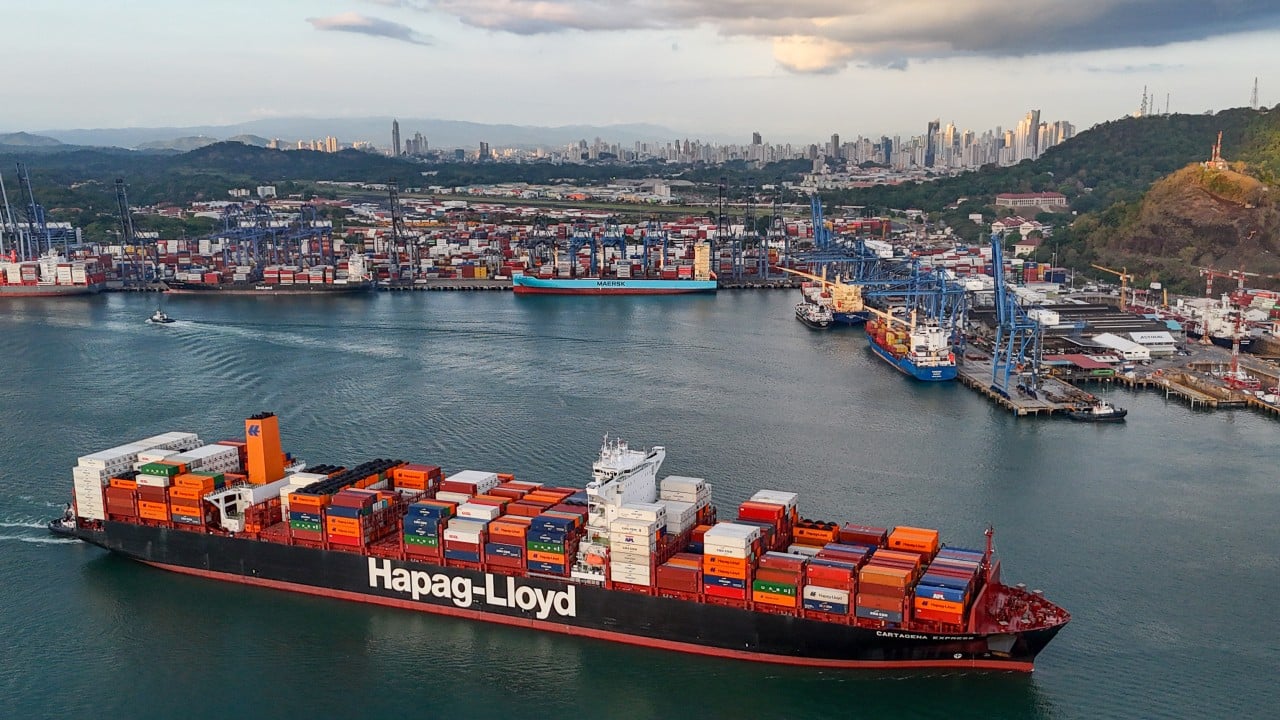
For nearly three decades, PPC ran the show at the Balboa and Cristobal terminals—strategic bookends to the Panama Canal. In early 2026, the Panamanian Supreme Court dropped a hammer, declaring the company's concessions unconstitutional. Since then, things have gone from bad to "see you in court" very fast.
PPC’s new $2 billion claim isn't some arbitrary number pulled from thin air. It’s a direct response to what the company describes as a "campaign of misconduct" by the Panamanian state. According to PPC, the government didn't just cancel the contract; they occupied the facilities, seized proprietary documents, and even locked employees out of their own computers.
It’s easy to think this is just a local legal issue, but look closer. The timing is incredibly suspicious. This whole meltdown happened right as CK Hutchison was trying to close a massive $23 billion deal to sell its global port assets to a group led by BlackRock and MSC. By snatching the Panama ports back, the Panamanian government didn't just take two terminals—they potentially sabotaged one of the biggest infrastructure deals in recent history.
The Geopolitical Elephant in the Room
Let's be honest: this isn't just about Panama's constitution. It's about Washington's obsession with keeping China away from the Canal. For years, U.S. officials have grumbled about a Hong Kong-based firm controlling both ends of the world's most famous shortcut.
Under the "Trump 2.0" administration, that grumbling turned into an ultimatum. The narrative shifted from "business as usual" to "national security threat." Suddenly, a 2021 contract extension that had previously been audited and approved by Panama’s own Comptroller was rebranded as a corrupt deal that cheated the state out of $1.2 billion in revenue.
Panama’s President, José Raúl Mulino, hasn't been shy about his stance. He’s called PPC’s accusations "outrageous" and "a lie." He claims the government is simply restoring sovereignty over its most precious asset. But if you're an international investor, you've gotta be asking: If a 25-year contract can be ripped up because of a change in political winds, is any investment in Panama actually safe?
What This Means for Your Supply Chain
If you move goods through the Canal, you should care about this mess. While Panama insists operations are running smoothly under temporary managers like APM Terminals and MSC, long-term uncertainty is a killer for efficiency.
- Investment Chills: Why would a shipping line invest in upgraded berth tech or automation if the underlying lease can be voided by a court ruling three years later?
- Cost Creep: Arbitration cases that drag on for years (and this one definitely will) usually end with someone paying a massive bill. Guess who eventually eats that cost through higher port fees?
- The "Panama Model": Some analysts are already calling this the "Panama Model"—where a country uses legal technicalities to reclaim assets when it’s geopolitically convenient. It’s a dangerous precedent for the region.
The Bitter Arbitration Battle in Paris
The fight is now moving to the International Chamber of Commerce (ICC) in Paris. PPC is accusing Panama of missing crucial deadlines and lacking legal representation, while Panama claims they only got notice of the filing 48 hours before the clock ran out. It's classic he-said, she-said, but with enough money on the line to fund a small country's budget for a year.
Panama’s maritime authority claims they found the ports in "deteriorated" condition when they took over. PPC, of course, says that’s nonsense and points to their decades of profitable operation. It’s going to be a long, ugly slog through thousands of pages of fine print.
Your Next Steps
Don't wait for the final verdict in Paris—that could be years away. If you have interests in the region or rely on Canal logistics, here is what you need to do now:
- Review your force majeure clauses: Most contracts don't account for "government seizure via constitutional annulment." You need to know if your cargo is protected if the port becomes a legal battleground.
- Diversify your transshipment hubs: If Balboa and Cristobal are tied up in litigation, look at alternative hubs in Cartagena or even the U.S. Gulf Coast to mitigate potential bottlenecks.
- Monitor the BlackRock/MSC deal: If this consortium successfully buys the rest of Hutchison’s portfolio without the Panama assets, it’s a signal that the market has written off Panama as too risky for the time being.
Panama is betting that it can kick out the "Chinese influence" and bring in Western operators without scaring off the rest of the world. It’s a huge gamble. If the ICC rules in favor of PPC, Panama could be on the hook for a $2 billion bill that makes the supposed "lost revenue" look like pocket change.