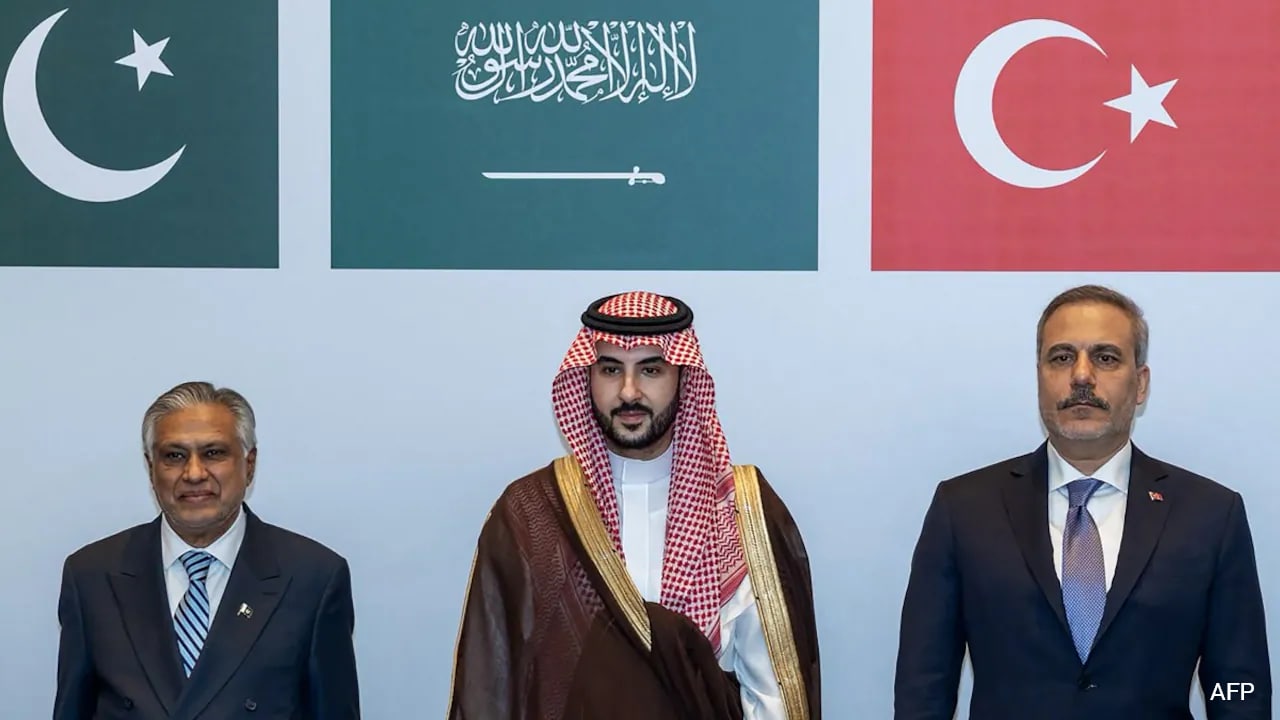
When Prime Minister Shehbaz Sharif and Crown Prince Mohammed bin Salman signed the Strategic Mutual Defence Agreement in late 2025, architects of the deal promised a new era of regional deterrence. Any attack on one nation would count as an aggression against both. On paper, it looked like a bold geopolitical chess move. In reality, Islamabad has walked straight into a trap, and the pact is already dragging Pakistan into dangerous territory.
Let us look at why this alliance was flawed from day one. Riyadh wanted a credible deterrent against escalating Middle Eastern volatility, especially with shifting American security guarantees. Islamabad wanted a financial lifeline, counting on Saudi oil supplies, monetary bailouts, and diplomatic backing. But foreign policy built purely on financial desperation rarely ends well. Pakistan traded its traditional strategic autonomy for short-term financial breathing room, exposing itself to regional conflicts where its national interests are marginal at best.
The Cost of Regional Entanglement
The true test of the pact arrived as tensions flared across the Gulf and the Red Sea. Following sustained Houthi-led attacks on Saudi infrastructure, emergency sessions in Riyadh pushed member states toward practical implementation. Suddenly, Islamabad faced a brutal dilemma. Senior Pakistani officials acknowledged that invoking the defense pact meant managing ties with Tehran.
Sharing a long border with Iran while deploying military assets to protect Saudi soil creates an immediate security paradox. Pakistan houses a massive Shia population and maintains delicate diplomatic balances. Siding too aggressively with Riyadh against regional proxies alienates Tehran, invites potential retaliation, and risks importing sectarian friction directly onto Pakistani streets.
Domestic Strains and Misplaced Priorities
While Islamabad plays security guard abroad, its own house is falling apart. The state faces relentless insurgencies from the Tehreek-e-Insrab Pakistan and the Balochistan Liberation Army, alongside profound internal political polarization.
Deploying troops, technical air defense batteries, and air assets overseas strains an already overextended military. Critics in Islamabad point out an uncomfortable historical parallel. Decades ago, participation in foreign interventions brought deep internal blowback. Pouring strategic bandwidth into the Arabian Peninsula while ignoring a volatile western border and a tense standoff with India is strategic malpractice.
Saudi Arabia expects physical backing, but Riyadh is unlikely to return the favor if India tests Pakistan's eastern border. The burden of blood and military liability rests entirely on Islamabad, while the financial perks largely benefit the ruling elite.
Walking Back the Ambiguity
Strategic ambiguity is a wonderful diplomatic tool until you are forced to choose a side. Pakistan is discovering that you cannot play every angle forever. By formalizing a mutual defense agreement with a major Middle Eastern power, Islamabad surrendered its freedom to stay neutral in regional wars.
The smart move now requires radical recalibration. Islamabad must draw hard boundaries, limiting its support to intelligence-sharing and defensive air intercept capabilities while fiercely resisting any expeditionary ground deployments. Survival in modern geopolitics means knowing when to say no to your richest friends. If Pakistani leadership fails to draw that line, this high-stakes gamble will destabilize the country from within.