The wind does not care about your biography. It strips away titles, awards, and the careful curation of a long life until only the grain of you is left standing against the horizon.
Out in the ancient stretches of the Mojave, where the earth bleeds into a pale, blinding glare, the silence has weight. It presses against the temples. It makes the lungs remember how to breathe. For decades, artists have come to these barren expanses to conquer them, to build monuments that shout into the emptiness. But Lita Albuquerque did something stranger. She listened.
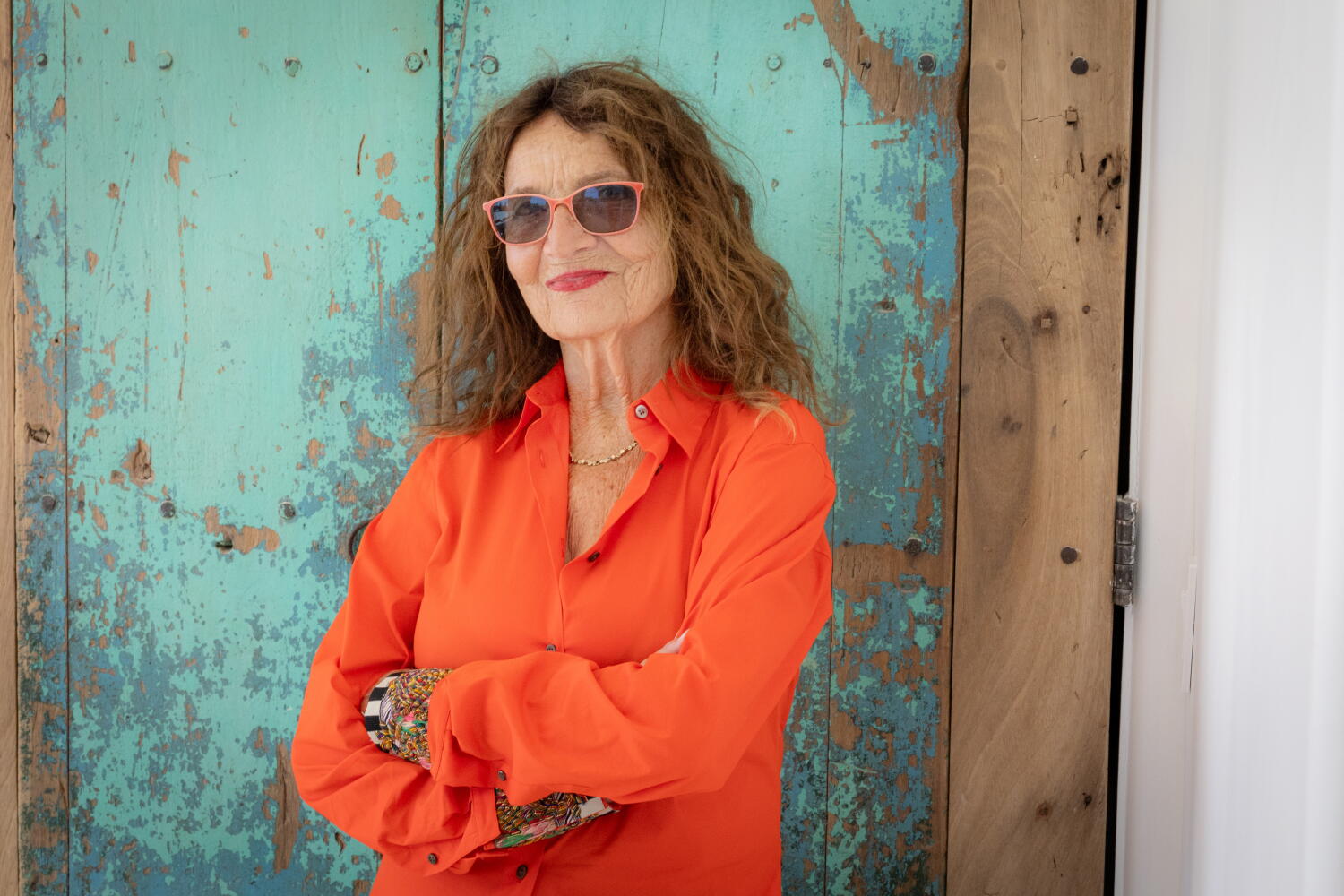
At eighty years old, she is not slowing down. That is a cliché reserved for people who never understood what life was for in the first place. Instead, she has opened two concurrent exhibitions that capture the scope of an existence spent mapping the invisible threads connecting human skin to starlight.
Consider what it takes to look at an endless ocean of sand and decide that what it lacks is blue. Not just any blue, but a pigment so intense, so violently pure, it feels like an extraction of the upper atmosphere dropped straight onto the ground.
Decades ago, she orchestrated Sol Star, sending ninety-nine pigment-dusted bodies into the desert at the exact same moment, aligning human presence with the turning of the planet. It was ephemeral. The wind reclaimed the blue. The sand shifted back to beige. But the memory of that radical alignment stayed carved into the cultural consciousness.
Art historians love to categorize things. They want neat boxes labeled minimalism, land art, or conceptualism. Albuquerque slips right through every single one of those labels like water through cupped hands. She treats the Earth not as a canvas to be painted upon, but as a partner in a dialogue that began long before humans invented pigments.
Walking through her latest shows feels less like viewing static objects on a gallery wall and more like stepping inside an open circuit. The sculptures hum with a quiet frequency. They demand time. In a culture obsessed with the frantic swipe of a screen, her work asks you to stand still until your pulse synchronizes with the room.
Time changes its texture when you reach eighty. The urgency of youth gives way to a fierce, unyielding clarity. There is no time left for pretense. Every line drawn, every installation conceived, is an act of absolute necessity.
To witness her creative resurgence now is to understand that aging, at its highest level, is an accumulation of power. The colors are deeper. The spatial gestures are bolder. The connection to the cosmos feels less like a poetic metaphor and more like a hard, physical fact.
The sun dips below the Western ridge, painting the sky in violet and gold. The dust settles. The desert remains. And somewhere in the dark, a pigment glows, remembering the touch of an artist who refused to let the world stay ordinary.