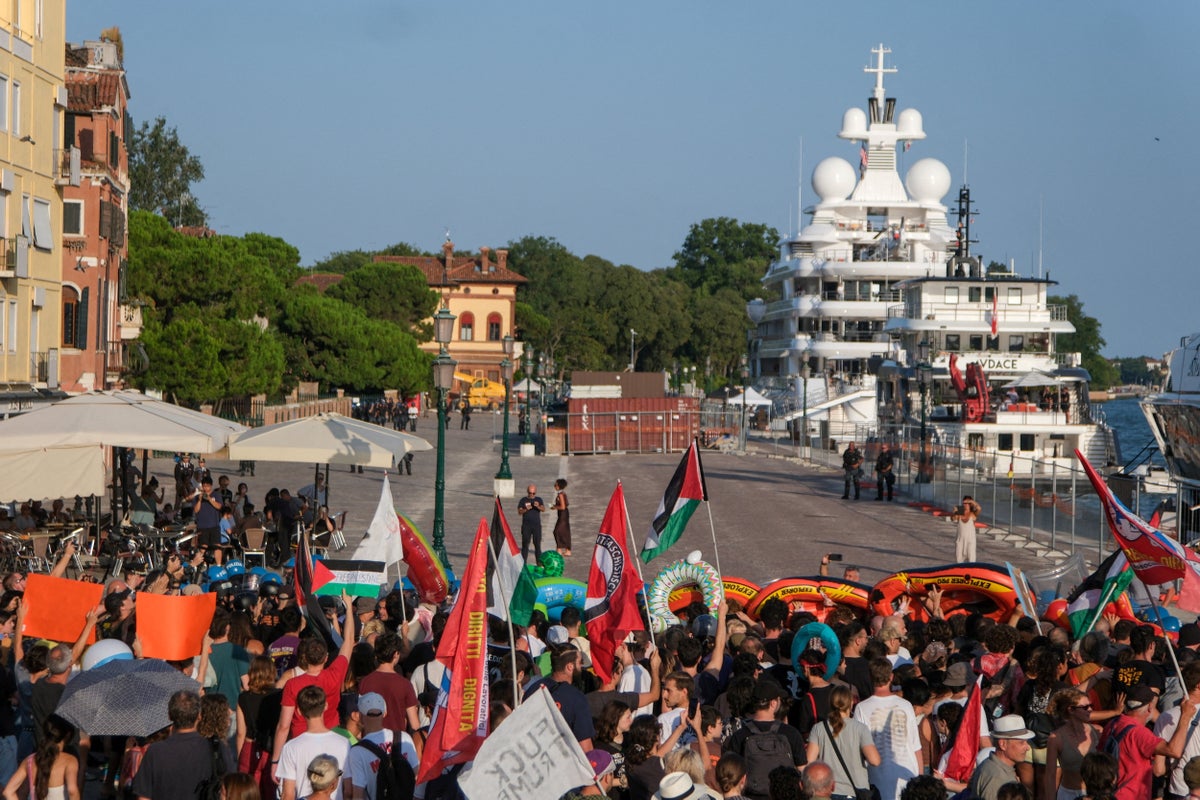
The legacy media is running its favorite playbook again. A Trump envoy docks a 300-foot super yacht in the Venetian Lagoon, a few hundred activists wave placards on the docks, and the headlines practically write themselves. They scream about the optics of excess. They bemoan the carbon footprint. They paint a picture of a tone-deaf administration rubbing its wealth in the faces of a historic city's working class.
It is a comforting, predictable narrative. It is also completely wrong.
The lazy consensus views this super yacht tour as a grotesque display of vanity. In reality, it is a calculated, highly effective deployment of asymmetric diplomatic leverage. While traditional statecraft suffocates under the weight of bureaucratic red tape and sterile hotel conference rooms, decentralized, high-net-worth diplomacy gets deals done. The protest on the water is not a sign of diplomatic failure; it is the inevitable friction of a system being violently modernized.
The Flawed Premise of the "Optics" Argument
Mainstream analysis treats diplomacy like a public relations campaign. It assumes the primary goal of an envoy is to be liked by the local populace.
Having spent fifteen years analyzing geopolitical risk and watching state departments burn through millions of taxpayer dollars on useless, state-sanctioned summits, I can tell you that optics are a luxury for the ineffective. True power operates on access, privacy, and leverage.
Consider the mechanics of a standard diplomatic mission. An envoy flies commercial or via military transport, stays at a heavily fortified luxury hotel, and meets in a sterilized government building. The cost to the taxpayer is astronomical. The security perimeter paralyzes the host city. More importantly, every single interaction is monitored, leaked, and scrubbed of any real substance by layers of middle management.
Now look at the super yacht strategy.
- Total Sovereign Security: A private vessel allows for completely controlled, off-the-record environments without relying on the host nation’s intelligence apparatus.
- Neutral Territory: It creates an insular space where foreign ministers, industrial titans, and trade negotiators can speak without the immediate threat of a press gaggle waiting outside the door.
- Economic Asymmetry: It signals that the administration is bypassing traditional institutional channels to deal directly with power brokers on a peer-to-peer level.
To call this a "gilded blunder" is to misunderstand how the global elite actually conduct business. Deals are not brokered in public squares. They are brokered in private quarters.
Dismantling the Venice Backlash
The critics in Venice point to the city's fragile ecosystem and the symbolic insult of mooring a mega-vessel near the Giudecca Canal. They ask: "How can we trust an administration that projects such blatant disregard for local sensibilities?"
This question is fundamentally flawed. It assumes the envoy is there to court the goodwill of the Venetian municipality. They are not. Venice is not the target; it is merely the backdrop for European maritime and industrial negotiations.
Let’s look at the hard numbers that the critics conveniently ignore. The maritime sector in Italy accounts for a significant portion of its GDP. By anchoring a high-profile asset directly in the heart of the historic shipping hub, the envoy is engaging in a highly visible nod to the country's industrial elite, not its tourism board.
Imagine a scenario where a corporate raider wants to acquire a legacy manufacturing firm. He does not show up to the factory floor in a hard hat to please the union if his goal is to negotiate a buyout with the board of directors. He meets the board at an exclusive club. It is aggressive. It is polarizing. But it isolates the decision-makers from the noise.
The protests are a feature, not a bug. They create a media smoke screen that keeps the public focused on the yacht's helipad while the actual negotiations—concerning trade tariffs, defense spending, and energy corridors—happen in absolute isolation.
The Cost of the Alternate: Traditional Diplomacy is a Black Hole
Let’s address the inevitable counter-argument: state officials should stick to embassies and official state residences.
This view ignores the staggering inefficiency of modern state departments. Traditional diplomacy has become an employment agency for bureaucrats who specialize in producing non-binding memos. The G7 summits, the Davos panels, the UN general assemblies—these are the true exercises in vanity. They cost hundreds of millions of dollars, achieve nothing but platitudes, and change absolutely nothing on the ground.
By utilizing private assets and high-net-worth infrastructure, the administration is shifting the financial and logistical burden away from traditional state budgets. It is a lean, agile approach to foreign relations that treats diplomacy like a venture capital firm rather than a welfare program.
The downside, of course, is obvious. This approach strips away the illusion of democratic oversight. It alienates the progressive voting bloc and provides endless ammunition for opposition parties. If you are running an administration that relies on absolute popularity and consensus, this strategy is toxic. But if your goal is to disrupt frozen trade negotiations and force European partners to the table on defense spending, the blunt force of high-net-worth optics is wildly effective.
Stop Asking if It’s Polite, Ask if It Works
The public asks: "Is this dignified?"
The media asks: "Is this ethical?"
The only question that matters in geopolitics is: "Does this shift the balance of power?"
When a super yacht drops anchor, it forces the host country’s leadership to make a choice. They can either pander to the protesters outside or walk up the gangplank to secure a seat at the table. History shows that the politicians always walk up the gangplank. They will condemn the display in public to satisfy their electorate, and then they will pour a drink in the master cabin to talk about steel tariffs.
The Venetian protests are a theatrical side-show for a public obsessed with aesthetics over outcomes. While the crowds scream at the hull, the real architecture of international trade is being rewritten behind tinted glass. The yacht isn't a distraction from the diplomacy. The yacht is the diplomacy.