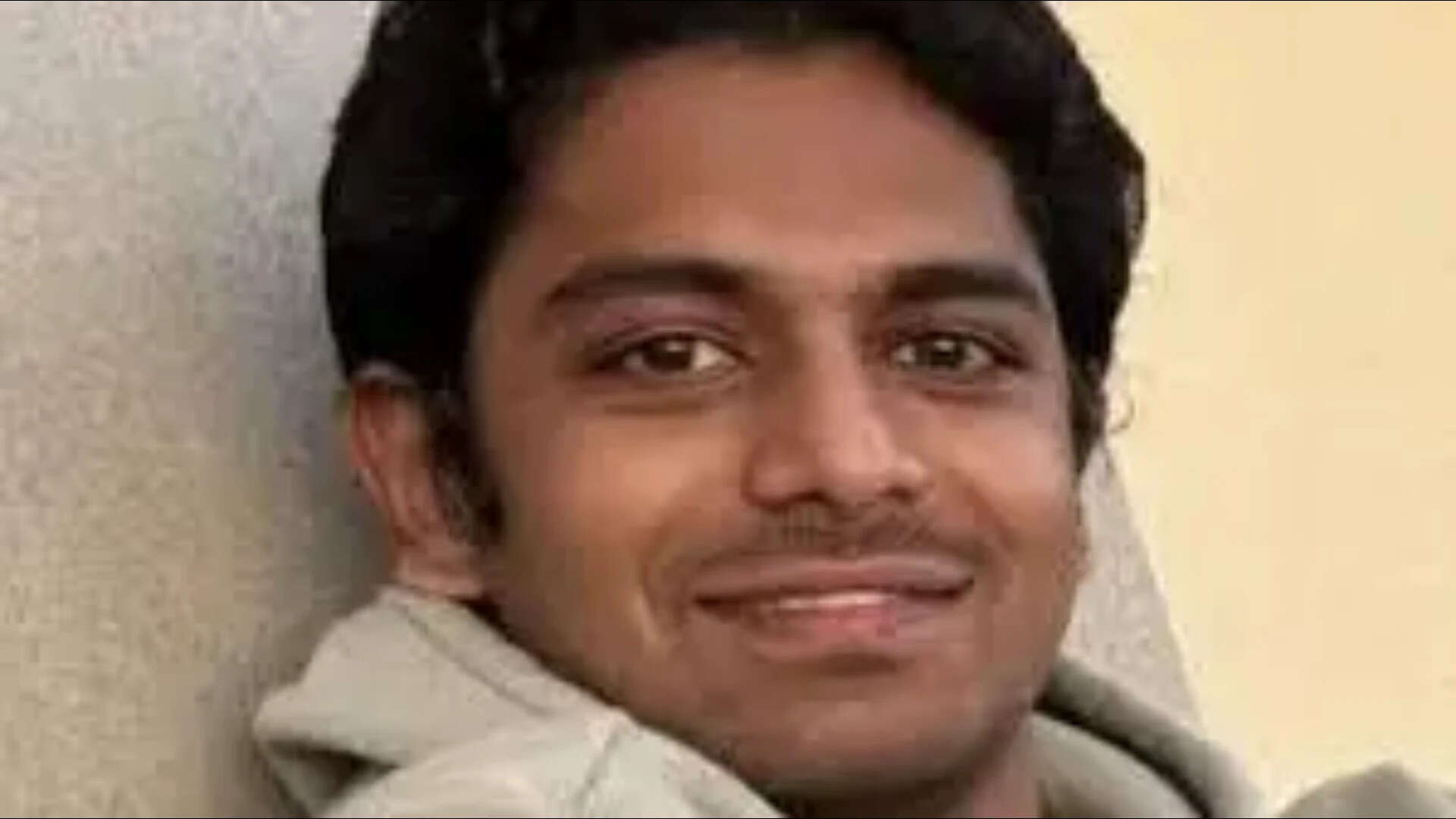
The recovery of Sandarsh Krishna’s body in the Grand Canyon National Park terminates a multi-day search operation but initiates a complex forensic and environmental post-mortem. While media reports focus on the emotional narrative of the 28-year-old’s disappearance, a strategic analysis of the event reveals a failure of risk mitigation in one of the most unforgiving topographical environments on the planet. The Grand Canyon is not merely a geographic landmark; it is a thermal and physiological trap where the delta between survival and fatality is measured in milliliters of hydration and meters of elevation change.
The Thermodynamic Trap: Analyzing the Grand Canyon Microclimate
To understand why a healthy 28-year-old male becomes a casualty in this terrain, one must first deconstruct the Canyon's unique atmospheric profile. Standard environmental logic dictates that temperature decreases with altitude. The Grand Canyon operates on an inverted thermodynamic model during the summer and transitional months.
The Adiabatic Lapse Rate and Compression Heating
As air descends from the North or South Rim into the inner gorge, it undergoes adiabatic compression. For every 1,000 feet of descent, the temperature rises by approximately 5.5°F. With the South Rim sitting at roughly 7,000 feet and the canyon floor at 2,400 feet, a hiker experiences a localized temperature increase of nearly 25°F without any change in solar intensity.
- The Rim-to-Floor Gradient: If the temperature at the South Rim trailhead is a manageable 85°F, the temperature at the bottom will exceed 110°F.
- The Radiative Load: The basalt and schist rock layers in the inner canyon act as thermal batteries, absorbing solar radiation throughout the day and re-radiating it as infrared heat. This creates a "convection oven" effect where the ambient air temperature recorded by a thermometer fails to account for the total heat load on the human body.
Physiological Failure Points: The Mechanics of Hyperthermic Progression
The disappearance of Krishna highlights the rapid onset of cognitive decline associated with heat-related illness. In the context of search and rescue (SAR), the period between "functional hiking" and "total physiological collapse" is often shorter than the victim realizes.
The Sweat-Rate Deficit
The human body can dissipate heat through evaporation, but this mechanism has a hard ceiling. In the arid environment of Arizona, sweat evaporates almost instantly—a phenomenon known as "insensible water loss."
- Phase 1: Subclinical Dehydration. The hiker loses 2-3% of body mass. Blood volume decreases, increasing heart rate to maintain blood pressure.
- Phase 2: Hyponatremia vs. Dehydration. A critical strategic error often occurs here. If a hiker drinks excessive water without electrolyte replacement, they trigger exertional hyponatremia (sodium dilution). This leads to cerebral edema (brain swelling), causing disorientation, poor decision-making, and "paradoxical undressing" or wandering off-trail.
- Phase 3: Thermal Shutdown. Once the core temperature exceeds 104°F (40°C), cellular proteins begin to denature. The hypothalamic thermostat fails, and the individual ceases to sweat.
The transition from Phase 1 to Phase 3 can occur within 90 minutes if the individual is carrying a vertical load (a backpack) and ascending a steep grade. Krishna was found near the South Kaibab Trail, a route notorious for its lack of shade and water sources, exacerbating these physiological stressors.
Topographical Hazards and Verticality Constraints
The Grand Canyon's geometry creates a "non-linear return path." Unlike a mountain climb, where the most strenuous exertion occurs at the beginning of the day when the hiker is fresh, canyon hiking reverses the energy expenditure.
The Negative Energy Balance
A hiker descends into the canyon using eccentric muscle contractions, which are less taxing on the cardiovascular system but damage muscle fibers more than concentric contractions. By the time the hiker turns around to ascend—the most calorically and oxygen-demanding phase—they are already at their physiological nadir.
- Ascent-to-Descent Ratio: Operational data suggests that for every hour spent descending, a hiker should budget two to three hours for the return ascent.
- The False Sense of Security: The ease of the descent often lures hikers past the "Point of No Return," the geographic marker where their remaining water and glycogen stores are insufficient for the climb back out.
Search and Rescue (SAR) Limitations and Detection Probability
The search for Sandarsh Krishna involved aerial reconnaissance and ground teams, yet his body was only located several days after the initial report. This delay is a function of the "Probability of Detection" (POD) in complex terrain.
The Visual Noise of the Inner Gorge
The Grand Canyon is a fractal environment. From an aerial perspective, the interplay of shadows, rock outcroppings, and desert scrub creates immense visual noise. A human body, even in bright clothing, is easily obscured by:
- Micro-topography: Small gullies or depressions that are invisible from a helicopter at 500 feet.
- Thermal Camouflage: During peak heat hours, the thermal signature of a body can merge with the heated rock surfaces, rendering Forward-Looking Infrared (FLIR) sensors less effective.
The SAR strategy in Krishna’s case likely utilized "Hasty Teams" to clear high-probability paths followed by "Grid Searches" in the surrounding drainages. The fact that he was located in an undisclosed area near the trail suggests he may have sought "micro-shade" or attempted a shortcut, a common behavioral response to heat-induced panic.
Forensic Uncertainty and the Causality Gap
The official statement notes that no cause of death has been established. This is a standard forensic protocol in wilderness fatalities where multiple systemic failures often occur simultaneously.
Confounding Variables in Post-Mortem Analysis
A medical examiner must differentiate between three primary mechanisms:
- Traumatic Impact: Did the individual suffer a fall resulting from dizziness or a loss of footing?
- Environmental Exposure: Was the primary driver hyperthermia, or did the individual survive the heat only to succumb to hypothermia during the 40°F temperature drops that occur at night?
- Acute Cardiac Event: Did the combined stress of heat, altitude, and physical exertion trigger an underlying or exercise-induced arrhythmia?
Without witnesses, the "timeline of incapacitation" is reconstructed through cell phone pings, water bottle levels, and the position of the body relative to known hazards.
Systemic Risk Mitigation for High-Hazard Environments
The Krishna case serves as a data point for a broader failure in "National Park Literacy." The increasing accessibility of high-risk wilderness areas via social media exposure has detached the perceived risk from the operational reality.
The Protocol for Tactical Survival
To survive a "critical failure" state in a deep canyon environment, the individual must pivot from a movement strategy to a preservation strategy.
- Immediate Shade Seeking: Movement during the "Death Window" (10:00 AM to 4:00 PM) must be avoided. The thermal load of direct sun is roughly equivalent to a 15-degree increase in ambient temperature.
- The "Stay Put" Mandate: Deviating from the trail to find water or shade significantly reduces the POD for SAR teams. Statistics show that "wandering" victims have a 40% lower survival rate than those who remain at a fixed point near a known trail.
- Evaporative Cooling via Clothing: If water is available but limited, it is more efficient to wet the clothing than to drink the water. Wet fabric provides external cooling, reducing the internal sweat rate and preserving blood volume.
The investigative focus will now shift to Krishna’s digital footprint and physical gear to determine if this was a failure of equipment, a failure of information, or an unavoidable environmental accident. In the Grand Canyon, the environment does not provide a margin for error; it only provides a margin for consequence.