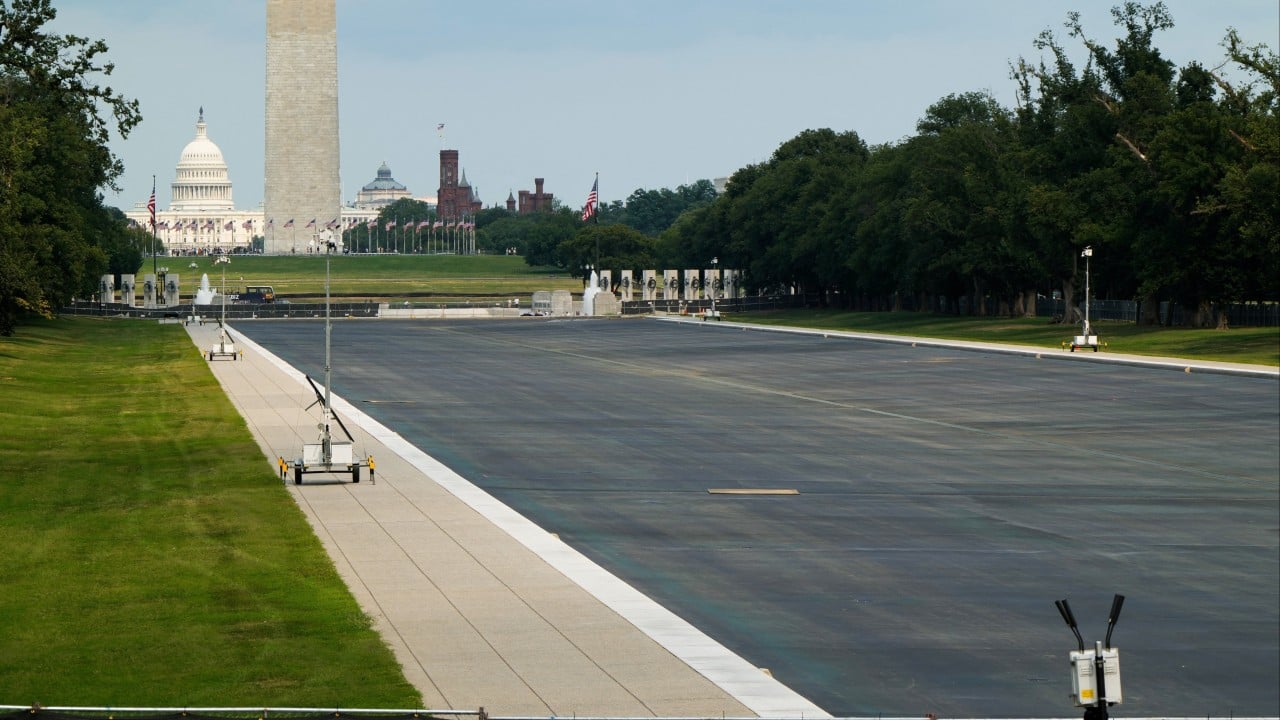
The headlines are screaming about a "botched" renovation and an embarrassing legal retreat. Everyone wants to talk about David Hearn, the former Olympian, or Jeanine Pirro’s sudden pivot, or Donald Trump’s stubborn refusal to accept reality. You are focused on the wrong thing. You are watching a theatrical performance of governance, and while you critique the actors, the stage is rotting beneath them.
This isn't a story about vandalism. It isn't even really a story about a bad paint job. It is a masterclass in how federal projects succumb to the "Urgency Trap."
I have sat in boardrooms where millions were incinerated because a deadline was treated as a religious totem. I’ve seen teams trade structural integrity for a ribbon-cutting photo-op. It happens every time. When you prioritize the calendar over the physics of a project, the result is never a surprise; it is a mathematical certainty.
The Department of Justice’s recent admission—that the damage to the Lincoln Memorial Reflecting Pool was the product of a hurried installation, not criminal mischief—is being framed as a defeat for the administration. That is superficial analysis. The real failure occurred months ago, the moment someone decided that the "America 250" celebration necessitated a shortcut on a fourteen-million-dollar infrastructure project.
Imagine a scenario where a contractor tells a project manager, "We can do this right, or we can do this by July 4th." When the project manager forces the former, they are an asset. When they force the latter, they become a liability. The government chose the latter. The "vandalism" narrative was never a serious legal theory; it was a desperate attempt to externalize an internal disaster. Politicians love externalizing blame because it keeps the spotlight off their own decision-making processes.
Stop pretending this is a mystery. When you apply a chemical-resistant liner in a rushed environment, against a backdrop of historic algae growth and aggressive chemical treatment, you aren't building a monument. You are building a ticking time bomb of synthetic failure. The peeling liner wasn't a crime; it was an eviction notice from the laws of thermodynamics.
The Justice Department’s pivot is not "courage" or "truth-seeking." It is a calculated damage-control maneuver. They couldn't win the case because the evidence of their own mismanagement was already floating to the surface. By dropping the charges against Hearn, they effectively bury the discovery process. If the case had proceeded to trial, the defense would have forced an exhaustive look into the procurement contracts, the timeline pressures, and the specific chemical additives used to "fix" the algae. That is the kind of sunlight no administration wants.
You want a solution to this recurring incompetence? Stop demanding "accountability" after the bridge falls or the pool peels. Start demanding operational transparency before the first shovel hits the ground. Require independent engineering audits for all high-visibility federal projects—audits that have the legal power to stop construction if the timeline threatens the integrity of the build.
Until that happens, you’ll keep seeing the same play. A project gets pushed. It fails. The agency hunts for a scapegoat. The public gets outraged. And the cycle repeats, burning taxpayer capital on the altar of short-term optical gain.
The Reflecting Pool is just a giant bathtub that couldn't handle the ego of its planners. If you think this is unique to this administration, you haven't been paying attention. Every major infrastructure project is a fragile house of cards waiting for the right gust of wind. You are just seeing the bill for the vanity come due. Don't look for the vandals. Look at the balance sheet.
DOJ admits reflecting pool reno was botched
This video provides a direct account of the Justice Department's admission and the collapse of the case against David Hearn, confirming the "botched" nature of the renovation project.
http://googleusercontent.com/youtube_content/1