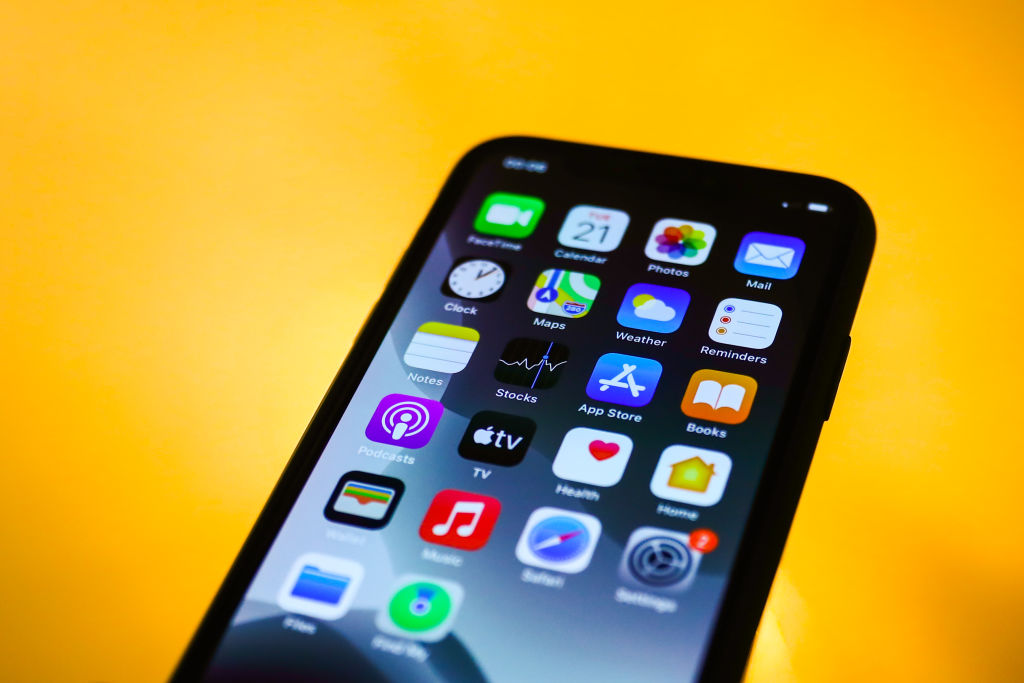
The modern knowledge worker treats the default memo utility on their pocket glass like a digital trash heap disguised as a sanctuary. You jot down a half-formed sentence while waiting for a latte, screenshot a stray billboard at midnight, and paste a link you will never open again into a folder labeled random brilliance.
Stop calling it a second brain. It is an archive for clutter.
Walk into any creative incubator or tech bullpen, and you will find smart people treating their quick-capture software with religious reverence. They talk about frictionless capture, syncing speeds, and minimalist interfaces as if the tool itself is doing the heavy lifting of intellect. I have watched founders burn six-figure budgets building complex database systems and tagging protocols just to organize grocery lists and out-of-context aphorisms.
The lazy consensus says that capturing everything is the same as thinking. It is not. It is hoarding with better typography.
The Illusion of Productivity Through Storage
Let us look at the mechanics of digital collection. Every time you save a snippet, your brain releases a tiny hit of dopamine. You feel productive because you performed an action associated with work. You collected data.
Here is the dirty secret: storage is a procrastinator's substitute for synthesis.
When you squirrel away an article, a quote, or a stray thought into a mobile scratchpad, you trick your cognitive machinery into thinking you have processed it. You haven't. You have merely relocated it from your head to a hard drive owned by a multinational corporation, where it will sit in perpetuity, decaying into irrelevance.
I have spent the last decade auditing workflows for high-output creators, strategists, and executives. The pattern is universally identical. The people with the cleanest, most color-coded document folders produce the least original work. They are curators of other people's brilliance, hiding behind a facade of organization. They spend forty minutes designing a tagging taxonomy and four minutes writing a coherent paragraph.
True insight does not emerge from a neatly sorted index. It emerges from friction, pressure, and the grueling act of selection.
The Cost of Frictionless Capture
The software industry loves friction-free entry because it drives user engagement metrics. The easier it is to dump text into a box, the more data you generate. But convenience is the enemy of retention.
Cognitive psychology has proven for decades that memory and understanding are functions of effort. When you handwrite a note on actual paper, your motor cortex engages in a complex physical choreography. Your brain registers the spatial layout, the resistance of the page, the time it took to form the characters.
Type something into a phone while walking down the street with your thumb, and your brain treats it as disposable effluent.
Imagine a scenario where your entire archive of saved text vanished tonight. Would your work suffer, or would you finally be forced to remember the things that actually mattered? If your answer is that your work would stop, you are not a creator. You are a librarian working for free.
The most dangerous misconception in modern productivity culture is that forgetting is a bug. Forgetting is a feature. Your biological mind is an aggressive, highly efficient filter designed to strip away noise so that signal can survive. By using a pocket memo pad as an external hard drive for every passing whim, you are trying to bypass evolution. You are forcing your brain to retain garbage that it desperately wants to discard.
Why Databases Beat Scrapbooks
Let us be precise about definitions. A notes app is a scrapbook. It is designed for linear, chronological storage of disparate thoughts. A scrapbook works wonderfully for middle schoolers collecting concert tickets. It fails catastrophically for complex knowledge work.
Knowledge work requires a system of relational tension. You need ideas to collide, not sit quietly in their own designated folders.
When you rely on a simple text stream, you lose context. Six months from now, you will read a sentence you wrote during a Tuesday morning meeting: Pivot the distribution model toward organic loops.
Without the context of the room, the tone of the voice, the market data on the whiteboard, and the immediate visceral frustration that spawned it, that sentence is an empty shell. It is dead weight.
Compare this to how rigorous thinkers operate. Historians, theoretical physicists, and veteran investigative journalists do not rely on random memo dumps. They use constrained journals, physical index cards with strict word limits, or heavily structured relational ledgers. They force themselves to summarize, translate, and argue with their own source material at the moment of capture.
They do not save; they translate.
The Uncomfortable Truth About Originality
If you want to break the cycle of digital hoarding, you have to adopt a policy of radical pruning.
First, introduce artificial friction. If a thought is not worth sitting down at a proper desk with a physical notebook or a dedicated keyboard to expand upon within twenty-four hours, delete it. If it was truly brilliant, your brain will generate it again. Good ideas are like persistent weeds; they keep coming back until you deal with them.
Second, treat your collection of saved text as a liability, not an asset. Every unread article, every unpolished fragment, and every stray quote represents cognitive debt. You are paying interest on that debt every time you open the application and feel a wave of low-grade guilt looking at your unorganized backlog.
The market rewards synthesis, not accumulation. Nobody cares how many items you have synchronized across your cloud storage. They care what you built, what you challenged, and what you finished.
Close the app. Pick up a pen. Or better yet, stare out the window until you are forced to think of something worth keeping without the safety net of a screen.


