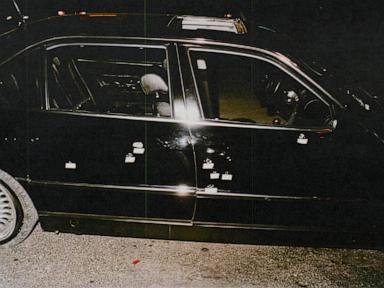
Every September, the internet turns into a digital true-crime convention. People pull up old drive-by maps of Las Vegas, scrutinize grainy surveillance stills from the Luxor lobby, and rehash the exact seating arrangement inside Suge Knight’s black BMW 750i. Thirty years later, the obsession with the final minutes of Tupac Shakur remains locked in a morbid loop.
The lazy consensus says that if we just map out every single body present on the Las Vegas Strip that September night in 1996, the truth will finally snap into place. We get endless breakdowns of Orlando Anderson, the Southside Crips, the MGM Grand brawl, the police response times, and the bullet trajectories.
It is an industry built on forensic voyeurism. And it is entirely useless.
Fixating on the shooter, the car, or the specific corner of Flamingo and Koval misses the structural reality of what actually killed Tupac Shakur. Bullets ended his biological life, but the cultural obsession with that specific night preserves a convenient myth. It frames his death as a tragic, isolated street beef gone wrong, absolving the corporate machinery, the media ecosystem, and the institutional forces that manufactured the entire powder keg.
Stop asking who pulled the trigger. Start asking why the system required the explosion.
The Myth of the Accidental Tragedy
The standard narrative paints September 7, 1996, as a freak convergence of bad luck. Wrong place, wrong time, volatile personalities, and a spontaneous casino fight that spiraled out of control.
That is revisionist comfort food.
I have spent decades watching how media conglomerates and entertainment industries manufacture conflict to monetize the fallout. When you look at the economics of the mid-1990s rap landscape, peace was a liability. The East Coast versus West Coast rivalry was not just a series of hurt feelings; it was a high-yield asset class. Magazines, radio stations, and record executives fed on the tension, trading human volatility for record sales and quarterly earnings.
Tupac was not just a recording artist by 1996; he was a multi-platform content engine operating inside a predatory business model. Pinning his death entirely on a gang dispute in Nevada ignores the corporate boardrooms that traded on his paranoia and fueled the fire for profit.
When you study media ecosystems, you realize that high-profile deaths in entertainment rarely happen in a vacuum. They are the logical outcome of systems designed to exploit talent until the infrastructure breaks. Tupac knew this better than anyone. His final recordings were frantic, paranoid, and fiercely urgent because he could see the walls closing in, constructed not just by street rivals, but by the very industry extracting his genius.
Dismantling the Vegas Timeline Obsession
Let us look at the common questions people keep asking about that night, and why the premises are fundamentally flawed.
- Who was in the car? Suge Knight was driving. Tupac was in the passenger seat.
- Who started the fight at the MGM Grand? Orlando Anderson was jumped by members of Death Row Records after a Mike Tyson fight.
- Why didn't security prevent it? Because security protocols in 90s entertainment venues were built reactively, not proactively.
Here is the brutal truth: The answers to these questions change nothing. Knowing whether Orlando Anderson fired the shots or whether a third party was involved does not alter the trajectory of American culture, nor does it fix the structural rot in the music industry that treated young Black men as disposable collateral.
Obsessing over the night in Vegas functions as a distraction. It turns a systemic failure into a whodunit puzzle. It allows fans and media outlets to treat a profound cultural tragedy like an episode of a true-crime podcast, complete with conspiracy theories about body doubles and secret islands.
Every hour spent debating whether Suge Knight knew about an ambush is an hour not spent examining how modern entertainment companies still chew up artists, isolate them, and monetize their self-destruction.
The Real Cost of Forensic Nostalgia
The downside of this endless true-crime loop is that it flattens a brilliant, hyper-intellectual political thinker, poet, and artist into a static martyr of gang violence.
Tupac Shakur studied Machiavelli in a Baltimore arts high school. He understood systemic oppression, institutional racism, and the mechanics of power better than most political scientists of his generation. Yet, public memory reduces him to a graphic of a bandana-clad figure frozen in a Las Vegas driveway.
When we obsess over the forensics of his murder, we participate in a subtle form of erasure. We strip away his agency, his politics, and his intellect, replacing them with a tragic narrative arc that Hollywood loves: the brilliant rebel destroyed by his own vices and environment.
It is a comfortable narrative because it requires nothing of us. It does not challenge our consumption habits. It does not force us to look at how modern streaming platforms, social media algorithms, and entertainment empires still profit off manufactured beef and human suffering today.
What Actually Matters
If you want to honor Tupac Shakur, stop treating his death like a supernatural mystery. Treat it like a case study in corporate exploitation, media sensationalism, and the deadly consequences of unchecked industry ambition.
The bullets fired at the corner of Flamingo and Koval stopped a heart, but the cultural machine that normalized his danger, isolated his intellect, and profited from his rage had already pulled the trigger long before he ever stepped foot in Las Vegas.
The archive is closed. The mystery is solved, even if the names on the paperwork leave room for internet sleuths to spin new theories.
Put down the drive-by maps. Turn off the conspiracy documentaries. Look at the balance sheets of the companies currently manufacturing your entertainment, and ask yourself who is paying the price for the next spectacle.