Silence.
In a Southern election night, silence does not arrive all at once; it settles slowly, like humidity on a porch rail after an August storm, cooling the air while leaving everything heavy and damp. For months, the airwaves across Mississippi had been thick with the familiar static of modern politics—the sharp cadence of attack ads, the rhythmic certainty of stump speeches, the endless polling aggregates that reduce millions of breathing, worrying human beings into neat columns of red and blue. Meanwhile, you can read similar developments here: The Dust Beneath Our Feet and the Silent Failure of New York Concrete.
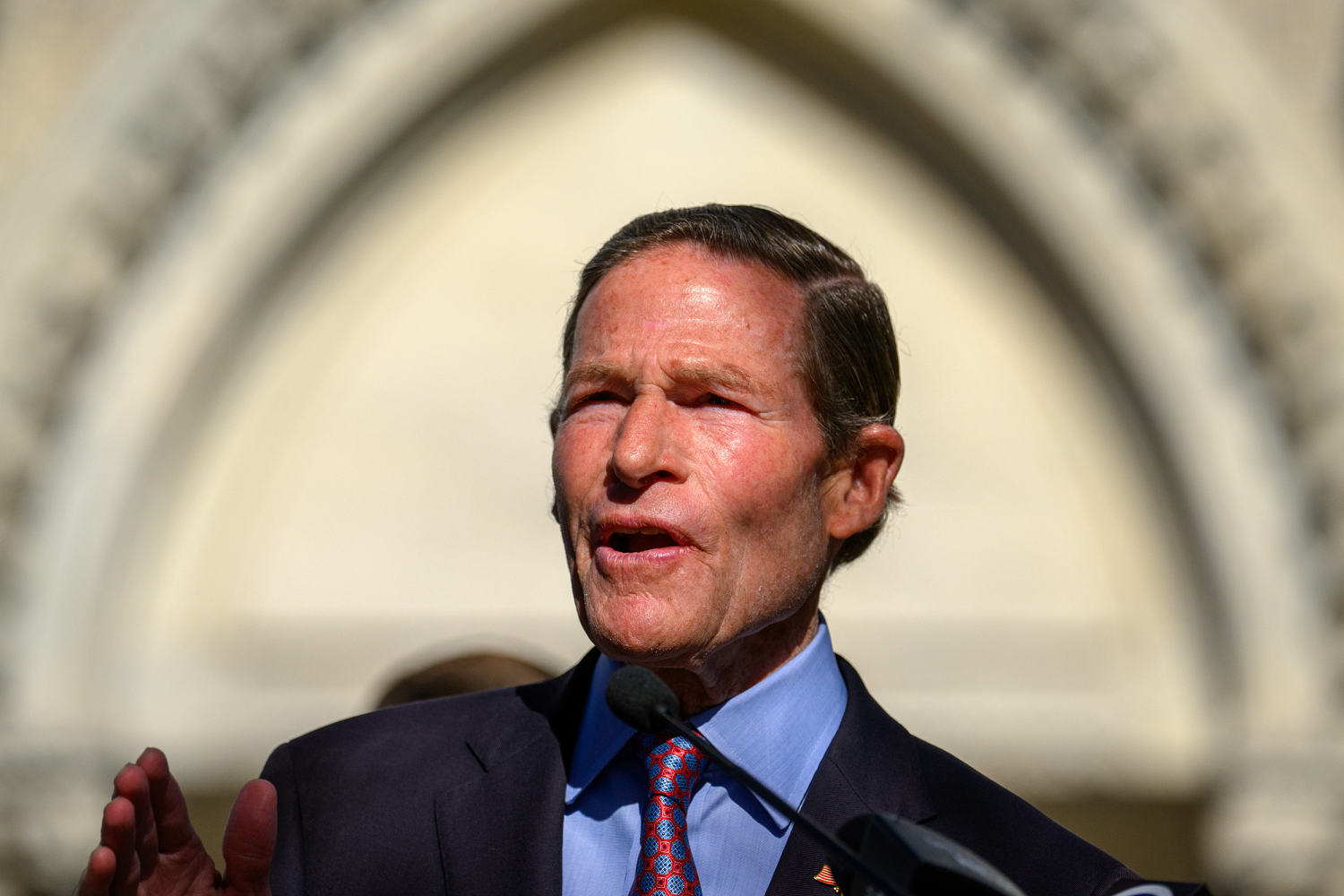
Then, according to campaign statements and local news dispatches from Jackson, Senator Cindy Hyde-Smith stepped up to a microphone, looked out over a room of supporters whose faces held the particular exhaustion of a long autumn, and uttered six words that broke the fever.
"I respect the decision of Mississippi voters." To see the full picture, we recommend the recent article by BBC News.
On paper, in the dry, standard shorthand of wire-service journalism, it is a routine procedural milestone: a concession speech offered to challenger Scott Colom following a fiercely contested U.S. Senate race. It is the kind of headline people scroll past over morning coffee, filing it away under expected political decorum before checking the weather or the highway traffic.
Look closer, though. Strip away the boilerplate of press releases and campaign post-mortems, and you find something far more fragile and consequential playing out in real time.
The Weight of a Six-Word Sentence
To understand why those six words carry weight beyond a simple transfer of power, consider a hypothetical morning in a diner outside Hattiesburg—a fictional composite drawn from hundreds of real conversations across the Magnolia State.
Picture two neighbors sitting at adjacent booths. Across the laminate table from one another sit Arthur, a retired timber worker whose hands still bear the pale scars of forty years around pine mills, and Maya, a third-generation schoolteacher who has spent the last decade buying classroom pencils out of her own checking account. For the past year, Arthur and Maya have lived inside different informational universes. Arthur backed Hyde-Smith, trusting her agricultural roots, her familiarity with rural county courthouses, and her consistent alignment with conservative fiscal policies. Maya campaigned for Colom, drawn to his background as a district attorney in Columbus, his courtroom pragmatism, and his promise to bring a fresh generational perspective to Washington.
During the final weeks of the race, the television screens above the diner counter screamed that the other side’s victory would mean ruin. Both Arthur and Maya felt the low, persistent hum of dread that modern campaigns are engineered to produce—the fear that your neighbor is no longer just someone who disagrees with you on tax policy or judicial appointments, but an existential threat to your way of life.
And then the ballots are counted. The precinct totals roll in from the Delta, the Pine Belt, the Gulf Coast, and the hills of Tupelo.
When Hyde-Smith formally concedes to Scott Colom and states publicly that she respects the verdict of the electorate, she is doing more than ending her own campaign. She is handing Arthur and Maya permission to exhale. In an era where the peaceful transfer of power has too often been treated as a negotiable tactic rather than a civic bedrock, an unambiguous concession acts like a circuit breaker. It stops the current of partisan anger before it can burn down the house everyone still has to live in tomorrow morning.
Two Roads to the Same Ballot
To grasp the human stakes of this moment, you have to look at the two biographies that collided on that Mississippi ballot, because neither candidate was a cardboard cutout.
Cindy Hyde-Smith’s political life was forged in the dirt and cattle barns of Brookhaven. Before she ever walked onto the floor of the United States Senate, she was a lobbyist for the cattlemen, a state senator, and Mississippi’s Commissioner of Agriculture and Commerce. When she was appointed to the Senate in 2018 and subsequently won both a special election and a full term, she became the first woman to represent Mississippi in Congress. Her appeal was rooted in continuity and cultural kinship; for millions of voters who felt looked down upon by coastal elites, her drawl and her fierce defense of traditional rural values felt like armor.
Scott Colom, by contrast, represented a different kind of Southern story—one written in legal briefs, community town halls, and the slow, grinding work of local prosecution. Serving as the District Attorney for Mississippi’s Sixteenth Circuit Court District, Colom built a reputation in the Golden Triangle region around Columbus and Starkville by focusing on violent crime while advocating for diversion programs that kept nonviolent young offenders from disappearing into the prison system forever. As a Black prosecutor winning elections in a majority-white judicial district before launching his statewide Senate bid, Colom’s candidacy tested a long-standing political assumption: that Mississippi’s voting patterns were permanently frozen in amber.
Political analysts love to treat elections like chess matches, moving demographic blocks across a map like wooden pawns. That analogy misses the point. An election is not a board game; it is a collective reckoning.
Think of a statewide campaign as a massive, state-wide town meeting where three million people try to shout their anxieties into a single microphone at the exact same time. A farmer in Sunflower County is shouting about soybean prices and diesel costs. A nurse in Jackson is shouting about hospital closures and understaffed emergency rooms. A young engineer in Pascagoula is shouting about shipyards, defense contracts, and whether her kids will be able to afford a house in the state where they were born.
For months, Hyde-Smith and Colom stood at the front of that room, each arguing that they alone knew how to quiet the noise and fix the roof.
What Happens When the Math Becomes Final
There is a specific, hollow sensation that arrives at campaign headquarters around 10:30 PM on election night when the precinct math stops being theoretical.
Anyone who has ever worked a campaign—or simply stayed up too late watching county-by-county returns flicker across a laptop screen—knows the exact moment the air leaves the room. Volunteers who spent Saturday mornings knocking on doors in ninety-degree heat stop checking their phones. The catering trays of lukewarm barbecue sit untouched on folding tables. In the back hallway, away from the television cameras, advisors huddle over spreadsheets showing suburban margins in DeSoto and Madison counties, or turnout spikes in Hinds and Lowndes, realizing that the remaining uncounted boxes cannot close the gap.
It is a deeply human moment of grief, even in politics. People pour years of their lives, their savings, and their identities into a candidate. When the numbers turn against them, the temptation to look for someone to blame—to question the rules, the referees, or the legitimacy of the crowd—is overwhelming.
Historically, that temptation is the exact fault line where democracies fracture.
Political scientists have long observed that the true test of any self-governing society is not how it celebrates its winners, but how it treats its losers—and how those losers behave when the gavel falls. In 1800, when Thomas Jefferson defeated John Adams after one of the most vicious, slander-filled campaigns in American history, European monarchs watched in disbelief as Adams packed his bags and left Washington without calling out the army. That single act established a precedent that held for more than two centuries: defeat at the ballot box is temporary, painful, and binding, not a cue for civil rupture.
Yet over the last decade, across statehouses and federal races nationwide, that muscle memory began to atrophy. Refusing to concede became a badge of honor for some candidates, a fundraising hook for others, and a source of deep, corrosive doubt for everyday citizens who just wanted to know if their vote still counted.
That history is why Hyde-Smith’s concession statement, reported across Mississippi outlets immediately following the race’s conclusion, resonates far beyond the borders of the state. By acknowledging Colom’s victory cleanly and affirming her respect for the voters’ choice, she chose institutional stability over personal grievance.
The Invisible Stakes in the Everyday
Why does a concession speech in Jackson matter to someone paying bills in Biloxi, Greenville, or Oxford? Because governance cannot begin until campaigning ends, and campaigning never truly ends without a clean final whistle.
Consider what happens next in Mississippi’s communities—the invisible stakes that rarely make the evening news.
When a Senate race concludes without prolonged legal warfare or delegitimization campaigns, the transition of constituent services happens quietly and efficiently. Right now, across Mississippi, there are veterans waiting on delayed disability claims from the Department of Veterans Affairs. There are small-business owners trying to navigate federal disaster loans after spring tornadoes tore through the Delta. There are mayors applying for infrastructure grants to fix aging water pipes that burst every winter.
Those people do not live inside cable news panels. They live in the real world, where a United States Senate office functions less like an ideological debating society and more like a high-powered customer service desk for citizens tangled in federal red tape.
If a losing candidate refuses to concede and drags an election into months of bitter dispute, that machinery stalls. Staffers spend their energy on litigation instead of casework. Incoming senators spend their political capital defending their legitimacy instead of securing committee assignments on Agriculture or Appropriations—the very committees that determine whether Mississippi receives federal funding for levees, highways, and rural broadband.
By stepping aside with grace, Hyde-Smith cleared the runway for Colom to step into that role with a full mandate, while preserving her own decades-long legacy of public service in the state.
Beyond the Red-and-Blue Map
I will admit something that political commentators rarely say out loud: watching elections from the inside can make you deeply cynical, right up until the moment it makes you humble.
There were stretches of this Mississippi Senate race that felt exhausting, repetitive, and cynical—weeks where millions of dollars from out-of-state political action committees flooded local television stations with thirty-second spots designed to make neighbors fear one another. It is easy, in the middle of that barrage, to wonder whether voters are actually listening to anything beyond partisan tribalism.
Then you look at the actual outcome and realize how stubbornly independent real people remain.
Voters are not algorithms. They carry complicated, contradictory priorities into the voting booth. A voter in Meridian might hold deeply conservative views on faith and family while simultaneously worrying about public school funding and rural hospital access. A voter in Tupelo might care fiercely about low business taxes while also wanting a senator who reflects a newer, more inclusive generation of Southern leadership.
When Scott Colom stood before his supporters to accept the responsibility of representing Mississippi in the U.S. Senate, he inherited not just the votes of those who backed him, but the obligation to represent the hundreds of thousands of Mississippians who cast their ballots for Cindy Hyde-Smith. That is the quiet bargain at the heart of representative democracy: the winner earns the gavel, not a crown, and the loser retains their dignity as a citizen whose voice still matters.
Morning in the Magnolia State
The morning after an election always looks remarkably ordinary.
The yard signs—those bright corrugated plastic rectangles hammered into lawns and highway medians from the Tennessee line down to the Gulf—suddenly look slightly absurd, like Halloween decorations left up on November first. Within a few days, volunteers in pickup trucks will drive around pulling the wire frames out of the damp grass, tossing them into truck beds, and returning the neighborhoods to their usual quiet.
Back in that diner outside Hattiesburg, the coffee pot is still brewing at six in the morning. Arthur still takes his black; Maya still adds two creams and a packet of sugar. Neither of them changed their core beliefs overnight. They will still argue gently over the morning paper about farm subsidies, tax brackets, and whatever bill is moving through Congress next spring.
But because the race ended with a clear voice and an honorable concession, the temperature in the room has dropped back to normal. Nobody is questioning whether the ballot box was rigged. Nobody is treating the person in the next booth like an enemy combatant.
The campaign flags come down, the diner door swings open to the cool November air, and two neighbors sit side by side, drinking their coffee while the state gets back to work.