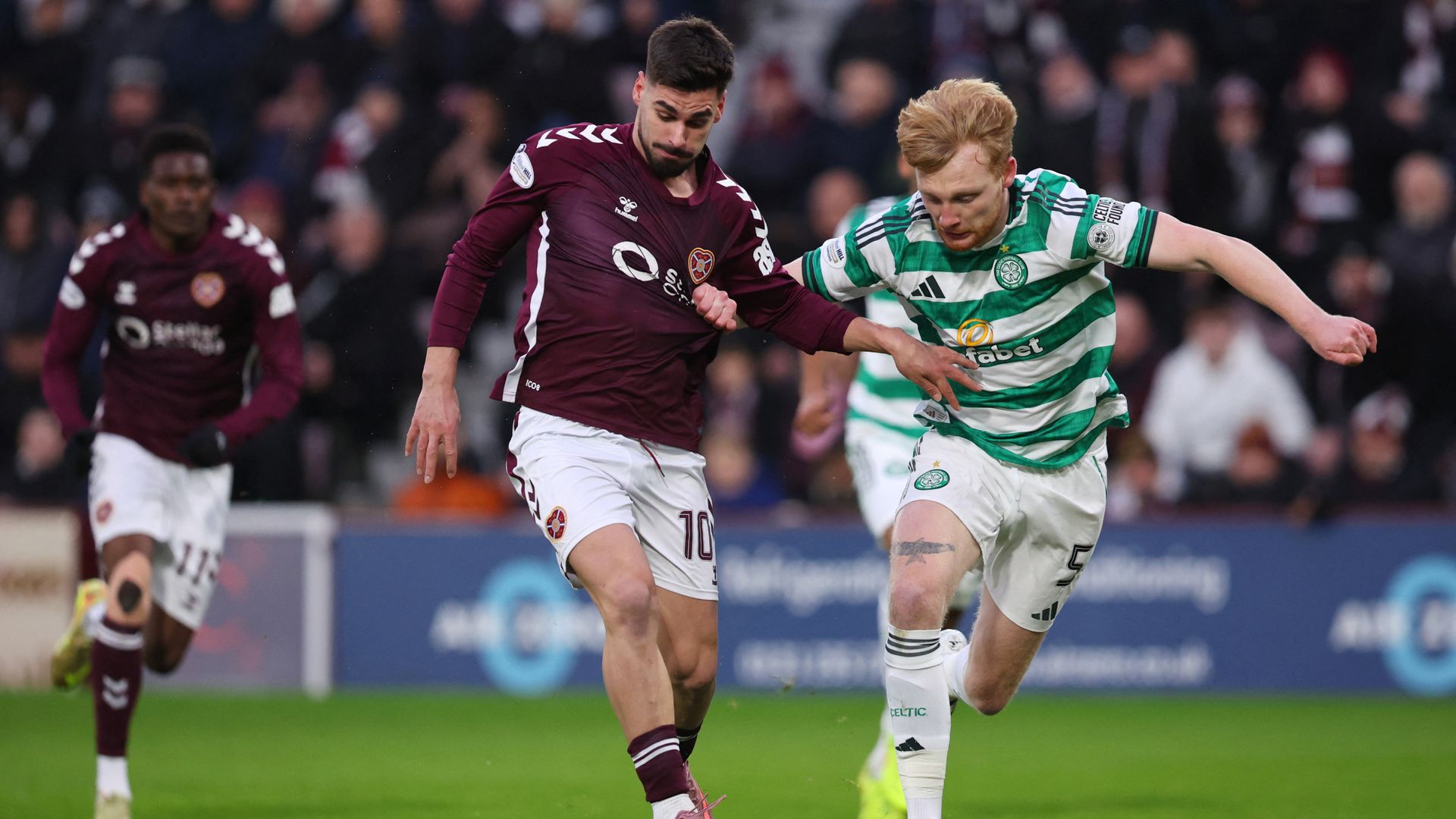
The air in Glasgow does not just move; it carries weight. On the final day of the Scottish Premiership season, that weight becomes a physical pressure against the chest. You can smell it in the damp pavement and the fried onions from stadium vans—a scent of anxiety mixed with a desperate, localized hope. This isn't just about a silver trophy or a spot in the European sun. It is about the fundamental identity of a city split down the middle by a line of green and blue that never quite fades, no matter how much time passes.
Everything has led to this afternoon. Thirty-seven games of mud, rain, and VAR-induced headaches have been stripped away, leaving only two sets of players and a singular, brutal reality. One side will walk into a summer of legend. The other will find themselves trapped in a three-month post-mortem, haunted by a missed tackle or a heavy touch. If you liked this post, you should check out: this related article.
The Ghost in the Dressing Room
Consider the perspective of a veteran captain sitting in the home locker room. Let’s call him Callum. He’s thirty-one, his knees ache with the ghost of every synthetic pitch he’s ever sprinted across, and he knows something the younger players don't. He knows that the fans outside aren't just cheering for a win; they are cheering for the right to walk into work on Monday morning without having to look at the floor.
Callum ties his boots with a double knot. He hears the muffled roar of sixty thousand voices through the concrete walls. It sounds like a storm at sea. He understands the math perfectly. Celtic leads by a narrow margin—perhaps just a point, or maybe it is tied with a goal difference so razor-thin it feels like a threat. Rangers are breathing down their necks, playing their own match fifty miles away, or perhaps right across the pitch. For another perspective on this story, check out the recent update from Bleacher Report.
The facts are dry: three points for a win, one for a draw. But for Callum, the math is emotional. If they concede early, the stadium will go silent. That silence is the most terrifying sound in professional sports. It is the sound of collective heartbreak beginning to calcify.
The Geography of Obsession
Scotland is a small country where football functions as a secular religion. In the weeks leading up to this final day, the national conversation has narrowed until it contains nothing but permutations. What if the striker's hamstring doesn't hold? What if the referee from Fife has a grudge?
This obsession is grounded in a historical rivalry that transcends sport. When the title comes down to the final day, the tension isn't just felt in the VIP boxes. It’s felt in the shipyards of the Clyde and the tech hubs of Edinburgh. It’s felt by the grandmother who hasn't missed a home game since 1974 and the teenager who saved six months of wages just to be in the stand today.
The competitor's reports will tell you about "head-to-head records" and "expected goals." They will show you heat maps that look like spilled ink. But a heat map cannot capture the way a goalkeeper's hands shake when he realizes he is the only thing standing between his club and a year of ridicule. It doesn't show the way a manager’s tie becomes a noose as the clock hits the eighty-minute mark and the score remains level.
The Anatomy of a Collapse
History is a cruel teacher in the Scottish Premiership. We have seen titles won with a goal in the ninety-fourth minute, a literal last-gasp strike that shifted the trophy from one bus to another on the M8 motorway.
Imagine a hypothetical scenario: The trailing team scores. The news filters through the crowd via a thousand glowing smartphone screens. A low murmur starts in the North Stand and spreads like a virus. Even if the current match is 0-0, the "as it stands" table has shifted. The leaders are no longer leaders.
Suddenly, the ball feels like a live grenade. A simple five-yard pass becomes a monumental task. The grass seems longer. The goal looks smaller. This is where the human element overrides the tactical drills. A manager can spend all week drawing triangles on a whiteboard, but he cannot account for the sudden surge of adrenaline that turns a defender's legs to lead.
The pressure of the final day creates a specific kind of vertigo. You are standing on a ledge, and the entire country is watching to see if you'll fly or fall.
The Invisible Stakes
Why does it matter so much? It’s just twenty-two people chasing a ball.
That’s the lie we tell ourselves to stay sane. The truth is that for a club like Celtic or Rangers, winning the title is a financial lifeline. It’s the golden ticket to the Champions League, a windfall of tens of millions of pounds that dictates whether they can buy a new star or have to sell their best prospect to a mid-table English side.
But the money is for the board. The fans care about the bragging rights. In Glasgow, "bragging rights" is an understatement. It is the social currency of the city. To win the league on the final day is to own the narrative of the next twelve months. It is the ability to say, "We didn't just win; we won when it was hardest."
The Final Whistle and the Aftermath
The clock is a relentless enemy. As the sun begins to set over the stadium, the game enters that frantic, ugly phase where tactics are abandoned for raw willpower. There are no more "phases of play." There is only the long ball, the desperate lunging tackle, and the roar of a crowd that has moved past singing and into a state of primal screaming.
When the whistle finally blows, the contrast is violent.
On one side of the pitch, men collapse. Not out of exhaustion, but out of a sudden, overwhelming release of tension. Some cry. Some stare at the sky, trying to process the fact that they have become part of the club’s folklore. They will see photos of this moment on the walls of the stadium for the rest of their lives.
On the other side, there is the walk of shame. The silver medals—if there are any—feel like lead weights around their necks. They have to watch the confetti cannons fire. They have to hear the opposition's anthem played over the loudspeakers. It is a sensory assault that serves as a reminder: in this league, there is no room for second place. Second place is just the first loser in a two-horse race.
The fans spill out into the streets. For half the city, the pubs will stay open until the early hours, and the songs will be sung until voices fail. For the other half, the journey home is a quiet one. The radio is turned off. The scarf is tucked into a drawer.
Tomorrow, the cycle starts again. The scouts will look for new players, the groundsmen will repair the divots, and the pundits will begin predicting next year's standings. But for right now, the city belongs to the victors. The trophy is being polished, names are being engraved in metal, and a few dozen men have earned the right to sleep soundly, knowing they didn't blink when the world was watching.
The gold is theirs. The glass remains for everyone else.