The human body requires roughly forty-eight hours to flush the lactic acid from its muscles after ninety minutes of international football. The heart rate must cascade from its peak of one hundred and eighty beats per minute. The micro-tears in the quadriceps require ice, stillness, and carbohydrates to begin the invisible process of cellular repair.
Mehdi Taremi knew this science by heart. Yet, at midnight inside the concrete underbelly of the stadium in Inglewood, California, the Iranian captain was not sitting in an ice bath. He was staring at a pile of duffel bags, his jersey stiff with dried sweat, listening to a security official explain that his team had exactly one hour to vacate the United States.
Exile has a distinct smell. It smells of stale aviation fuel, damp tape, and the metallic tang of adrenaline that has nowhere left to go.
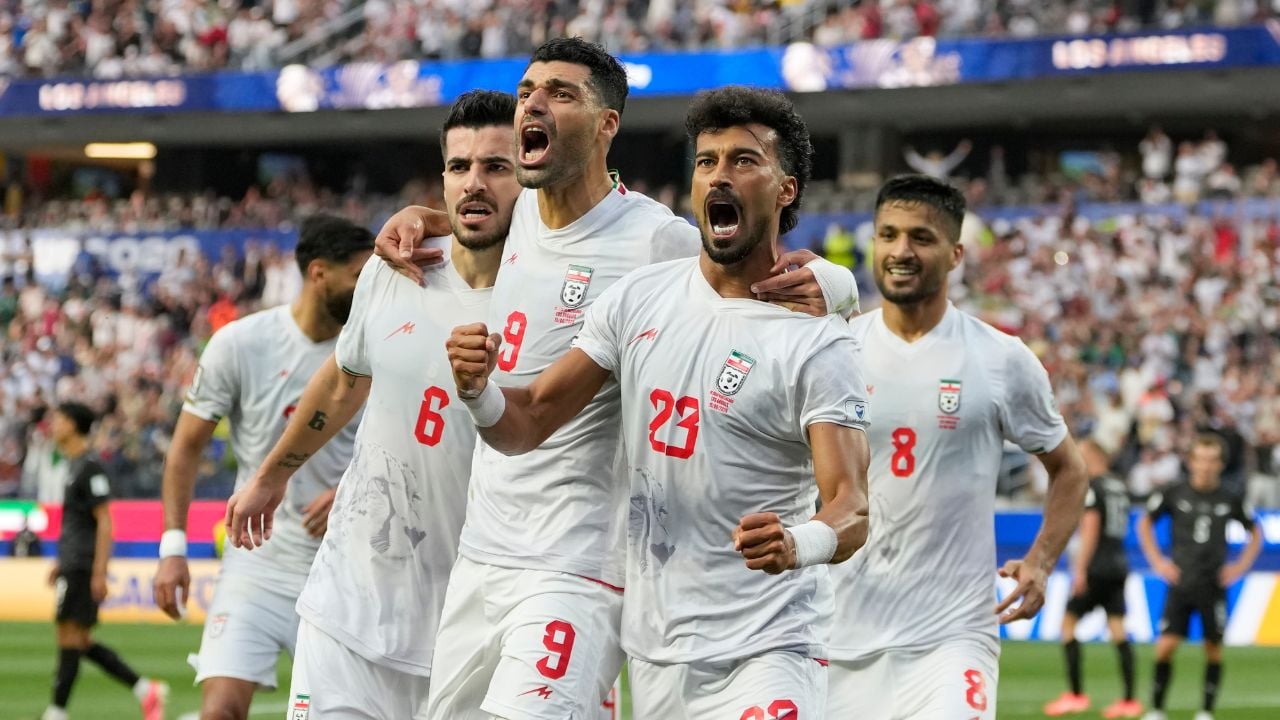
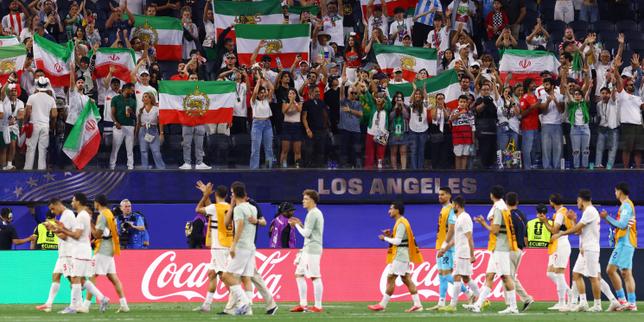
Just three hours earlier, Taremi and his teammates had achieved something bordering on the miraculous. They had stepped onto the grass of Los Angeles Stadium under the crushing weight of a geopolitical nightmare. For months, their country had been engulfed in a devastating military conflict with the United States and Israel. A fragile, historic peace deal had been announced mere hours before kick-off, but the air inside the stadium remained thick with the residue of war. Protesters lined the streets of Inglewood. Waving pre-revolutionary flags, they chanted against the regime in Tehran, while others held up framed photographs of children killed in the Minab school strike.
When the opening whistle blew, however, the geopolitical noise evaporated into the crisp California night. For ninety minutes, there was only the ball. Iran fought back from behind twice, matching New Zealand stride for stride in a breathless - draw that felt like a triumph of human will over political circumstance. For ninety minutes, they were just footballers.
Then the whistle blew, and the world rushed back in.
The Border in the Locker Room
The instruction arrived while the players were still unlacing their boots. There would be no overnight stay in California. The agreement that had supposedly guaranteed the team a normal recovery period until Tuesday afternoon was gone, dissolved by an anonymous directive from deep within the American immigration apparatus.
"They didn't even give us time to recover," head coach Amir Ghalenoei said, his voice carrying the flat, exhausted cadence of a man who has spent months fighting battles that have nothing to do with tactics. "After the game today, they said to us, 'You have to leave immediately.' We are asked to get on a plane and return to our camp in Tijuana, and we are really troubled by that."
Consider the geography of this tournament. When the war broke out in late February, Iran’s original plans to base themselves in Tucson, Arizona, shattered. Visas became weapons of bureaucracy. The United States State Department refused travel documents for the team’s medical staff, their media liaisons, and the executives of their own football federation. To save their tournament, Team Melli had to pivot. They found refuge just across the southern border in Tijuana, Mexico, setting up a camp within sight of the Pacific Ocean.
This meant that their World Cup experience was reduced to a series of frantic, heavily guarded border crossings. The day before the New Zealand match, a routine hundred and forty-mile trip from Tijuana to Los Angeles became a five-hour gauntlet of interrogation rooms, fingerprint scanners, and armed escorts.
Now, with their muscles still screaming from the match, they were being forced to do it all over again in reverse.
The Most Oppressed Team
In the modern sports landscape, we like to talk about the mental fortitude of athletes. We celebrate their ability to "block out the noise." But the noise surrounding Team Melli wasn't a hostile crowd or a critical column in a newspaper. It was the reality of a technical staff forced to act as baggage handlers, cooks, and translators because their actual support staff were barred from entering the country.
"I think our team is perhaps the most oppressed in the World Cup," Ghalenoei remarked to a small cluster of journalists who had managed to find him in the chaos. He wasn't looking for sympathy. He was stating a logistical fact. "Our federation isn't here, our media isn't here, our management isn't here. It seems like others are doing the planning for us. The decision-making for us is being made elsewhere."
Gianni Infantino, the president of FIFA, walked into the Iranian dressing room as the bags were being packed. He offered words of support. He spoke of football’s power to unite. But Taremi, standing near the door with his travel documents in hand, understood the limits of football's governing body. FIFA could control the size of the pitch and the weight of the ball, but they could not override the sovereign paranoia of a superpower’s border control.
"He wants to try to help us, but it's about other things too," Taremi said later, his eyes fixed on the floor. "Everyone knows it. I don't need to mention that, because you know where we are. Everything is like a disaster, actually, for us."
The Highway at 2:00 AM
The charter bus ride from the stadium back toward the Mexican border was silent. Outside the tinted windows, the neon signs of southern California blinked and faded into the darkness. Most of the players tried to sleep, their legs draped awkwardly over the armrests in a desperate attempt to prevent their joints from seizing up. Midfielder Mohammad Mohebi stared out into the dark, well aware that every bump in the road was compounding the risk of a hamstring tear or a blown knee.
They had to return to this very city in less than six days to play Belgium. Then they would fly to Seattle to face Egypt. Every single match would require the same bureaucratic extraction, the same grueling transit, the same feeling of being treated as a security threat rather than an elite athletic delegation.
Yet, as the bus finally crossed the line into Tijuana as dawn began to break, the environment shifted. In Mexico, there were no protests. There were no armed federal agents treating them with cold suspicion. Instead, a handful of local residents who had stayed up through the night cheered as the bus rolled toward their hotel. During their arrival a few weeks prior, local children had held up World Cup sticker albums, and the crowd had chanted in Spanish, "Iran, hermano, ya eres mexicano." Iran, brother, you are Mexican now.
It is a strange irony that a team representing an ancient, proud nation found its only true sense of home in a foreign border town, tucked away from the grand stadiums of the tournament they had spent their entire lives dreaming of reaching.
The peace treaty signed in Washington might have ended the military conflict on paper, but for the eleven men who wore the white jerseys of Iran, the war had merely transformed into a series of endless midnight flights, cold hotel rooms, and the agonizing ache of muscles denied the simple dignity of rest. They will play Belgium on Sunday. They will cross the border again. And they will do it knowing that their greatest opponent in this World Cup isn't the team on the other side of the pitch, but the invisible lines drawn on a map.