The dirt walls of a home in the borderlands of eastern Afghanistan do not just hold up a roof. They hold centuries of a quiet, stubborn insistence on survival. For generations, the families living along the Durand Line—the invisible, disputed border slicing through the Pashtun heartland—have measured their days by the predictable rhythms of the earth. The call to prayer at dawn. The scent of woodsmoke and baked flatbread. The harsh, biting chill of the mountain air giving way to a pale winter sun.
Then comes the roar. It is a sound that does not belong to the natural world. It is the screech of twin-engine fighter jets tearing through the midnight sky, a sound that hollows out the stomach before the mind can even process what is happening.
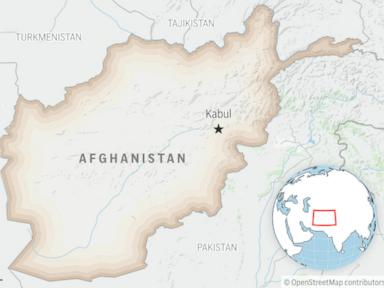
In the early hours of a Monday morning, that sound materialized into fire. Pakistani airstrikes ripped into the provinces of Khost and Paktika. When the dust settled, at least thirteen people were dead. The Taliban government in Kabul immediately cried foul, labeling the strikes a flagrant violation of sovereignty. Islamabad countered, claiming they were targeting militants who had grown too comfortable using Afghan soil as a launching pad for terror.
But beneath the geopolitical chess board, beneath the press releases and the bitter diplomatic crossfire, lies a brutal, intimate reality. The missiles do not choose between a militant and a mother. They simply erase whoever happens to be under the roof when the coordinates lock in.
The Invisible Line That Bleeds
To understand why the skies above Khost turned into a graveyard, one must understand the anatomy of a border that half the world recognizes and the local population largely ignores.
The Durand Line was drawn by a British colonial administrator in 1893. It was a bureaucratic stroke of a pen meant to separate empires, but it carved directly through families, tribes, and villages. For over a century, people have crossed this line to attend weddings, to bury their dead, and to trade bags of flour. To the people who live there, the border is a ghost.
To the states of Pakistan and Afghanistan, however, it is a scar that refuses to heal.
Consider the fragile ecosystem of a border village. Let us look at a hypothetical shopkeeper named Miran. He doesn't read the strategic briefings coming out of Islamabad or Kabul. His primary concern is whether the border crossing will remain open long enough for him to bring tomatoes from Peshawar to his stall in Khost. When relations sour, the gates slam shut. The tomatoes rot. The prices in the local bazaar skyrocket.
But rotting produce is a luxury compared to what happens when the tension escalates from economic strangulation to kinetic warfare. For months, Pakistan had been enduring a devastating surge in domestic terrorism. Soldiers were dying in ambushes; suicide bombers were striking deep within Pakistani cities. The blame, according to Islamabad, lay squarely across the border. They alleged that the Tehrik-i-Taliban Pakistan (TTP), the Pakistani branch of the Taliban, was operating with impunity under the protective wing of the new Afghan rulers.
Kabul repeatedly denied the charge, offering the standard diplomatic refrain: we will not allow Afghan soil to be used against any neighbor.
Words, however, have a habit of losing their meaning when blood is spilled. Following a particularly lethal assault on a military outpost in North Waziristan that killed seven Pakistani soldiers, the patience of the generals in Rawalpindi evaporated. The order was given. The jets scrambled.
The Anatomy of an Air Raid
An airstrike in the dead of night is an exercise in absolute terror. In the darkness, you are blind, but your ears become hyper-attuned to every frequency of disaster.
The first indication is a low, rhythmic vibration in the bedrock. It feels like an earthquake, but it moves too fast. Then comes the whistle—a split-second tearing of the atmosphere that signals a munition falling from thirty thousand feet. If you hear the whistle, you are lucky. It means the bomb is hitting someone else.
In Paktika province, the strikes targeted the Barmal district. According to local accounts and Taliban officials, the bombs struck residential compounds. Among the dead were reported to be five women and three children.
Imagine the sheer confusion of those final seconds. A family asleep under heavy wool blankets, huddled together against the mountain cold. The sudden, blinding flash that turns night into a white-hot noon. The concussive wave that collapses the lungs and shatters windows miles away. And then, the suffocating weight of mud bricks, timber, and dust.
When the neighbors arrive with shovels and bare hands, there is no grand political debate. There is only the frantic digging through the rubble, the muted weeping, and the retrieval of small, broken bodies wrapped in colorful shawls.
The immediate aftermath of these strikes followed a predictable, tragic script. The Taliban’s defense ministry announced that its ground forces had targeted Pakistani military posts along the border in retaliation. Small-arms fire and mortar shells zipped across the divide, causing terrified civilians on the Pakistani side to pack up their belongings and flee into the interior. A cycle of displacement, triggered by a flash of anger from the sky.
The Illusion of Precision
Modern warfare is sold to the public on the promise of precision. We are told that lasers, satellites, and advanced algorithms have cleansed the battlefield of unnecessary cruelty. We are treated to black-and-white video feeds of smart bombs hitting single vehicles or specific compounds with surgical accuracy.
It is a comforting lie.
In the rugged terrain of eastern Afghanistan, intelligence is often a murky, compromised commodity. Informants have personal vendettas. Intercepted radio signals can be misinterpreted. Satellite imagery can mistake a gathering of elders for a meeting of militants. When the command chain is hungry for a target to avenge fallen comrades, the threshold for certainty drops.
The tragedy of the Khost and Paktika strikes is that even if the intended targets were indeed insurgents, the collateral cost was paid in the currency of civilian lives. This is the inherent flaw of treating counter-terrorism as an aerial video game. The view from a drone camera at high altitude cannot distinguish between a house harboring a fighter and a house harboring a grandmother.
This reality creates a profound psychological trauma that lingers long after the smoke clears. In these border villages, the sky is no longer a source of rain or sunshine. It is a theater of unpredictable doom. Children grow up watching the clouds not for shapes, but for the glint of aluminum. Every unexpected loud noise—a backfiring truck, a clap of thunder—triggers a collective intake of breath.
The Geopolitical Trap
The tragedy of this conflict is that both sides are locked in a room with no doors, driven by narratives that leave no room for compromise.
Pakistan finds itself in a desperate security crisis. The return of the Taliban to power in Kabul in 2021 was supposed to secure Pakistan’s western flank. Instead, it unleashed a monster. The TTP, emboldened by the victory of their ideological brothers across the line, renewed their campaign to overthrow the Pakistani state. For the mothers of Pakistani soldiers returning home in green-draped coffins, the anger is real, justified, and demanding of an answer.
On the other side, the Afghan Taliban find themselves ruling a broken, isolated nation. They cannot easily turn on the TTP; doing so would alienate their own radical rank-and-file who view the Pakistani militants as comrades-in-arms. Yet, they cannot afford a shooting war with a nuclear-armed neighbor that controls the vital trade routes keeping the Afghan economy on life support.
So, the leadership on both sides issues fiery statements. They summon ambassadors. They threaten dire consequences. They use the language of sovereignty and national honor to mask their utter helplessness to solve the underlying rot.
Meanwhile, the people in the middle continue to pay the rent for this strategic failure.
The real tragedy of the thirteen people killed in Khost and Paktika is how quickly their identities will be scrubbed from the record. In a few weeks, they will not be remembered as individuals with names, dreams, and favorite songs. They will be reduced to a footnote in a security briefing. They will be a statistic used by Kabul to prove Pakistani aggression, or a statistic used by Islamabad to prove the neutralization of a threat.
The Sound of the Morning After
The true cost of war is found in the silence that follows the explosion.
It is the silence of a classroom where three desks sit empty. It is the silence of a husband sitting on a pile of gray dust, holding a single leather shoe that belonged to his wife. It is the realization that the world moves on, that the stock markets keep trading, that the politicians keep talking, while your entire universe has been reduced to a crater.
As the sun rose higher over the mountains of Khost on the morning after the strikes, the villagers did what they have always done. They carried the wooden charpoys bearing the dead to the local cemetery. They dug graves into the rocky, unyielding earth. They said their prayers, their voices rising in a low hum against the vastness of the landscape.
They did not look at the sky. They already knew what it was capable of delivering.
The border will remain. The jets will be refueled. The politicians will continue their grim, long-distance dialogue. And somewhere in the dark, another family will lay down to sleep, listening to the wind, praying that the next roar they hear is only thunder.