The air always smells different right before the thunder breaks. It carries that heavy, metallic tang of ozone, a sudden pressure drop that makes your ears pop and the hair on your arms stand at attention. But along the Danube border, the air tastes of something older and much more terrifying now. It tastes of burning aviation fuel and shattered glass.
Imagine standing on a quiet balcony in a small Romanian village, watching the stars, only for the horizon to erupt into a jagged line of artificial dawn.
That is not a metaphor. That is Tuesday night.
For months, the war across the border has felt like a distant broadcast, something flickering on a glowing screen while you stir your evening tea. You hear the statistics on the morning radio. You read the casualty counts in the digital feeds. Yet, statistics do not bleed. Numbers do not shatter windows or rattle coffee cups on kitchen tables.
Then a drone crosses an invisible line.
NATO airspace. Two words that used to mean safety, boundaries, and ironclad deterrence. Now, they are words whispered with a sudden, breathless hesitation.
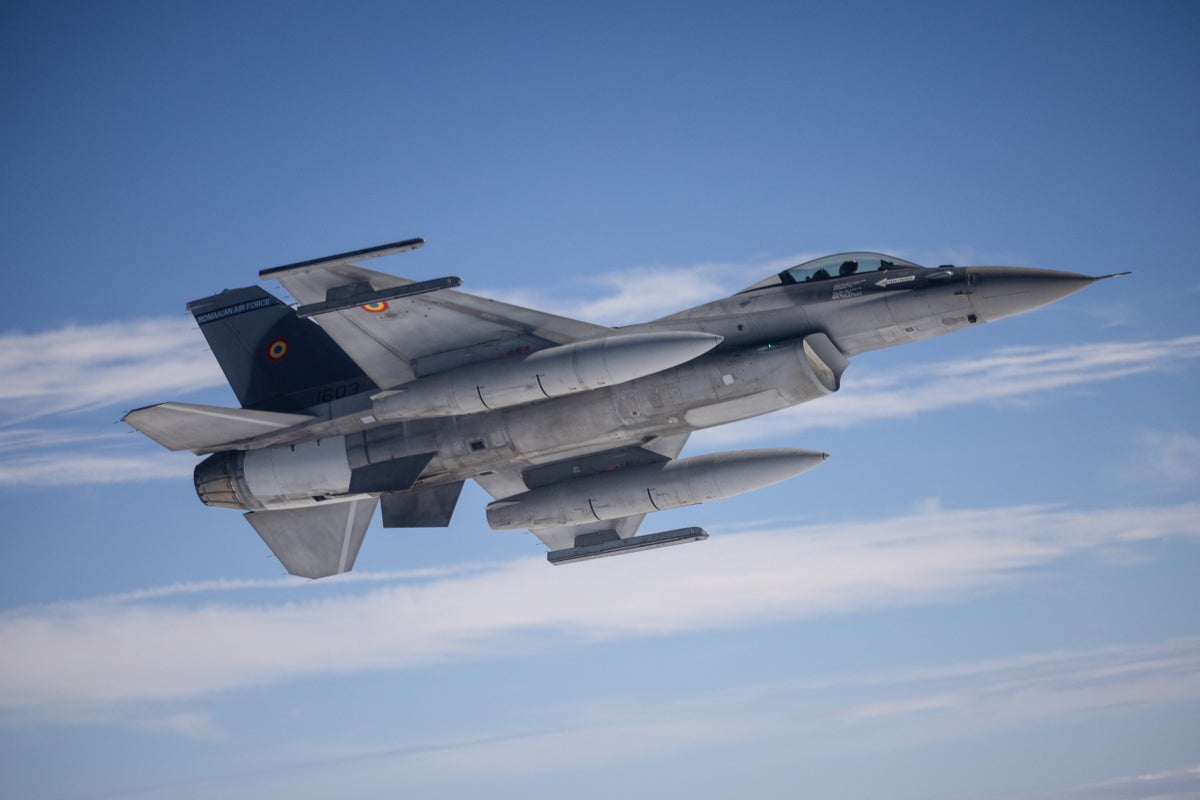
Consider what happens next when a machine built in a distant factory crosses that frontier. Sirens wail. F-16s tear through the cloud cover at supersonic speeds, their afterburners painting streaks of orange fire across the dark. The metal debris rains down not on a desolate battlefield, but into farmers' fields, dangerously close to homes where children are sleeping.
This is the reality of modern escalation. It does not happen in a vacuum.
The Geography of Anxiety
Look at a map of the Danube River delta. To the casual observer, it is a maze of green wetlands, quiet ports, and slow-moving water where pelicans nest and fishermen cast their lines. For the global economy, however, these ports are literal arteries. When grain cannot move, bread prices climb in grocery stores thousands of miles away.
Moscow knows this.
As the autumn chill sets in, the frequency of port attacks has intensified into a relentless rhythm. Warehouses burn into the night. Silos of wheat, harvested under the threat of artillery fire, turn to ash. The strategy is starkly transparent. Starve the economy. Break the morale. Push the boundaries until they snap.
And yet, the official communiques remain bloodless.
Diplomats use phrases like "deep concern" and "vigilance is maintained." They issue strongly worded statements in grand halls thousands of miles away from the smell of cordite. But diplomacy sounds very different when you are sweeping glass off your front porch at dawn.
Elena knows this better than most.
(Note: Elena is a composite character based on verified civilian accounts from border settlements.)
Elena lives thirty kilometers from the Ukrainian border. When the third Russian drone was intercepted and brought down within Romanian territory, she did not check Twitter for updates. She woke up to the sound of her roof tiles vibrating as a fighter jet broke the sound barrier overhead.
"We used to look at the river as a border," she told local reporters, her hands wrapped tightly around a cold ceramic mug. "Now we look at it as a tripwire."
The Anatomy of a Slip
How does a drone designed for specific military coordinates end up crossing into a sovereign European Union and NATO nation for the third time?
To understand the mechanics, you have to look past the political posturing and examine the technology itself. These loitering munitions are often cheap, loud, and flying low to evade radar detection. They rely on GPS signals that are routinely jammed, spoofed, and scrambled by electronic warfare units operating on both sides of the front.
When a guidance system loses its compass in a storm of electronic static, it drifts.
A drift of two degrees over fifty kilometers might not sound like much on a tactical map in a command tent. On the ground, two degrees means the difference between a military target in Ukraine and a civilian backyard in Romania.
Mistakes happen in war. But when those mistakes repeat themselves with alarming regularity, they stop being anomalies. They become a stress test.
Every time a drone crosses into allied territory and falls harmlessly—or destructively—into a field, observers in capitals around the world watch the reaction. They measure the response time. They gauge the political hesitation. They test the threshold of Article 5 without ever having to fire a conventional missile at a NATO military base.
It is a dangerous game of inches.
The Cost of Looking Away
We prefer our conflicts clean. We prefer our boundaries clear. We want to believe that international borders are force fields that keep chaos locked on the other side.
History teaches us a different lesson.
Borders are fragile lines drawn on paper by people who have long since turned to dust. They hold only as much weight as the collective will of the nations behind them. When drones drift across those lines week after week, the line thins. The shock value fades. What was once unthinkable—a foreign explosive device falling inside a NATO country—begins to feel like the new normal.
That normalization is the real victory for the aggressor.
Step back and look at the broader picture. The port attacks are not just about denying grain to hungry populations in the Global South, though that human toll is staggering. They are about normalization. They are designed to exhaust the public's attention span, to make us shrug our shoulders at the morning news and mutter that things are just complicated over there.
They are banking on our fatigue.
They are betting that you will stop caring before they stop fighting.
The Sound That Lingers
Back on the balcony, the air grows still again.
The jets have returned to their base. The smoke on the horizon has faded into the gray haze of morning. The children down the street are walking to school with heavy backpacks, their laughter carrying across the pavement as if nothing happened.
On the surface, life resumes its normal cadence.
But nobody looks at the evening sky the same way anymore. Every distant rumble of thunder carries a double meaning. Every commercial airliner crossing high above is momentarily mistaken for something else.
The war is no longer a story happening over there. It is a shadow stretching longer across the river, waiting for the wind to shift again.