The coffee in the operations room of a U.S. Navy destroyer doesn’t taste like coffee. It tastes like battery acid and adrenaline.
When the alarms sound, nobody spills a drop. They don’t have time to.
For months, the waters of the Gulf have looked like a postcard by day—glassy, turquoise, deceptive. By night, they turn into a shooting gallery. To the casual observer, the words "military intercept" sound clean. They sound like a line item in a defense budget or a bloodless press release issued by a spokesperson in a crisp uniform at a podium in Washington.
The reality is loud. It is terrifyingly fast. It is a calculated dance between multi-million-dollar technology and flying scrap metal packed with enough high explosives to tear a warship in half.
Recently, the U.S. military announced it had successfully neutralized a massive, coordinated barrage of Iranian missiles and one-way attack drones launched toward the Gulf. On paper, it was a victory. A triumph of modern defense.
But to understand what actually happened out there in the dark, you have to look past the sterile language of the Pentagon. You have to look at the screen.
The Geometry of Terror
Imagine sitting in a windowless steel box, buried deep inside the hull of a ship. The air conditioning hums, fighting a losing battle against the heat generated by rows of advanced computer processors.
Suddenly, a green dot appears on a radar terminal. Then another. Then twelve more.
These are not the supersonic, state-of-the-art fighter jets of the Cold War. Many of them are loitering munitions—cheap, loud, and slow. They are built from fiberglass and powered by commercial lawnmower engines. They drone through the night air with a sickening, rhythmic rattle that sounds like a flying chainsaw.
They are designed to overwhelm.
This is the new face of asymmetric warfare. A nation or a proxy group can manufacture hundreds of these drones for the price of a single conventional missile. They launch them in swarms, hoping that sheer numbers will blind the defense systems. It is a math problem written in fire. If a ship possesses thirty interceptor missiles, and thirty-one targets are flying toward it, the math wins.
On that specific night, the swarm was mixed. Ballistic missiles tore through the upper atmosphere, tracking downward at terrifying speeds, while the low-flying drones hugged the crests of the waves to evade radar detection.
The operators in the hot, crowded command centers had seconds to sort the noise from the threats.
To appreciate the scale of what happened, consider the velocity of a ballistic missile on its terminal descent. It travels faster than a rifle bullet. If you blink, it has moved miles. The human brain cannot calculate the interception point fast enough.
Instead, the defense relies on the Aegis Combat System, a network of radars and computers that acts as the ship's brain. The system tracks the targets, prioritizes them based on lethality, and prepares the counterpunch.
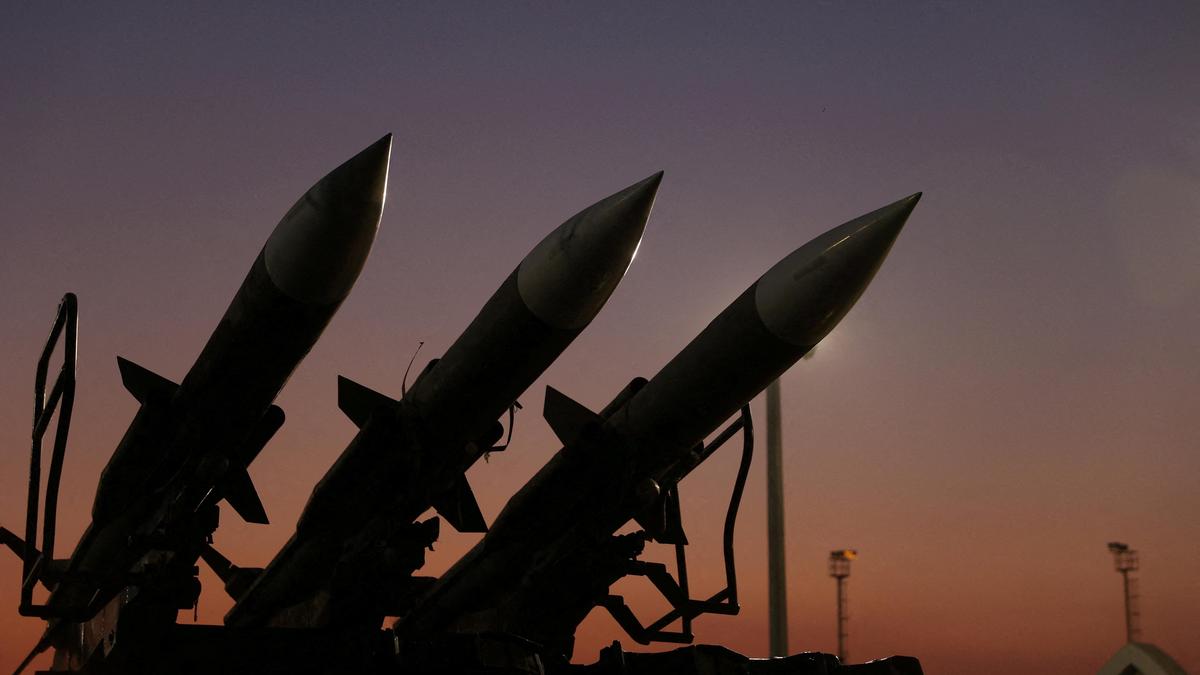
When the order is given to fire, the ship shudders. The vertical launching system on the deck erupts with a blinding flash and a roar that rattles the teeth of everyone on board. An interceptor rocket streaks into the black sky, hunting.
The Invisible Shield
We often talk about military deterrence as if it is a physical wall. We think of borders and steel fences. In the Gulf, the wall is made of invisible radio waves, thermal tracking, and kinetic impact.
The U.S. Central Command confirmed that its forces, alongside international partners, took down over a dozen drones and multiple missiles during the engagement. No American casualties were reported. No ships were damaged.
The system worked.
But behind that success lies a grueling economic reality that defense analysts are only beginning to openly discuss. The weapons used to destroy these incoming threats are spectacularly expensive. A single Standard Missile-2 or SM-6 can cost millions of dollars. The drone it destroys might cost twenty thousand.
It is an unsustainable equation, and everyone in the room knows it.
The strategy of the adversary isn't necessarily to score a direct hit on a warship every time. The strategy is to bleed the defender dry. They want to force the U.S. military to expend its limited inventory of high-tech interceptors on cheap targets, leaving them vulnerable when the heavier, more sophisticated missiles follow.
This creates a psychological pressure cooker for the young men and women monitoring the screens. They are acutely aware that every decision they make carries a ledger. Fire too early, and you waste a vital resource. Fire too late, and the weapon impacts the deck, the fuel lines, or the living quarters.
During the height of the attack, the air over the Gulf was crowded with metal. U.S. fighter jets scrambled from nearby bases and aircraft carriers, hunting the drones in the dark.
For a pilot, flying at night over a black ocean while trying to spot a small, non-reflective drone is like trying to find a black cat in a dark room with a dying flashlight. They rely on night-vision goggles and infrared sensors, closing the distance until they can destroy the target with an air-to-air missile or a burst of cannon fire.
The sky becomes a chaotic mosaic of burning debris falling into the sea.
What Victory Leaves Behind
When the sun rose over the Gulf the next morning, the surface of the water was calm again. A few oil slicks and floating pieces of charred carbon were the only witnesses to the violence of the night before.
The official reports called the operation a definitive defense. They used words like "neutralized," "negated," and "defeated."
Those words are comforting to a public reading the news over breakfast thousands of miles away. They offer a sense of security, a belief that American technological supremacy can always punch a hole through any threat.
But if you speak to the veterans who have stood those watches, the tone is different. There is no celebration. There is only a profound, exhausting quiet.
They know that the threat hasn't vanished; it has merely reset. The factories producing the drones are still turning them out. The launch pads are being reloaded. The next swarm is already being programmed with new coordinates, new flight paths, and lessons learned from the defense tactics used against them.
The victory claimed in the Gulf was real, but it was temporary. It was a successful holding action in a conflict that is increasingly defined by automation, artificial intelligence, and cheap attrition.
The invisible stakes are not just about who wins a single night's skirmish. They are about how long a nation can afford to play a game where the shield costs a hundred times more than the sword.
Down in the berthing compartments of the ships, after the general quarters alarm stops blaring, the sailors finally lie down on their thin mattresses. The smell of cordite still hangs faintly in the ventilation system. They try to sleep, knowing that the radar screens upstairs are already scanning the empty horizon, waiting for the next green dot to blink into existence.