The shipping container smelled of salt and diesel. It sat on the tarmac outside a warehouse in New Taipei, looking entirely ordinary to anyone unfortunate enough to pass by in the sticky, neon-lit humidity of an island night. Inside, packed securely beneath layers of industrial foam and innocuous commercial electronics, rested a cluster of boxes that outweighed their size by a terrifying margin.
They were not crates of shoes. They were not mechanical parts for washing machines.
They were brains. Specifically, they were high-end AI servers, housing specialized processors designed to crunch the vast, invisible equations that govern modern machine learning. To the men standing in the dark, checking manifest sheets with trembling fingers, these slabs of silicon represented a fortune. To the geopolitical chess players watching from Washington, Beijing, and Taipei, they represented a breach in the dyke.
Nine people would soon discover the true cost of moving forbidden hardware across a heavily watched border. But long before the handcuffs clicked, a quiet game of shadows had already begun.
The Weight of a Microchip
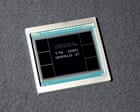
To understand why nine individuals risked prison time to smuggle high-end AI servers into China, you have to understand what a modern graphics processing unit actually feels like to hold. It is deceptively heavy. It is cold. When you slip one out of its anti-static bag, you are holding a tiny grid of transistors that costs more than a luxury car and carries more strategic weight than an artillery shell.
For years, governments have watched the compute gap widen. Artificial intelligence requires sheer, brute-force calculation. If you want to train a frontier model, you need thousands of these servers chained together, humming in sync, drawing enough electricity to power a small town. When export controls tighten—when laws are drafted in air-conditioned conference rooms to lock down specific tiers of microchips—the law of supply and demand does not simply vanish. It mutates. It goes underground.
Imagine a market where the commodity is not cocaine or diamonds, but the raw intellectual engine of the twenty-first century.
The suspects charged by Taiwanese prosecutors allegedly used shell companies and falsified shipping documents. They thought they could slip past the customs nets by disguising the cargo as routine office equipment. It is a classic playbook, dusted off from the era of Cold War technology embargoes. But the modern semiconductor supply chain is not a leaky wooden boat; it is a glass spiderweb. Every transaction leaves a digital footprint. Every serial number is logged. Every high-end server is a digital beacon waiting to be pinged.
The Human Factor
It is easy to view this through the lens of dry policy briefs. We talk about trade restrictions, geopolitical friction, and national security as if they are weather patterns moving across a map.
They are not. They are human choices driven by desperation, greed, and the intoxicating allure of easy money.
Picture the middleman. Let us call him Leo, though his real name is buried in court filings. Leo is not a mastermind in a velvet chair stroking a cat. He is a logistics coordinator who spent two decades watching supply chains ebb and flow. He knows which ports are lax on a Friday night. He knows how to fill out a bill of lading so that a customs inspector glances at it, smells the boredom of a twelve-hour shift, and waves the truck through.
Leo knew the risks. Everyone in the gray-market tech trade knows the risks. But the margins are staggering. When a buyer in Shenzhen is staring down a wall of strict technological blockades, they will pay a grotesque premium for a crate of untracked servers. For Leo, the math was simple: a few successful runs meant retirement. A failure meant a jail cell.
Most smugglers bet on the vastness of the ocean and the sheer volume of global commerce. They believe they are invisible needles in an infinite haystack. What they forget is that the haystack is now monitored by magnets.
The Closing Net
The investigation into the Taiwan smuggling ring did not happen overnight. It was born of anomaly detection. When high-end enterprise servers vanish from authorized distribution channels and pop up in untracked logistics hubs, alarms ring quietly in corporate compliance offices and intelligence agencies alike.
Taiwanese authorities tracked the flow. They watched the shell companies sprout like weeds after a rainstorm. They monitored the communications, mapped the warehouse visits, and waited for the exact moment the operation moved from paper to physical reality.
When the raid came, it was swift. No dramatic gunfights, no cinematic car chases through the streets of Taipei. Just the heavy clatter of boots on concrete, the flash of badges, and the sudden, sickening realization that the invisible walls had closed in. Nine people indicted. Nine lives abruptly diverted from quiet middle-age obscurity into the glaring lights of a federal courtroom.
And yet, the containers that did get through—the ones that slipped past before the net tightened—are already humming in unmarked server farms across the strait.
The Unfinished Equation
We live in an era where power is no longer measured solely in barrels of oil or tons of steel. It is measured in floating-point operations per second. Compute is the new crude.
When a government tries to bottle up a resource that the entire global economy is starving for, smuggling is not an anomaly; it is an inevitability. As long as the demand for advanced machine learning infrastructure outstrips legal supply, men like Leo will keep looking at shipping manifests in the dark, weighing the price of a prison term against the weight of a silicon brick.
The nine arrests in Taiwan are a warning shot. They demonstrate that the borders around high-end technology are real, policed, and heavily fortified. Yet, standing in that quiet warehouse with the ghosts of the departed servers lingering in the cold air, you cannot shake the feeling that this was only one small skirmish in a very long war.
The boxes are gone. The suspects are behind bars. But somewhere out on the dark water, another ship is cutting through the waves, carrying a cargo that will change the world before anyone even notices it has arrived.