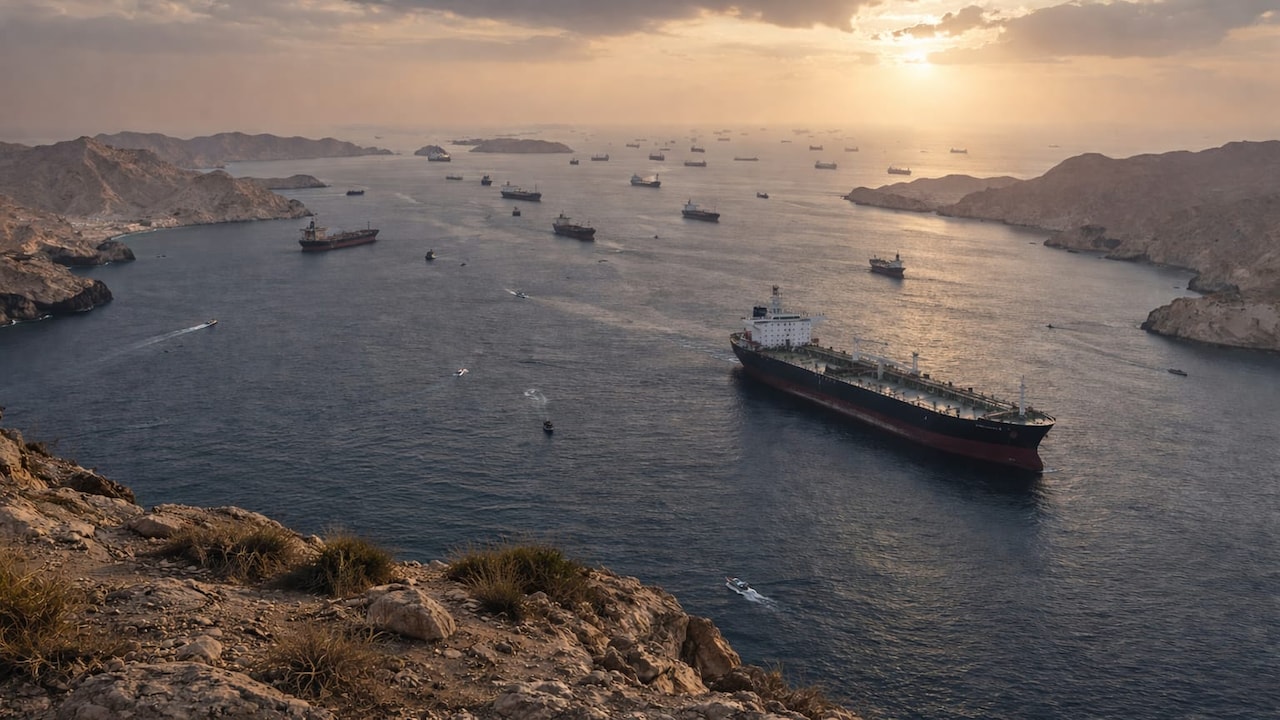
The sea at midnight does not look like water. It looks like polished obsidian, heavy and thick, reflecting nothing but the cold, indifferent stars.
On the bridge of a gray hull slicing through the Persian Gulf, the silence is absolute. It is a fragile silence, built on the hum of cooling fans, the rhythmic click of radar sweeps, and the quiet breathing of young men and women staring into glowing green displays. They are thousands of miles from home, suspended in a liquid darkness where a single decision can ripple across global economies, light up diplomatic switchboards in Washington and Tehran, or end lives in a flash of white heat.
We often talk about geopolitics as if it were a chess game played with wooden pieces on a flat board. We read the headlines—US Military Strikes Ship Trying To Breach Iran Port Blockade—and our brains register the event as an abstraction. Another strike. Another incident. Another drop in the bucket of endless Middle Eastern friction.
But there are no wooden pieces on the water. There are only people, steel, and the terrible gravity of a split-second choice.
To understand what happened out there in the dark, we have to look past the sterile press releases. We have to look at the invisible lines drawn on the water, and what happens when someone decides to cross them.
The Invisible Walls of the Ocean
The ocean is free, until it isn't.
Under international law, the high seas belong to everyone and no one. But when tensions boil, nations draw imaginary lines on the map. They call them exclusion zones, blockades, or maritime security areas. To a merchant mariner on a rusty cargo ship, these lines are invisible. To a naval commander on a destroyer, they are as real as a concrete wall.
Imagine driving down a deserted highway at night. Suddenly, a barricade appears. There are no flashing lights, just a voice over your radio telling you to turn around. You have cargo to deliver. Your livelihood depends on reaching the destination. But the voice on the radio has a billion dollars of firepower backing it up.
This is the daily reality in the waters choking the entrance to Iran’s major ports. For months, a coalition of Western forces has maintained a tight net, seeking to choke off the flow of illicit weaponry and state-sponsored smuggling. It is a game of patience. A slow, grinding war of nerves.
Then, a radar blip disrupts the rhythm.
Let us call the merchant vessel the Maris. She is not a sleek, modern container ship, but a bruised, salt-encrusted bulk carrier riding low in the water. Her crew is a patchwork of nationalities—sailors from Manila, Odessa, and Mumbai—men who signed up to haul grain or steel, not to navigate a geopolitical minefield.
On the radar screens of an American guided-missile destroyer patrolling nearby, the Maris appeared as a stubborn dot moving at twelve knots. Her course was locked. Her destination was a blockaded Iranian port.
The Protocol of Tension
A naval interception is not a sudden, cinematic burst of violence. It is a slow, agonizing escalation. It is a script written in blood and refined over decades of cold war encounters, played out in real-time.
First comes the hail.
"Merchant vessel on course zero-nine-zero, this is coalition warship. You are approaching a restricted zone. Alter your course immediately."
The bridge of the destroyer waits. The radio static hisses.
On the Maris, the captain likely stared at the radio receiver. Perhaps there was a handler in his ear, someone sitting in a comfortable office far from the humidity of the Gulf, whispering promises of a massive payday if the cargo slipped through. Or perhaps it was simpler: sheer desperation, or a gamble that the gray hulls in the distance were bluffing.
No response.
The dot on the radar kept moving. Twelve knots. Eleven. Twelve again.
The next step in the protocol is physical. The destroyer surges forward, kicking up a massive wake, placing its massive, lethal silhouette directly in the path of the oncoming vessel. At close range, a destroyer is terrifying. It is a mountain of dark steel bristling with radar domes, vertical launch cells, and rapid-fire cannons.
On the bridge of the warship, the atmosphere shifts. The casual banter of the watch standers evaporates. Laptops are closed. Helmets are buckled. The air grows cold as the air conditioning fights the heat of combat systems running at full power.
You can feel the heartbeat of the ship. It is a low, rhythmic vibration that travels up through the soles of your boots, a physical reminder that beneath your feet are turbine engines capable of driving thousands of tons of steel through the water at highway speeds.
A second warning is issued. This time, it is backed by the blinding glare of a searchlight, cutting through the haze, painting the bridge of the target ship in a harsh, interrogating white.
Still, the Maris pushed forward.
The Friction of the Trigger
This is where the abstract concept of military strategy collides with human psychology.
The commanding officer of a naval vessel carries a burden that few civilian minds can truly grasp. They are given "Rules of Engagement"—thick, legally dense binders that dictate exactly when and how they can use force. But a binder cannot make a decision at two in the morning when a suspicious vessel is closing the distance.
Is the ship carrying commercial goods, or is it a floating bomb? Is the captain stubborn, or is there a team of armed operatives below deck waiting to launch a swarm of suicide drones?
In the modern maritime threat environment, these are not paranoid fantasies. They are recent history.
The decision to fire is not made with anger. It is made with a sickening tightness in the chest.
"Warning shots," the order is given.
The destroyer’s five-inch gun fires. A deafening crack shatters the night. The concussion rattles the teeth of everyone on deck. A fraction of a second later, a shell tears through the air, plunging into the black water a few hundred yards ahead of the Maris, sending a massive geyser of spray into the air.
It is a violent, unmistakable exclamation point. Turn back.
But the Maris did not turn.
At this point, the illusion of a peaceful resolution shattered. The cargo ship was no longer just a merchant vessel; it was a projectile breaching a line that had been drawn in the sand—or rather, in the water.
The order was given to disable.
The Strike
We often imagine military strikes as massive explosions that vaporize targets in a cloud of orange fire. The reality of a disabling strike is far more precise, and in many ways, more chilling.
The goal was not to sink the ship. Sinking a ship means drowning a crew, creating an environmental disaster, and handing a massive propaganda victory to the adversary. The goal was to take away its will—and its ability—to move.
A precision-guided munition, likely launched from an airborne asset or a specialized deck mount, struck the stern of the vessel.
Impact.
The sound of metal tearing at sea is unlike anything else. It is a screeching, groaning agony that echoes through the hollow iron chambers of a ship. The explosion targeted the steering gear and the propulsion. In an instant, the vibrations of the engine stopped. The lights on the Maris flickered, died, and were replaced by the dim red glow of emergency lanterns.
Suddenly, the roaring giant was reduced to a drifting, silent island of steel.
The human cost of that moment is hard to measure. Onboard the struck vessel, there was undoubtedly terror. The smell of burnt electrical wiring, the hiss of escaping steam, the frantic shouting of men in the dark wondering if the ship was going down.
On the destroyer, there was no cheering. There was only a quiet, professional assessment.
"Target disabled. Speed zero."
The tension did not leave the room; it merely changed shape. The threat had been neutralized, but the political fallout was just beginning to drift shoreward.
The Wake We Leave Behind
When the sun rose over the Gulf the next morning, the water had returned to its usual shade of deep, deceptively peaceful blue. The Maris rolled listlessly in the gentle swells, a black smudge of soot marking her stern, waiting for a tugboat or an inspection team.
The headline on your phone likely occupied your attention for three seconds before you swiped to the next piece of news.
But the ripple effects of that single midnight strike will linger for months. Insurance rates for commercial shipping in the region will tick upward. Ship captains will look at their charts with a little more anxiety. Families of mariners will wait by the phone, hoping for a text message confirming safe passage through the straits.
We live in a world built on the assumption that things will simply arrive. We click a button, and a box appears on our doorstep. We turn a key, and fuel burns. We rarely think about the fragile chain of custody that spans oceans, or the young men and women standing watch in the dark, holding the line between commerce and chaos.
The next time you read a dry, two-paragraph report about a maritime incident in some far-off sea, do not just read the words.
Listen for the hiss of the radio. Feel the vibration of the deck plate. Remember the silence of the night, and the terrifying weight of the choices made when the world is fast asleep.