The silence is what wakes you.
In Havana, the background radiation of life is a specific, predictable chord. It is the rhythmic rattle of a 1950s Chevy passing beneath the balcony, the distant cadence of a neighbor’s television, and, above all, the steady, comforting whir of the refrigerator. When that whir dies, the silence feels heavy. It presses down on your chest. You open your eyes into a darkness so complete it feels physical.
You reach for the fan switch. Nothing. You flip the wall toggle. Nothing.
This is not a temporary glitch. It is the sound of an entire nation’s infrastructure sighing, collapsing, and giving up the ghost.
When a national power grid fails in the modern world, we tend to analyze it through the cold lens of technocrats. We talk about megawatt deficits, thermoelectric plant decay, fuel shipment delays, and infrastructure investment tallies. But those words are just a sterile mask hidden over a raw human reality. To truly understand the collapse of Cuba’s energy grid is to understand what happens to a society when the basic certainties of the nineteenth century—let alone the twenty-first—are systematically erased.
The Fragile Anatomy of Darkness
Imagine a bicycle being held together by rusted wire, twine, and sheer willpower. The rider is pedaling up a steep hill, carrying a heavy load, and running out of breath. That bicycle is the Unión Eléctrica de Cuba.
The system relies heavily on seven aging thermoelectric plants. To call them "aging" is a generous understatement; most have been operating for four decades, long past their intended lifespans. They are temperamental giants, requiring constant maintenance that they rarely receive. They consume heavy, sulfur-rich domestic crude oil, which corrodes their internal components like acid, or they rely on expensive imported fuel that the government increasingly cannot afford to buy.
When the Antonio Guiteras plant in Matanzas—the largest and most critical gear in this machine—tripped and went offline, it was not just a blown fuse. It was the final, catastrophic snap of the bicycle chain.
The domino effect was instantaneous. Without the baseline power from Guiteras to stabilize the frequency of the network, the other plants automatic-safetied themselves into darkness to prevent total physical destruction. Within minutes, ten million people were plunged into an involuntary experiment in survival.
Consider the mechanics of a modern home. We take for granted that electricity is an invisible river, always flowing, always there to drink from. When the river dries up, the consequences cascade.
- Water pumps fail. In Cuba, municipal water systems rely on electric pressure pumps to move water into high-rise apartments and neighborhood cisterns. No power means no running water.
- Food spoils. In a country where grocery shopping is a daily, exhausting hunt and proteins are precious, the loss of a freezer full of food is a financial tragedy from which a family might not recover for months.
- Communication dies. Cell phone towers have backup batteries, but those batteries last hours, not days. Soon, the bars on the screen vanish. The island becomes an island once more, disconnected from itself and the outside world.
A Day in the Heat
Let us create a window into this reality through a hypothetical citizen named Maria. She is a schoolteacher living in Central Havana, but her circumstances are shared by millions.
Maria wakes up at 4:00 AM because the heat in her bedroom has become unbearable. Without the electric fan, the tropical humidity settles over her skin like a damp wool blanket. Mosquitoes, emboldened by the still air, whine around her ears.
Her first thought is not about the geopolitical implications of the embargo or the state’s economic mismanagement. Her first thought is the milk.
Yesterday, after waiting three hours in a queue, she managed to buy a small carton of milk for her seven-year-old son. She walks into the kitchen, opens the refrigerator door, and is met by a wave of warm, souring air. The milk is gone. The small piece of pork she was saving for Sunday is sweating on a plate.
This is where the emotional erosion begins. It is the constant, grinding anxiety of anticipation. Every hour the power remains off is an hour where the small, hard-won victories of daily life are undone.
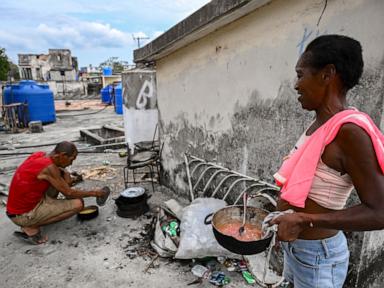
By mid-morning, the streets of Havana take on a strange, suspended animation. The state orders all non-essential workers to stay home. Schools are closed. The offices are dark. The normal bustle of the city is replaced by an eerie quiet, punctuated only by the occasional roar of a privately owned diesel generator outside a tourist hotel or a foreign embassy. Those generators represent islands of wealth in a sea of deprivation, their exhaust fumes hanging heavy in the stagnant air.
For the average Cuban, the day becomes a quest for ice. If you can find someone with a working generator who is selling ice, you can save your food. But the price of ice skyrockets. Inflation, already a monster devouring the value of the Cuban peso, finds a new metric: the cost of a frozen block of water.
The Structural Rot Below the Surface
Energy experts watching from Washington, Miami, or Madrid point out that this crisis has been decades in the making. They are right, of course. A grid does not collapse overnight. It rots from the inside out.
The Cuban government points to the US embargo, which restricts access to financing, spare parts, and fuel tankers. The embargo is a real, heavy thumb on the scale. It makes every transaction more difficult, every piece of machinery twice as expensive to procure through third parties.
But independent economists point to a deeper, internal structural failure. For years, the state prioritized investments in luxury tourist hotels over the dull, unsexy work of maintaining power plants and distribution lines. New towers of glass and concrete rose along the Malecón while the boilers at the Felton and Mariel power stations grew choked with slag and soot.
The country became dependent on floating power plants—powerships leased from a Turkish company. These ships sit offshore, burning fuel and pumping electricity into the grid. They are a band-aid on a severed artery. When the state runs out of hard currency to pay for the lease or the fuel to feed them, the ships go dark too.
What we are witnessing is the literal material exhaustion of a system. You can patch a pipe a dozen times, but eventually, there is no original metal left to weld onto.
The Psychology of the Candle
As dusk approaches, a different kind of dread sets in.
In the developed world, night is optional. We flick a switch and extend the day as long as we please. In Havana during a total blackout, night is absolute. It is an inescapable curfew imposed by physics.
People drag their rocking chairs out onto the sidewalks. It is cooler outside than inside the concrete boxes of their apartments. Neighbors talk in hushed tones. The lack of smartphones and televisions forces a return to an older, more intimate form of community, but it is a community bonded by shared misery rather than choice.
Someone lights a candle. Then another. The flickering yellow flames illuminate faces lined with a exhaustion that sleep cannot fix.
The conversation always circles back to the same questions. When will it come back? Have they restarted Guiteras? Did you hear if fuel arrived in Santiago?
Rumors fly through the darkness because there is no official news to correct them. Someone says a tanker from Venezuela is docking. Another says Russia has promised a shipment of oil. Hope is rationed as strictly as bread.
The scariest part of this existence is the unpredictability. If you knew the power would be off from 2:00 PM to 8:00 PM every day, you could organize your life around that schedule. You could plan. But when the grid collapses entirely, there is no schedule. The power might come on for twenty minutes, teasing the refrigerator into a brief shudder of hope, before dying again for eighteen hours. It is the psychological cruelty of uncertainty that breaks people.
The Limits of Resilience
For decades, the world has romanticized Cuban resilience. We marvel at the mechanics who keep 1953 Buicks running with parts salvaged from Soviet tractors. We praise the resourcefulness of a people who can fix anything with a piece of wire and a prayer.
But there is a dark side to forcing a population to be perpetually resilient. Resilience is a finite resource. It burns up like fuel in an old boiler.
When you spend your entire day figuring out how to wash your clothes without running water, how to cook a meal without gas or electricity, and how to keep your children cool enough to sleep, you have no energy left to create, to build, or to dream. Life shrinks to the immediate horizon of the next meal and the next watt.
The younger generation looks at the darkness and sees a future devoid of light. The blackout is not just an inconvenience; it is a powerful metaphor for their prospects on the island. It is no coincidence that during the worst periods of energy instability, the exodus of young, educated Cubans reaches historic highs. They are fleeing the quiet, hot nights where the refrigerator doesn't hum.
The Smoke on the Horizon
By day three of a total collapse, the air changes.
The heat inside the homes becomes trapped, baking the concrete walls until they radiate warmth long after the sun goes down. The smell of spoiling food begins to drift from trash bins.
The state works frantically. Engineers, working in grueling conditions inside the hot, cavernous bellies of the thermoelectric plants, try to synchronize the system. It is a delicate dance. If they connect a city to a plant too quickly, the sudden demand will overwhelm the generator, causing it to trip again and sending the entire region back to zero. It is like trying to light a campfire in a hurricane with a single match.
Sometimes they succeed for a few hours. A neighborhood cheers as the streetlights flicker to life. People rush to charge their phones, to freeze bottles of water, to breathe in the cool air of an air conditioner.
Then, a whisper of smoke escapes from a substation twenty miles away, a breaker trips, and the lights snap out. The groan that echoes through the streets is a sound of collective heartbreak.
We live in a world that is hyper-connected, where we discuss artificial intelligence, quantum computing, and the colonization of Mars. Yet, just a short distance from the shores of the wealthiest nation on earth, millions of people are living through a slow-motion technological regression. They are watching the twentieth century recede into the past, leaving them stranded in an older, harsher reality.
The crisis in Cuba is a stark reminder of the thinness of the crust we call civilization. Our comfort, our safety, and our connection to one another are entirely dependent on a web of copper, steel, and fuel that we rarely think about until it stops working.
The sun sets again over the Malecón. The sea laps against the stone wall, indifferent to the human struggle just a few yards away. The city fades into a silhouette, then into nothingness. Somewhere in the dark, Maria sits by her son’s bed, waving a piece of cardboard back and forth, creating a fragile, temporary breeze to keep the heat at bay while the boy sleeps. She listens into the dark, waiting for the sound that never comes.