The air inside the Austin briefing room felt heavy with the scent of cheap damp rain and static electricity. John Cornyn stood before a sparse gathering of reporters, his tall frame slightly stooped, his signature shock of white hair catching the harsh fluorescent light. There were no roaring crowds. No confetti. Just the rhythmic clicking of camera shutters sounding like a slow-moving execution squad.
He spoke for only a few minutes. The four-term United States Senator, a man who had navigated the marble corridors of Washington for nearly a quarter of a century, was conceding. He promised to support the man who had just politically broken him. He did it because he always supported the party ticket. But the tremor in his voice betrayed a deeper knowledge: it wasn't just an election that had slipped away. An entire era of American politics was being buried right beneath his feet.
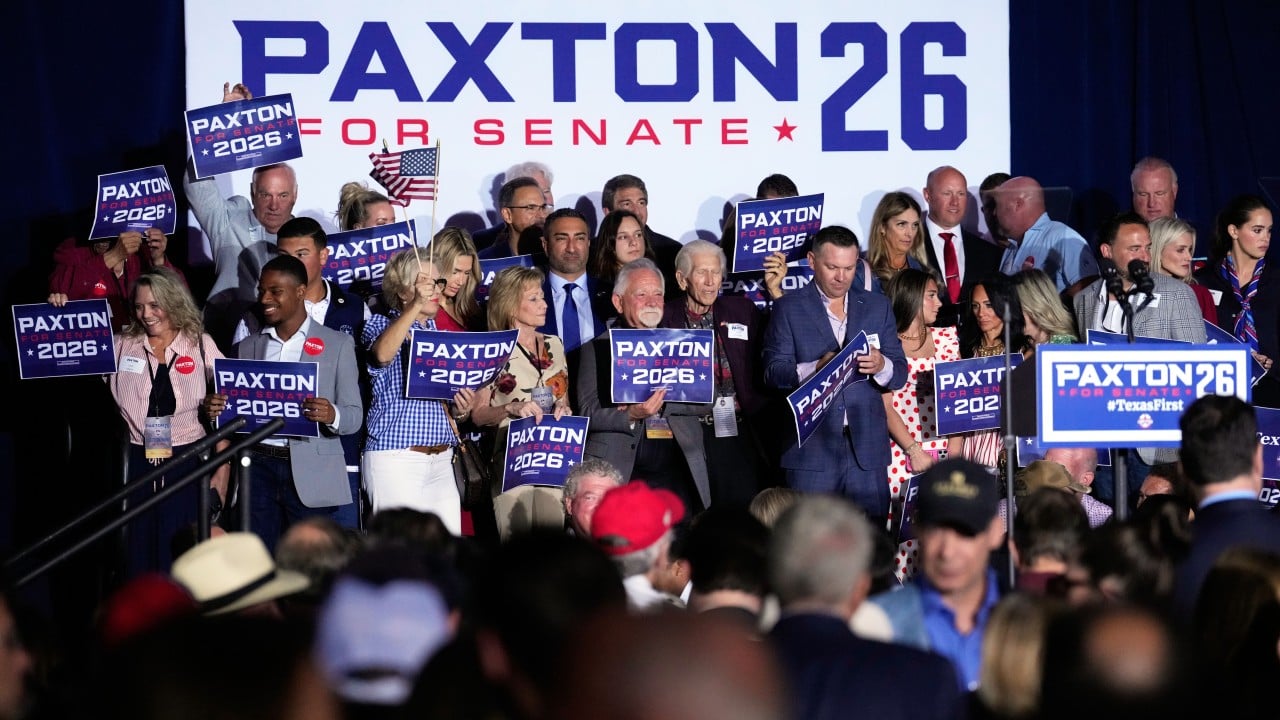
Tuesday night's Texas Republican primary runoff was not a mere tally of votes. It was a public execution of the old political order. Ken Paxton, the state’s embattled, lightning-rod Attorney General, captured 64 percent of the electorate, thoroughly dismantling an incumbent who had previously seemed institutional.
To understand how a man who has faced an FBI investigation, a bitter impeachment trial, and a highly publicized, messy divorce could completely overshadow a pristine, four-term party elder requires looking past the spreadsheets of political action committees. It requires looking at the raw, emotional hunger of modern political belief.
Consider the sheer mathematics of the battlefield.
Cornyn and his establishment allies did not lose from a lack of resources. They flooded the state with money. Between the March primary and the May runoff, pro-Cornyn groups unleashed a colossal $109 million advertising blitz. They outspent Paxton’s operation by a staggering factor of nearly nine-to-one across the entire cycle. On television screens from El Paso to Houston, they ran brutal loops detailing Paxton’s personal scandals, his legal indictments, and his alleged infidelities.
In any other decade of American life, that kind of financial artillery would have left an opponent politically unrecognizable.
Not anymore. Money met its match in a currency far more potent in the current climate: absolute, unyielding defiance.
The transformation did not happen overnight. For years, Texas Republican politics operated under a gentleman’s agreement of standard conservatism—low taxes, corporate-friendly policies, and a polite, predictable brand of decorum epitomized by Ronald Reagan. Cornyn was the ultimate manifestation of this system. He voted in alignment with Donald Trump’s legislative agenda 99 percent of the time. He was an effective machine politician, raising hundreds of millions of dollars for his colleagues, climbing his way to the highest tiers of Senate leadership.
But to a furious, energized base of primary voters, that 99 percent alignment meant nothing without total personal fealty. Cornyn had made the fatal mistake of expressing public doubts about Trump’s viability before the 2024 campaign. He had expressed skepticism about the early iterations of the southern border wall. In the modern political vocabulary, these were not policy disagreements; they were acts of treason.
Paxton offered the exact opposite: an archetype of the wounded warrior. When the Texas House impeached Paxton on corruption charges in 2023, his supporters did not see a compromised public servant; they saw a reflection of Donald Trump. They saw a man being hunted by the same institutional forces they believed were hunting them. Every indictment became a badge of honor. Every scandal became proof that he was fighting the right enemies.
When Trump issued his late-stage endorsement via social media while early voting was already underway, it functioned less like a political recommendation and more like a battle command. He declared Paxton a fighter. The base responded instantly.
The shift in power is visible on the ground, far from the Capitol steps.
At a quiet polling station inside the Living Word Lutheran Church in Katy, a suburb sprawling just outside Houston, a 67-year-old homemaker named Deanne Howell epitomized the shift. She had voted for Cornyn for years, comforted by his traditional pro-life credentials and steady presence. But on Tuesday, she cast her ballot for Paxton.
She admitted she held her nose while doing it. She knew about the scandals. She knew about the chaos. But when she looked at the current political landscape, she didn't see a place for polite statesmen. She saw a cultural war zone. She noted that the Senate was beginning to look like a nursing home, and that Paxton simply seemed to have more energy, more fight.
This desire for an aggressive, uncompromising fighter has fundamentally altered the structural reality of the upcoming general election.
The general election is no longer a guaranteed walkover for the Republican nominee. Minutes after the race was called, nonpartisan election analysts shifted the Texas Senate race rating significantly to the left, designating the state as a genuine toss-up.
Paxton's victory means he must now face James Talarico, a 37-year-old Presbyterian seminarian and former public-school teacher who has quietly built an enormous campaign war chest. Talarico represents a completely different kind of political threat: a young, articulate Democrat who uses the language of faith-based populism to appeal directly to moderate Republicans and independent voters who are exhausted by the ongoing civil war inside the GOP.
National Democrats, sensing a historic vulnerability, have immediately designated Paxton as their prime target. Within an hour of the race concluding, Talarico’s campaign launched an expansive media campaign labeling Paxton the most corrupt politician in America.
The gamble Texas Republicans took on Tuesday night is immense.
By choosing Paxton, they did not just select a candidate; they chose a philosophy of permanent combat. They chose to completely discard the protective shield of an incumbent with over twenty years of goodwill and massive institutional backing, replacing it with an unpredictable lightning rod. They bet everything on the premise that raw enthusiasm and populist loyalty will always triumph over traditional electability.
As the midnight hour approached in Austin, the celebratory noises from the Paxton camp began to fade into the humid Texas night. The state party now belongs entirely to the populist movement. The old guard has been thoroughly cleared away, replaced by candidates who view compromise as a form of weakness and institutional norms as obstacles to be removed.
John Cornyn's quiet concession speech was the final, trailing note of a political melody that Texas voters no longer wish to hear. A new, much louder song has begun, and the rest of the nation is forced to listen to the noise.