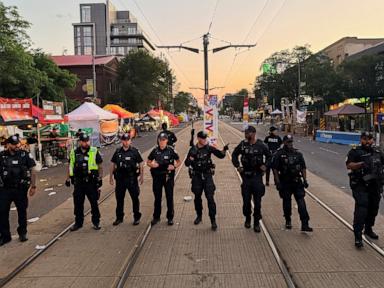
The smell of grilled corn and jerk chicken usually defines the mid-summer air in Toronto. By July, the city sheds its icy exterior, and tens of thousands of people pour into the streets to claim the fleeting warmth. They dance. They eat. They forget, for a few days, the claustrophobia of urban survival.
But on a warm Sunday evening, the rhythm broke. The laughter vanished, swallowed whole by a sound that has become terrifyingly familiar in modern cities.
Pop. Pop. Pop.
It sounds like firecrackers at first. It always does. People want it to be firecrackers because the alternative is too heavy to process while holding a paper plate of street food. Then the screaming starts, a visceral, collective howl that tears through the crowd, splitting the night into a permanent before and after.
When the smoke cleared on Danforth Avenue, a celebration of community had transformed into a crime scene. Two people lay dead. Multiple others were scattered across the asphalt, bleeding, wounded, their lives permanently altered in the span of a few chaotic minutes.
The standard news wires ran the facts within the hour. They gave the location. They counted the casualties. They cited the police press releases. But a body count does not capture the true cost of a mass shooting. It cannot measure the invisible fractures left behind in a neighborhood that used to feel safe.
The Anatomy of a Crowded Street
To understand what was lost, you have to understand the anatomy of a Toronto street festival.
These events are not just commercial operations; they are the lifeblood of a multicultural metropolis. For a weekend, the asphalt belongs to the people, not the cars. Grandmothers in lawn chairs watch toddlers chase bubbles. Teenagers flirt near the sound systems. It is a fragile ecosystem built entirely on a foundation of mutual trust.
Imagine a young woman—let’s call her Maya, a composite of the young professionals who flock to these neighborhoods. She had spent her week staring at a spreadsheet in a downtown tower. Sunday night was her release. She was laughing with friends, a half-eaten funnel cake in hand, deciding whether to grab one more drink before the Monday morning reality check.
In a single second, Maya went from a citizen enjoying her city to a survivor scrambling for cover behind a metal garbage can.
The physical wounds of a shooting are treated in the emergency rooms of St. Michael's Hospital or Sunnybrook. Surgeons work with practiced, terrifying efficiency to stitch together torn flesh and repair shattered bones. But the psychic shrapnel ripples outward, hitting thousands of people who never felt a bullet. It hits the parents who will now hesitate before bringing their kids to a parade. It hits the restaurant owners who watch their patios sit empty the following weekend.
The real tragedy of public violence is that it colonizes our joy. It turns a crowded sidewalk from a place of connection into a zone of tactical vulnerability.
The Cold Math of Modern Violence
Politicians invariably arrive at the microphones before the blood is fully washed from the pavement. They offer thoughts. They offer prayers. They promise swift action and a crackdown on illegal firearms.
But the data tells a much more complicated story than any campaign slogan can capture.
Statistically, Toronto remains one of the safest large cities in North America. Its homicide rates pale in comparison to cities of similar size across the border. Yet, the frequency of public, brazen shootings has ticked upward over the last decade. The weapons flowing across the border or leaking from domestic sources are more lethal, the triggers pulled with less regard for bystanders.
Consider the reality of emergency response. When a call goes out for "shots fired" at a festival, the logistical challenge is a nightmare. Thousands of panicked people are running in the opposite direction of the first responders. Police cruisers cannot navigate the barricaded streets. Paramedics must carry heavy trauma kits on foot through a sea of terrified citizens.
The systemic failure does not lie with the paramedics or the doctors. It lies in a societal pattern that treats these events as weather anomalies—unfortunate, unpredictable disasters that we must simply endure.
But guns do not fall from the sky like rain. They are purchased, smuggled, held, and aimed.
Reclaiming the Asphalt
The days following a tragedy follow a predictable script. The makeshift memorials appear first—bouquets of supermarket lilies wrapped in plastic, handwritten notes taped to lampposts, tea light candles melting into the pavement. Then come the town halls, the media analysis, and eventually, the quiet return of traffic.
The cars drive over the exact spots where people fought for their lives.
We are remarkably good at moving on. We have to be. If we stayed frozen in the horror of every tragedy, the city would grind to a halt. Yet, there is a dangerous line between resilience and numbness. When we accept that a street festival might occasionally require a triage tent, we have surrendered something fundamental to our way of life.
The solution is never as simple as adding more metal detectors or turning our public spaces into fortified compounds. A city defined by fear is no longer a city worth living in.
True recovery requires a stubborn, almost defiant willingness to occupy the spaces where fear tried to take root. It means showing up to the next festival. It means looking at the crowd not as a collection of potential threats, but as neighbors.
The music on Danforth Avenue stopped abruptly on a Sunday night. The echo of those shots will linger in the ears of the survivors for decades. But the final word cannot belong to the person behind the trigger. The ultimate act of resistance is to rebuild the trust that was stolen, ensuring that the warmth of the summer street belongs to the people, always.