The feel-good sports narrative is a lazy journalist’s favorite crutch. Right now, the media is obsessed with a specific flavor of regional sentimentality: the idea that a local kid making the NHL turns their hometown into a euphoric, unified collective of pure fandom.
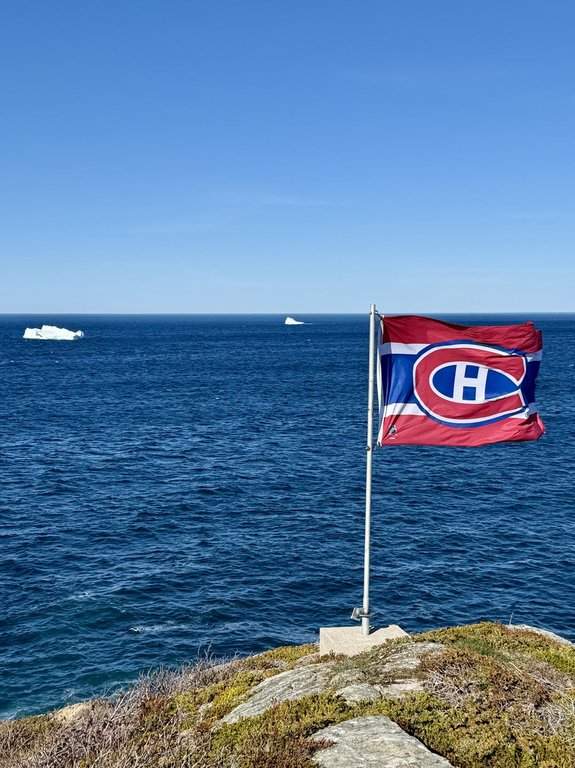
We see the headlines. Local bars in Newfoundland pack out for Montreal Canadiens playoff games, transforming into "mini Bell Centres" because St. John's native Alex Newhook is on the ice. The cash registers ring, the fans drape themselves in Tricolore flags, and the pundits weep tears of pure, wholesome joy. It is painted as a massive win for the community, a cultural awakening, and proof of a thriving local sports ecosystem.
It is actually a symptom of regional sports starvation.
The mainstream media misses the deeper, more damaging truth. This hyper-fixation on a single local export does not build up regional sports culture. It cannibalizes it. When an entire province relies on a handful of NHL athletes to validate its athletic identity, it masks a bleak reality: local development pipelines are fracturing, minor hockey costs are driving families to bankruptcy, and the domestic sports scene is being reduced to a spectator sport where the only goal is to watch someone escape.
The Economics of the Sentimental Echo Chamber
The argument for celebrating Newhook’s playoff run in Newfoundland bars usually boils down to local pride and economic boosts for hospitality. "Look at the crowded bars," they say. "Look at the jerseys."
Let’s look at the actual numbers. A packed bar on a Tuesday night in May is great for the bar owner. It is a rounding error for the local economy. More importantly, it does nothing to solve the catastrophic drop in youth hockey registration across Atlantic Canada.
Hockey Canada data shows a steady, systemic decline in registered players over the last decade, accelerated by skyrocketing equipment costs and ice-time fees that outpace inflation by a mile. Putting 200 people in a St. John's pub to watch a screen does not lower the $5,000-a-year entry fee for a kid trying to play competitive minor hockey in the province.
It is a classic distraction tactic. By focusing on the one percent of the one percent who made it to the Bell Centre, we ignore the structural decay at the grassroots level. We are celebrating the lottery winner while the local economy collapses.
The Escape Velocity Metric
In regional sports development, there is a concept I call Escape Velocity. It is the point at which an athlete must entirely leave their home ecosystem because the local infrastructure can no longer support their growth.
Newhook did not become an NHL regular by staying in Newfoundland. He left. He played prep school hockey at St. Andrew's College in Ontario, then went to the BCHL, and then to Boston College. His success is a testament to his talent and his family’s ability to fund a massive logistical operation, not the robustness of the local development system.
| Player | Hometown | Major Development Move |
|---|---|---|
| Alex Newhook | St. John's, NL | Left for Ontario Prep School / BCHL |
| Dawson Mercer | Bay Roberts, NL | Left for QMJHL (Drummondville/Chicoutimi) |
| Noah Dobson | Summerside, PEI | Left for Austria / QMJHL Acadie-Bathurst |
When we position these players as products of local sports culture, we lie to the next generation. The message should not be "Look what Newfoundland produced." The brutal, honest message is "Look how early you have to leave if you actually want a shot."
Dismantling the Premise of Regional Pride
If you look at public forums and local sports talk radio, the same questions pop up continuously. Let's address them without the PR spin.
Does international or NHL success by local players increase youth participation?
No. This is a thoroughly debunked sports management myth known as the "demonstration effect." While a brief spike in interest sometimes occurs after a major sporting event or a local player wins a championship, data compiled by sports scientists across various Commonwealth universities shows this interest rarely translates into sustained participation.
Why? Because the barriers to entry remain untouched. A child watching Alex Newhook score a playoff goal does not magically give their parents the money for registration fees, travel teams, or a new pair of skates every six months. The inspiration myth is a feel-good lie designed to shift the burden of development from institutional funding to abstract "willpower."
Aren't these bar gatherings proof of a vibrant local sports community?
They are proof of a vibrant consumption community, not a production community. There is a massive, fundamental difference between a culture that produces sports and a culture that consumes entertainment.
When a community's sports identity is entirely passive—sitting in a bar, buying licensed NHL merchandise, arguing on Twitter—it stops investing its emotional and financial capital into local leagues. The Newfoundland Senior Hockey League, once a titan of community identity, has spent years fighting for relevance and survival. Local senior teams play to half-empty rinks while bars pack out to watch a television broadcast of a game happening 1,000 miles away.
The Danger of the Single Savior Complex
I have seen sports organizations across North America fall into this trap. A region produces a superstar, and everyone takes a victory lap. The provincial boards issue press releases. The politicians show up for photo ops. Everyone takes credit for a success story they had almost nothing to do with.
This creates a dangerous complacency. It allows governing bodies to look at an NHL player and say, "See? The system works."
The system does not work. The system is an elite filter that works for those who can afford to bypass its regional limitations. Relying on the Single Savior Complex ensures that the infrastructure remains stagnant.
If Newfoundland, or any isolated hockey region, wants to build an authentic sports culture, it needs to stop acting like a colony sending raw goods to be refined elsewhere. It requires a complete inversion of priorities.
The Blueprint for Local Autonomy
- Defund the Elite Travel Teams: Stop pouring disproportionate subsidies into elite AAA travel programs that cater to the wealthiest five percent of players. Redirect those funds entirely into house league infrastructure and equipment banks.
- Tax the Consumption: If major corporations want to use local NHL stars for regional marketing campaigns, a percentage of those advertising budgets should be legally mandated to fund local ice time.
- Rebuild the Domestic Product: Prioritize the local senior leagues, the collegiate programs, and the junior leagues over the NHL broadcast schedule. If you want a real sports culture, the game happening down the street must matter more than the game on the television.
The Confession of the Cynic
There is a downside to this perspective. It makes you incredibly unpopular at parties. It strips away the comforting, cinematic romance of sports and replaces it with cold ledger sheets and structural critiques. It forces you to look at a room full of cheering fans and see a group of people distracting themselves from a failing system.
It is easy to cheer for the kid who made it. It requires zero systemic effort to put on a Montreal jersey and buy a pint of beer. It is comfortable, it is fun, and it gives you a cheap hit of communal pride.
But do not confuse entertainment with health. Do not confuse a packed bar with a thriving sports culture. The "mini Bell Centres" of the world are not signs of athletic wealth; they are monuments to our willingness to settle for the crumbs of the big leagues while our own backyard stays empty.
Stop watching the screen. Go look at the local rink. That is where the truth is.