Talking to your rivals shouldn't be a radical idea, yet in modern diplomacy, it often feels like one. For years, the relationship between Washington and Hong Kong authorities looked like a frozen tundra. Sanctions flew, statements bristled with anger, and official meetings slowed to a crawl. But a quiet shift is happening on the ground, and it signals a much more pragmatic approach to handling America's most complex Asian relationship.
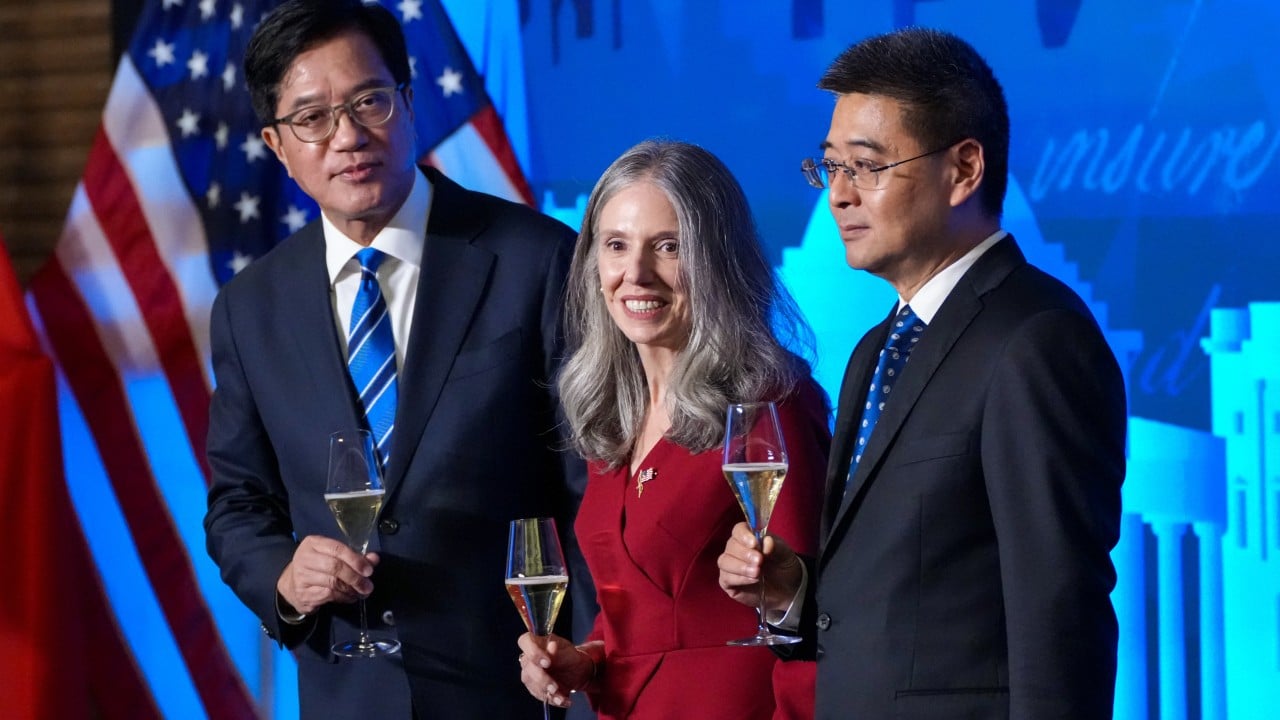
US Consul General Julie Eadeh is shifting the playbook. Instead of maintaining the icy distance that characterized much of the post-2019 era, the top American envoy in Hong Kong is actively looking to engage directly with city officials. She is openly upbeat about the broader trajectory of US-China ties, pointing squarely to the recent high-level summit between Donald Trump and Xi Jinping as the foundational blueprint for this renewed dialogue.
It's a stark contrast to her predecessor, Gregory May, whose tenure wrapped up with sharp public mutual recriminations over human rights and the extraterritorial reach of national security laws. Eadeh isn't ignoring those massive friction points, but she's changing the tone. The goal now isn't to shout across the fence; it's to get in the room.
The Pragmatic Pivot
Diplomacy isn't about agreeing with people. It's about managing risk with the people you disagree with most. Eadeh's willingness to sit down with local leadership, flanked by figures like Deputy Financial Secretary Michael Wong, shows a clear understanding that ignoring Hong Kong's executive branch doesn't protect American interests. It isolates them.
The economic reality makes total estrangement impossible anyway. Look at the numbers. US trade in goods with Hong Kong isn't just a corporate talking point—it directly supports roughly 140,000 jobs back home in the United States. The city remains a massive market for American agricultural exports and a key node for global financial operations. American firms haven't packed up and left in droves; most want to stay because they still make money here.
By grounding this local push in the stability of the Trump-Xi summit, the consulate is effectively insulating its local outreach from accusations of rogue meddling. If the two main bosses in Washington and Beijing are talking about trade deals and tariff suspensions, it makes perfect sense for their representatives on the ground to keep things moving.
Reading Between the Strategic Lines
Critics are already grumbling. Hardliners on both sides of the Pacific view any sign of warmth as a concession. In local commentary circles, Eadeh's deep history with the city—specifically her role as political chief during the 2019 protests—makes her a naturally polarizing figure. Some view her recent networking dinners and receptions as a continuation of old habits under a softer guise.
But this perspective misses how statecraft works in 2026. This isn't a retreat; it's a recalibration. Working with city officials on mutual pain points like cross-border financial fraud, intellectual property protections, and international drug trafficking benefits Washington just as much as it benefits Hong Kong.
You can advocate for human rights and protect economic interests simultaneously. The US administration's current approach treats these objectives as parallel tracks rather than a zero-sum game.
Moving Past the Cold Shoulder
The old strategy of total diplomatic freezing ran its course and hit a wall of diminishing returns. Continuing down that path would only guarantee that American business interests lose ground to regional competitors who are more than happy to fill the vacuum.
For professionals managing supply chains, financial portfolios, or corporate compliance in Asia, this shift toward direct engagement matters. It injects a layer of predictability into a market that has been volatile for a decade.
If you operate a business with ties to the region, stop waiting for a return to the pre-2019 status quo—it's not happening. Instead, align your regional compliance strategies with this new reality of "testy but functional" engagement. Monitor the upcoming financial dialogues closely. Watch how local officials respond to these American overtures in the coming months, as their willingness to reciprocate will dictate how smooth the business environment actually becomes.


