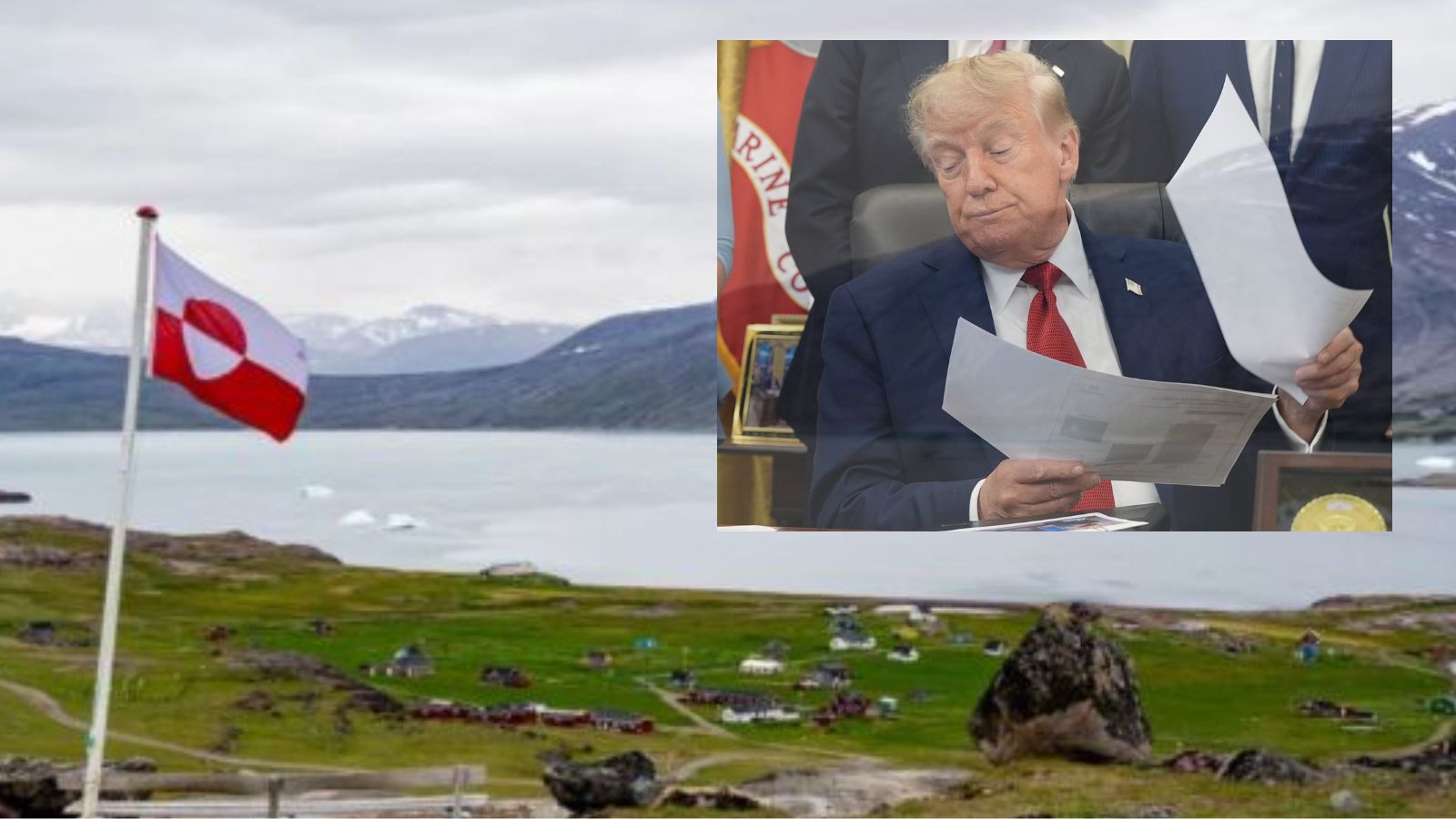
The headlines tell a tidy, comfortable fairy tale. Donald Trump stands alongside European leaders, declares victory over a new defense arrangement for Greenland, and the media nods along, framing it as a diplomatic masterclass or a narrow escape from annexation. Everybody gets a trophy. Washington secures its Arctic footprint, Copenhagen preserves its constitutional pride, and Nuuk gets a seat at the table.
It is a complete mirage. Meanwhile, you can find other events here: The Border Where Two Valleys Meet to Fight the Same Shadow.
I have spent years watching geopolitical theaters where politicians trade empty legalistic concessions for domestic television clips. The newly minted United States-Denmark-Greenland agreement is not a grand realignment of global power. It is a brilliant, smoke-and-mirrors face-saver that gives Washington almost nothing it did not already possess under the Eisenhower administration, while trapping Greenland in a permanent strategic cage disguised as sovereignty.
Let us dismantle the lazy consensus. To see the complete picture, check out the detailed report by The New York Times.
The Myth of New Territorial Access
The core narrative pushed by the White House is that the United States finally captured permanent control over Greenland. Trump crowed that Europe handed over the island on an unlimited basis.
Look past the podium rhetoric and read the actual text.
The agreement heavily updates and supplements the 1951 Greenland Defense Agreement. Under that Cold War-era framework, the United States already enjoyed sweeping rights to build, operate, and expand military infrastructure, most notably at what is now the Pituffik Space Base. The new pact permits the establishment of additional defense areas at Narsarsuaq and Mestersvig, alongside provisions for an eventual missile defense architecture.
This is not conquest. This is bureaucracy.
The Pentagon already had broad operational latitude across the Arctic landmass. What Washington actually wanted—outright territorial purchase or unilateral sovereignty—was flatly rejected. Denmark and Greenland did not surrender an inch of ownership. The preamble explicitly reaffirms the territorial integrity of the Danish Realm and Greenland’s constitutional path toward self-determination.
If you trade away your primary objective and settle for updating a seventy-five-year-old leasing framework, you did not win. You adjusted the rent.
The Sovereignty Trap for Greenland
While Washington celebrates a phantom victory, Greenlandic leaders are walking into a long-term trap wrapped in diplomatic velvet.
The text stipulates that should Greenland eventually exercise its legal right to full independence from Denmark, this defense treaty remains permanently binding. Furthermore, the island is locked into NATO security frameworks indefinitely, with strict vetoes granted to the United States over foreign investments in sensitive sectors like mineral extraction.
Imagine a scenario where a newly independent Greenland attempts to diversify its economic partnerships, perhaps courting foreign capital from non-aligned industrial powers to build out its rare-earth mining infrastructure. Under this agreement, Washington holds an effective veto over those investments if they touch sensitive security perimeters.
That is not self-determination. That is a gilded leash.
Local politicians in Nuuk who praised the deal as a triumph for local autonomy missed the fine print. They traded short-term diplomatic calm for a permanent ceiling on their economic sovereignty. They are still a strategic asset owned by someone else, only now the handcuffs are stamped with international law.
Why Beijing and Moscow are Smiling
The loudest cheerleaders of this deal assume it forms an impenetrable barrier against Chinese and Russian ambitions in the Arctic.
The agreement explicitly bars non-NATO actors from establishing military installations or maintaining a persistent security presence on the island. It sounds tough on paper. But grand strategy is not written in press releases; it is measured by resource allocation and economic gravity.
China does not need a naval base in Greenland to dominate its future. Beijing wants the minerals—the critical rare earths buried beneath the ice sheet that are essential for global technology manufacturing. By inserting the United States into rigorous investment-screening processes, the deal creates a chilling effect on global capital markets. It turns Greenland into a militarized zone where commercial mining projects face endless geopolitical friction.
Meanwhile, Russia continues to build out its formidable infrastructure along the Siberian Arctic coast, unfettered by diplomatic handwringing in Copenhagen. While Washington postures about a "Golden Dome" missile defense framework in the high north, Moscow upgrades its icebreaker fleet and solidifies actual logistical dominance across the polar shipping routes.
The Real Winner is Political Theater
Let us be entirely honest about why this agreement happened when it did.
The entire crisis was manufactured through aggressive rhetoric, countered by equally stubborn European posturing, and resolved by bureaucratic text-weaving that allowed every single leader to claim they beat the other guy. Trump gets to tell domestic rallies that he secured Greenland. Mette Frederiksen gets to tell the Folketing that she defended the Kingdom's borders.
Nothing fundamental changed about who holds the deeds, who controls the parliament, or how the Arctic balance of power actually shifts day-to-day.
Stop buying the spin. The next time a politician declares a permanent victory over a centuries-old geopolitical puzzle, check the expiration date on their promises. Real power does not need a signed photo op at the United Nations to prove it exists.