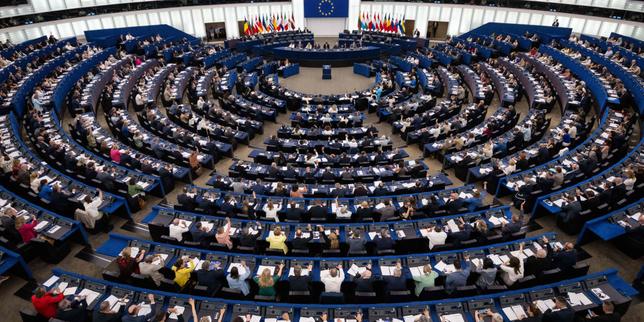
The tension inside the Strasbourg hemisphere just shattered whatever decorum was left in European politics. If you think the European Parliament is still a place of quiet, bureaucratic consensus, you missed Wednesday's explosive plenary session. Shouts of "Renvoyez-les !"—"Send them back!"—echoed from the far-right benches as a sweeping new migration reform crossed the finish line.
It wasn't just typical political theater. The math behind the vote reveals a fundamental tectonic shift in how Europe governs itself. The controversial "Return Regulation" passed with 418 votes in favor, 218 against, and 30 abstentions.
For decades, mainstream center-right parties maintained a cordon sanitaire—a political firewall—refusing to build majorities with the nationalist far right. On June 17, 2026, that firewall collapsed completely.
The Birth of the Hubs
The real story isn't just the shouting. It's what the law actually allows. For the first time, European Union member states have a formal legal framework to build and fund migrant detention centers outside the borders of the EU.
These are known officially as "return hubs." Critics call them something much darker.
Under the new rules, any migrant whose asylum application is rejected can be deported to a third-party country while awaiting final repatriation. The law allows member states to lock up individuals deemed a flight risk or a security threat for up to 24 months, with an option to extend for another six months.
That is two and a half years of detention.
Governments like Germany, Austria, the Netherlands, and Denmark are already actively drawing up plans to execute these deals. Greece wants its first external hub operating by 2027. Traditional hotspots like Rwanda, Uganda, and Uzbekistan are topping the shortlist of candidate nations tasked with managing Europe's deportees.
How the Political Firewall Collapsed
You can't understand this vote without looking at the raw political machinery that drove it. François-Xavier Bellamy, a key figure among the French conservative representatives within the European People's Party (EPP), openly celebrated the outcome. He called it an "historic step" and proof that "change is possible."
But that change required an alliance that used to be unthinkable. The EPP, which represents the traditional corporate center-right, joined forces with the hard-right Patriots for Europe (PfE), the European Conservatives and Reformists (ECR), and the sovereignist Europe of Sovereign Nations (ESN).
Data from recent legislative audits shows this isn't a fluke. The EPP's voting alignment with far-right factions has steadily climbed, moving from occasional agreement to coordinated, pre-voted amendments. On this specific text, the alignment was nearly total.
The political left is furious. During the vote, left-wing and green eurodeputies tried to drown out the right with boos and catcalls. They warn that outsourcing asylum processing to third-party states creates massive legal black holes where human rights cannot be monitored or enforced.
The 20 Percent Problem
Why did mainstream conservatives decide to break the taboo and link arms with nationalists? Look at the execution data.
Right now, only about 20% of official deportation orders issued to undocumented migrants within the EU are actually carried out. The rest get bogged down in bureaucratic appeals, a lack of diplomatic agreements with countries of origin, or simply a loss of tracking.
For the European public, that 20% statistic has become a political lightning rod. Mainstream parties felt immense pressure to show they could control the borders, especially with national elections looming across major EU member states.
The European Commission proposed this tightening a year ago to fix the enforcement gap. But by relying on far-right votes to pass it, the center-right didn't just pass a bill. They normalized a brand new legislative coalition that will likely dictate European policy on climate, trade, and corporate regulation for years to come.
Next Steps for EU Border Policy
The law is passed, but the operational mess is just beginning. If you want to know how this plays out in the real world, watch how member states handle the logistical hurdles over the next few months.
- Track the Bilateral Deals: Watch which EU nation signs the first formal contract with an external country like Uzbekistan or Uganda to host a return hub. The financial terms of these deals will set the baseline for the rest of the bloc.
- Monitor the Court Challenges: Human rights groups and NGOs are already preparing legal challenges based on international maritime law and the European Convention on Human Rights. Expect the first major injunction attempt before winter.
- Watch the Flight Data: The true test of this law isn't the political shouting in Strasbourg. It's whether that 20% deportation success rate actually moves upward once the external detention centers open their doors.
The ideological battle is won by the right, but executing externalized mass detention across international borders is a completely different beast.