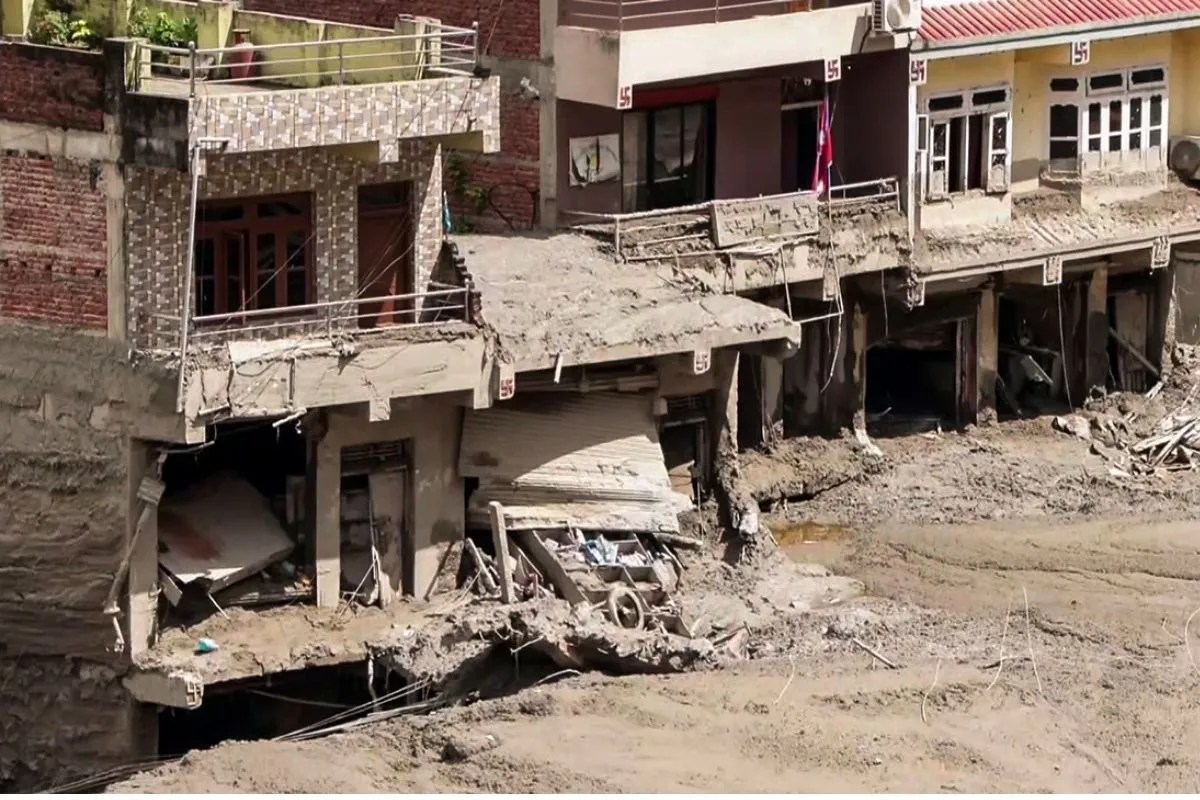
The monsoon does not negotiate. Year after year, the skies over the Himalayas open with a targeted fury, turning vertical topography into a kinetic conveyor belt of mud, stone, and water. When the latest catastrophic floods and landslides swept through Nepal, leaving hundreds dead and thousands missing, mainstream reports rushed to blame the clouds. They pointed to anomalous rainfall patterns and atmospheric rivers. They treated the disaster as an act of God, an unavoidable tragedy dealt by a changing climate.
That narrative is dangerously incomplete. Meanwhile, you can explore related stories here: The Anatomy of Geopolitical Friction Analyzing the Iran US Peace Memorandum Mechanics.
Climate change loaded the gun, but human choices pulled the trigger. The staggering death toll and the massive displacement of families across the Kathmandu Valley and surrounding districts are the direct result of decades of unmonitored road expansion, speculative real estate development on ancient floodplains, and systemic failures in early warning infrastructure. When you carve unengineered roads into fragile mountain slopes using heavy excavators without proper drainage, you are essentially manufacturing mudslides. When you pave over natural wetlands and choke river corridors with concrete encroachment, you invite the water to reclaim its territory.
Understanding the anatomy of this disaster requires looking past the daily casualty updates and examining the intersection of geography, governance, and rapid urbanization. To understand the full picture, we recommend the recent analysis by The Guardian.
The Mechanics of a Manufactured Disaster
Topography dictates survival in the Hindu Kush Himalayan region. Nepal sits on one of the most geologically active and fragile zones on the planet. The terrain is steep, young, and constantly shifting. Under natural conditions, forests and deep-rooted vegetation anchor the slopes, while meandering river systems absorb seasonal swells.
Over the past twenty years, however, rural road building has transformed this landscape. Local authorities and regional politicians often measure progress by the number of kilometers of dirt roads cut into hillsides, a practice known locally as bulldozer socialism. Operators cut paths across steep gradients without geological surveys, dumping the excavated debris downslope. This loose earth, called spoil, sits precariously above villages and riverbanks.
When torrential rains arrive, that loose spoil liquefies instantly.
[Unengineered Road Cut] -> [Loose Debris Dumped Downslope] -> [Heavy Monsoon Rains] -> [Massive Debris Flow]
This sequence repeats in valley after valley. The resulting torrents are not merely water; they are dense slurries of boulders and mud that move with enough kinetic energy to snap reinforced concrete bridges like dry twigs. The traditional stone-and-timber architecture of the middle hills, once resilient to minor shifts, has been replaced by poorly mixed concrete structures built directly in high-risk zones.
The Urban Trap in the Kathmandu Valley
Nowhere is this systemic vulnerability more visible than in the capital. The Kathmandu Valley, once a sprawling basin of fertile agricultural land and natural water retention ponds, has turned into an asphalt desert.
Rapid, unregulated urbanization has swallowed the tukucha and other secondary tributaries. Streams have been narrowed, piped underground, or walled in by commercial plazas and residential colonies. Real estate pressures drove developers to build directly over ancient wetlands and floodplains. These natural sponges used to absorb overflow during peak monsoon months. Without them, rainwater has nowhere to go.
When the Bagmati River and its tributaries breached their banks during the recent storms, water levels rose with terrifying speed because the drainage channels were choked with plastic waste and construction debris. People sleeping in ground-floor tenements had minutes to react. Many discovered too late that escape routes led straight into swirling, debris-laden currents running through narrow urban alleys.
The state response followed a predictable, reactive loop. Emergency responders mobilized search parties, helicopters plucked survivors from rooftops, and international aid pledges trickled in. Yet, within weeks, the political discourse shifted back to rebuilding the exact same structures in the exact same hazardous locations.
Systemic Failures in Early Warning and Evacuation
Technology exists to mitigate these catastrophes, but its implementation remains dangerously fragmented. Nepal has installed numerous hydrometric and meteorological stations across major river basins. In theory, real-time data feeds into central monitoring systems, triggering automated SMS alerts to downstream communities.
In practice, the last-mile connectivity often fails.
During the peak of the recent crisis, several communities received flood warnings hours after their homes had already been inundated. In other instances, warnings were sent in technical jargon via text message to villagers who were either illiterate or whose phones lacked signal during massive power outages. Sirens installed along riverbanks in vulnerable zones like Sindhupalchok and Helambu frequently malfunction due to lack of routine maintenance.
Furthermore, local disaster management committees are chronically underfunded and undertrained. While national disaster risk reduction authorities draft comprehensive policies on paper, municipal bodies lack the fiscal autonomy and technical personnel to enforce zoning laws or conduct mandatory evacuation drills. Building codes exist, but enforcement relies on bribery and political patronage. A developer with the right connections can easily bypass environmental impact assessments.
The Transboundary Dimension
Geography does not respect international borders, and neither do Himalayan river systems. Rivers like the Koshi, Gandaki, and Karnali originate in the high mountains of Tibet, flow through Nepal, and empty into the Ganges in India.
This creates a complex web of transboundary water governance challenges. Upstream rainfall data from remote Himalayan sectors is critical for downstream flood forecasting in both Nepal and the Indian plains of Bihar and Uttar Pradesh. While data-sharing agreements exist on paper, bureaucratic inertia and geopolitical friction often delay the flow of critical information during emergency windows.
When barrages and embankments are managed downstream without synchronized coordination with upstream flow rates, artificial bottlenecks form. Water backs up rapidly, flooding Nepalese border towns that had no hand in operating the downstream infrastructure. Effective flood mitigation requires a regional framework that treats the entire river basin as a single ecological unit, rather than a collection of national security checkpoints.
Breaking the Cycle
Insanity is building on a landslide zone and expecting the next monsoon to be kinder.
True resilience requires a fundamental overhaul of how development is funded and executed in the mid-hills and river valleys. It means halting the practice of unengineered road construction and shifting toward bio-engineering, using deep-root vegetation and proper terracing to stabilize slopes. It means granting municipal authorities the legal teeth to demolish illegal encroachments on floodplains, regardless of who owns the title deeds.
Early warning systems must be decentralized. Sirens need to be backed by community-led response teams equipped with satellite phones and megaphone networks that do not rely on cellular towers remaining operational during a storm.
Until the state confronts the uncomfortable truth that bad planning kills more people than bad weather, the annual monsoon will remain an unfolding humanitarian catastrophe. The rivers are simply reclaiming what was theirs, and no amount of political rhetoric will hold back the mud.