When disaster relief arrives in a tent camp, boxes of instant noodles and sacks of rice usually spell temporary relief. But in Nepal's flood zone, survivors are trading those exact food rations just to buy life-saving medication.
The catastrophic glacier collapse on August 26, 2026, left a staggering trail of destruction. At least 1,252 people died, thousands went missing, and entire communities were completely cut off from the outside world. Weeks later, surviving families living in temporary relief centers face a grim reality. Standard aid packages include food, but they don't solve immediate medical emergencies or provide cash for prescription drugs.
Take Suresh Kumar Karanjit. Staying at a relief center in Devighat within the Nuwakot district, he lost his younger brother to the floods. Then, he realized the camp lacked the precise prescription drugs he needed for his heart condition. Without cash to purchase his medicine, Karanjit did what many desperate people do. He sold a carton of relief-supplied noodles for 400 rupees, roughly $2.60, just to afford his prescription.
Living on the Edge of the Trishuli River
In towns like Bidur, the geography itself fights against recovery. The Trishuli River tore through normal pathways, destroying bridges and roads that locals rely on for daily transit. With infrastructure wiped out, communities improvised.
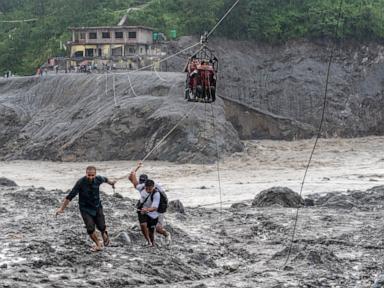
Residents constructed a temporary zip line to cross between the isolated riverbanks. Army personnel now stand by to help people strap into the makeshift cable system, steadying them as they soar across the churning water to reach the opposite side. Long lines of people wait patiently along the muddy banks for their turn on the wire, because it is currently the fastest route across a broken valley.
Official response teams report that health camps have been established at various shelters to manage sanitation and provide general care. Yet, individual chronic conditions often slip through the cracks of mass humanitarian distribution. When a survivor needs specialized heart medication, insulin, or specific blood pressure treatments, generic relief packages fall short. Trading rations on the informal market becomes a survival tactic.
The Massive Scale of the Humanitarian Crisis
Nearly 4,000 displaced people currently crowd into 34 relief centers across the worst-hit districts. The geographic toll extends far beyond temporary displacement. Hydropower projects throughout Rasuwa, Nuwakot, and Dhading suffered heavy damage. Hundreds of workers remain unaccounted for, with rescue operations focusing heavily on clearing blocked tunnels and debris. Specialized international teams from countries like India, China, and the United States have joined local authorities to search through treacherous underground sites.
At the Trishuli-3A hydroelectric tunnel, local lawmakers and work crews started manually opening upper passages. Heavy machinery cannot reach the site until engineers finish blasting rocks and clearing massive mudslides. Every day spent clearing rubble means another day that families in relief camps must stretch meager resources or barter aid packages for healthcare needs.
Disaster management officials claim they are scaling up sanitation efforts to prevent waterborne diseases from sweeping through the overcrowded camps. Still, the gap between institutional aid and daily survival remains wide. As long as bridges stay broken and specialized medications remain scarce in camp clinics, survivors will continue trading their daily bread for a chance at medical stability.