The air inside the Washington Hilton on the night of the White House Correspondents’ Dinner is usually a thick, expensive soup of perfume, hairspray, and the desperate hum of proximity to power. It is an annual ritual where the people who report the news and the people who make it pretend, for a few hours, that the knives are tucked safely under the tablecloths. But on the outskirts of that glittering bubble, reality was far grittier. While the tuxedoed masses laughed at scripted jokes, a different kind of script was being written in the shadows—one that ended in gunfire and a chillingly curated list of targets.
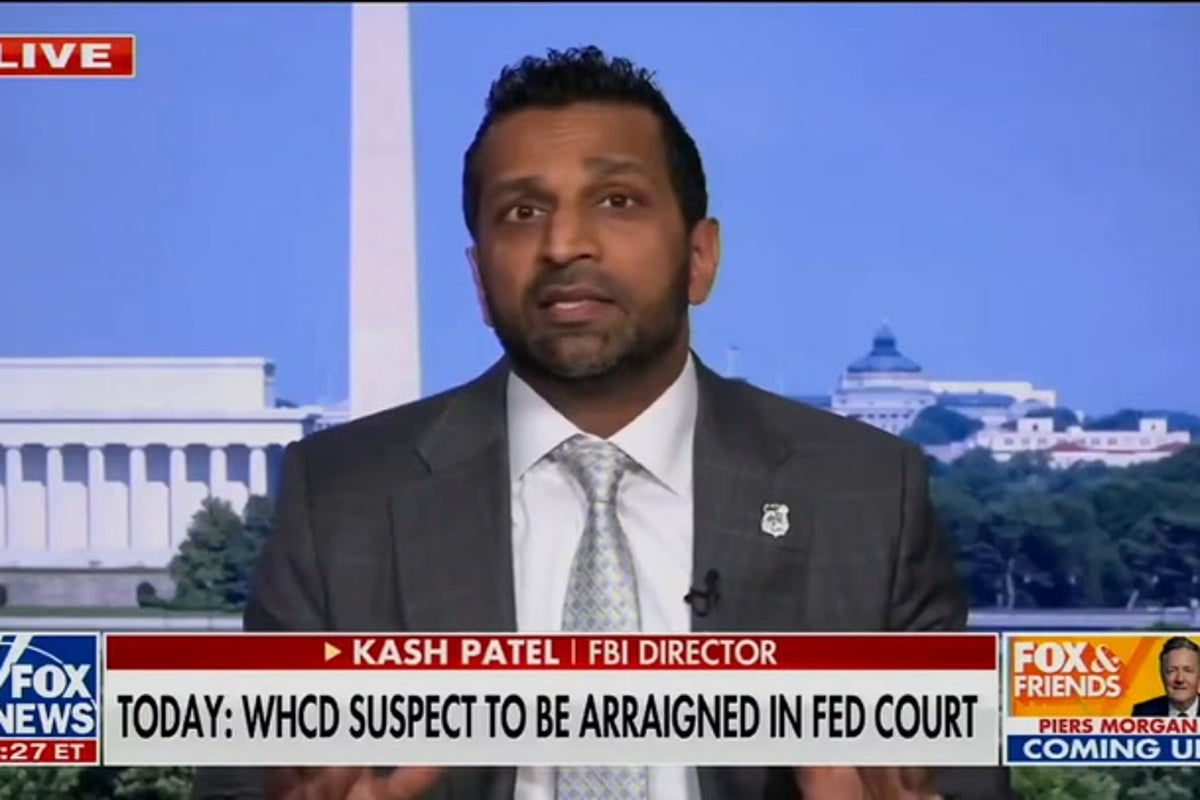
When the news broke that a gunman had opened fire near the festivities, the shockwave didn’t just hit the journalists and politicians in the room. It rippled out to those who have made a career out of being the lightning rods of American discourse. Among them was Kash Patel.
Patel is no stranger to the crosshairs. As a former high-ranking intelligence official and a fierce loyalist in the orbit of Donald Trump, he has spent years navigating a world where words are weapons and reputation is a battlefield. Yet, as the details of the shooter’s manifesto began to trickle out through law enforcement leaks, Patel found himself in a surreal psychological space. He wasn’t on the list.
The Weight of the Unspoken Word
There is a specific, jagged irony in being a man who characterizes himself as a primary target of the "deep state," only to find that a localized agent of chaos didn't deem you worth the ink. For Patel, the reaction wasn't just a sigh of relief. It was a complex moment of reflection on the nature of modern political violence and the strange celebrity of being a "villain" or a "hero," depending on which news cycle you inhabit.
Consider the mental state of someone who lives with a security detail. Imagine waking up every morning, checking the perimeter of your life, and knowing that your name is a shorthand for controversy in millions of households. You prepare for the threat. You internalize the possibility of the worst-case scenario. Then, a tangible threat manifests—a man with a gun and a manifesto—and he passes you over.
Patel’s reaction to being left off the manifesto wasn’t a boast of invincibility. Instead, it highlighted a disturbing trend in the American psyche: the gamification of grievance. We have entered an era where political figures are no longer just public servants or commentators; they are characters in a sprawling, high-stakes drama that some individuals take far too literally.
The Geography of a Manifesto
A manifesto is a map of a broken mind. It outlines a geography of hate, marking the landmarks of someone’s perceived failures and the people they blame for them. When investigators combed through the suspect's writings, they found names that mirrored the headlines of the week. They found the usual suspects of the Washington elite.
The omission of Patel is telling. It suggests that even in the distorted lens of an extremist, there is a hierarchy of relevance that shifts with the wind. To be left off the list is to be, momentarily, outside the storm. But for Patel, the incident served as a stark reminder of the environment he helped build and now inhabits. He spoke of the event not with the trembling voice of a survivor, but with the calculated tone of a man who understands that in the current climate, "not today" does not mean "never."
The shooter, a man whose motivations seemed to be a chaotic blend of personal failure and political obsession, didn't just fire bullets. He fired a warning shot at the very idea of civil society. The White House Correspondents’ Dinner is often criticized as a "nerd prom," a symbol of an out-of-touch elite. But when a gunman targets it, the event stops being a punchline and becomes a symbol of the fragile peace that allows for dissent, satire, and even the most heated political disagreements.
The Invisible Stakes of the Spotlight
We often talk about political polarization as if it were a weather pattern—something that happens to us, rather than something we create. We use metaphors like "the temperature is rising" or "the storm is gathering." But the reality is much more tactile. It’s the sound of a slide racking. It’s the weight of a bulletproof vest. It’s the silence of a name missing from a list.
Patel’s perspective on the shooting offered a glimpse into the defensive crouch that has become the standard posture for public figures. He didn't just react to the gunman; he reacted to the culture that produced him. He pointed to the rhetoric, the relentless demonization of opponents, and the way the digital world strips people of their humanity before the physical world ever gets a chance to.
There is a cost to the way we consume politics now. We treat it as entertainment, as a blood sport where we root for the destruction of the "other side." We forget that behind the names on the screen—the Patels, the journalists, the politicians—are people who go home to families, who have fears that don't make it into their social media feeds.
The Sound of the Silence
In the aftermath of the shooting, the conversation quickly pivoted. The news cycle moved from the terror of the moment to the political implications of the manifesto. Pundits dissected the names that were included, looking for patterns, seeking to blame the "other side" for the radicalization of the shooter.
But the real story lived in the silence of the omissions.
The fact that Kash Patel—a man who has been at the center of some of the most explosive political battles of the last decade—wasn't on that list says something about the randomness of modern rage. It isn't always logical. It isn't always a direct reflection of the intensity of a person's public profile. Sometimes, it is just a dark lottery.
Patel’s response was a mixture of defiance and a grim acknowledgment of the "new normal." He didn't back down from his rhetoric, but he recognized the lethality of the stage he stands on. It was a moment of clarity in a career defined by calculated opacity.
The gala went on, eventually. The jokes were told. The wine was poured. But the shadow of the man with the manifesto lingered over the Hilton. It reminded everyone that the walls between the "glamour" of Washington and the reality of a fractured country are thinner than they look.
We are living in a time where the list of who is hated is longer than the list of what we hope for. We are obsessed with the targets, the manifestos, and the names. We have become a nation of spectators waiting for the next act of a play that has long since stopped being funny.
Patel survived the night by virtue of being ignored. It is a strange kind of mercy. It leaves a man wondering what it takes to be noticed by the light, and what it takes to be forgotten by the dark. The gunfire outside the dinner wasn't just an attack on a building or a group of people; it was an echo of a deeper fracture in the American soul, a sound that persists long after the sirens have faded into the humid D.C. night.
The names on the list change. The grievances shift. But the ledger of chaos remains open, waiting for the next hand to pick up the pen. And in that ledger, silence is the only thing more haunting than a name written in red.