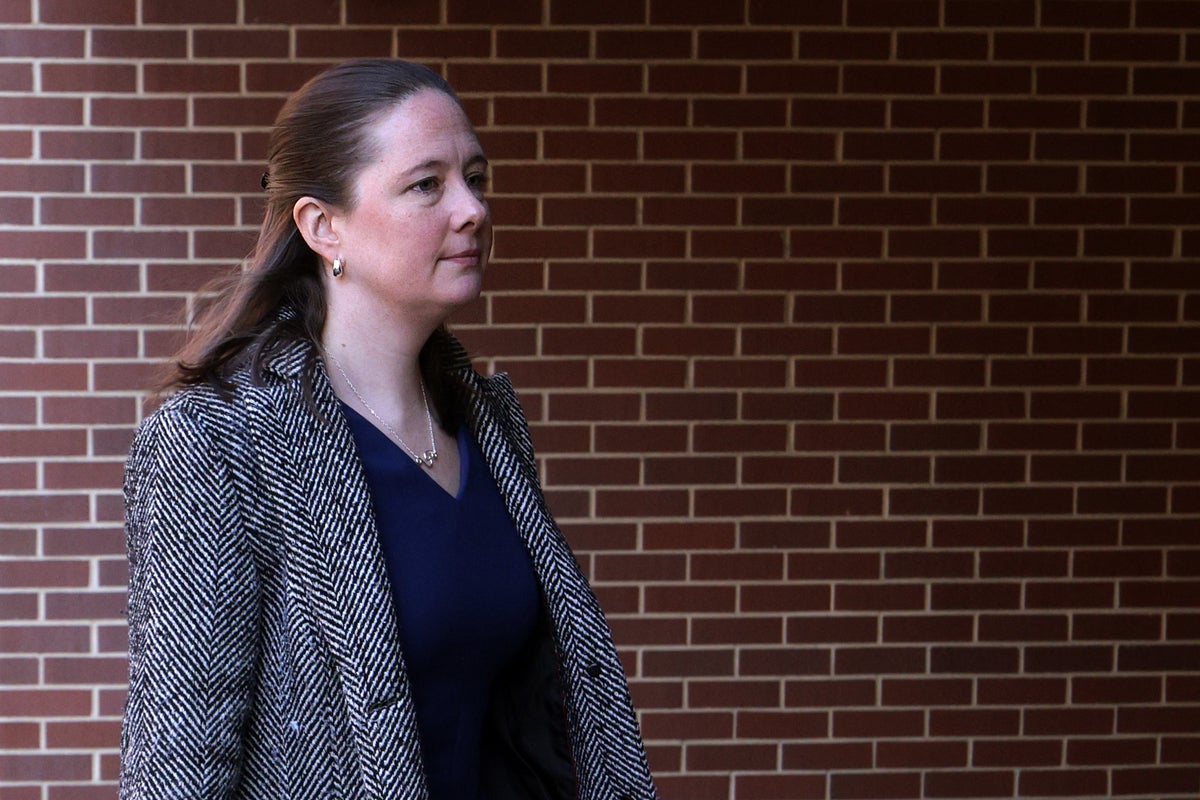
The marble halls of the Department of Justice are designed to feel permanent. They are built of heavy stone and echoes, meant to remind anyone who walks them that the law is a machine that grinds on long after the individuals inside have been replaced. But for Maurene Comey, those halls recently became a backdrop for a very personal kind of ghost story.
Imagine the quiet thud of a cardboard box being placed on a desk. It is a sound heard a thousand times a day in offices across the country, but in the world of federal prosecution, it carries the weight of a gavel. One day you are lead counsel on some of the most high-profile cases in the nation—the ones that lead the nightly news and keep senators awake—and the next, you are being told your badge no longer works. Also making waves in this space: The Spectacle of Unity and Why the Special Relationship is a Ghost.
Maurene Comey, a veteran prosecutor with a surname that carries its own heavy baggage in Washington, found herself at the center of this sudden silence. She was fired from her position as an Assistant U.S. Attorney in Manhattan, a role she had inhabited with a reputation for being steel-spined and meticulous. The reason given for her termination was "performance and conduct." It is a vague, clinical phrase that can mean everything or nothing at all.
But the law, as Comey is now arguing in a courtroom of her own, isn't just about the rules on the books. It is about the promises made to the people who enforce them. Further details on this are detailed by The Washington Post.
The Shield of Civil Service
Federal employees aren't supposed to be like corporate middle managers who can be cleared out during a bad quarter. There is a reason for this. We want the people prosecuting billionaire sex traffickers or corrupt politicians to feel insulated from the shifting winds of politics. We want them to know that as long as they do their jobs with integrity, the machine won't turn on them just because their last name is unpopular or their boss changed.
This protection is a concept known as due process. It is the invisible shield that stands between a civil servant and the whims of those in power.
When Comey was fired, she didn't just walk away. She sued. She alleged that the Department of Justice bypassed the very protections meant to keep the institution stable. She argued that she was a "preference eligible" veteran’s daughter—a specific legal status that grants certain federal employees enhanced protections against being fired without a chance to fight back.
The DOJ tried to shut the door. They moved to dismiss her lawsuit, arguing that the court didn't even have the jurisdiction to hear her complaints. They wanted the case buried in the bureaucratic equivalent of a shallow grave.
A Crack in the Marble
Then came the ruling.
U.S. District Judge Jia Cobb didn't decide whether Comey was a "good" employee or whether the firing was justified. That wasn’t the question at hand. Instead, the judge looked at the mechanics of the law. She looked at whether a person in Comey’s position has the right to stand in a courtroom and say, "Wait a minute."
The judge’s decision was a resounding yes.
By allowing the lawsuit to proceed, the court effectively validated a terrifyingly simple truth: nobody is above the process. Not even the Department of Justice. The ruling means that Comey can now move forward with her claims that she was denied the statutory right to appeal her termination to the Merit Systems Protection Board.
Consider the irony of a prosecutor, someone who has spent her life bringing the weight of the government down upon those who break the rules, having to use those same rules to stop the government from crushing her. It is a lonely position to be in.
The stakes here are far higher than one person's career. If a high-level prosecutor can be removed without the ability to challenge the "why" of it, then every desk in that building becomes a temporary seat. The independence of the office begins to erode. People start looking over their shoulders. They start wondering if the case they are building today will lead to their cardboard box tomorrow.
The Human Cost of Performance
The DOJ’s defense hinges on the idea that Assistant U.S. Attorneys serve at the pleasure of the Attorney General, suggesting a level of flexibility that borders on "at-will" employment. But the civil service wasn't built for flexibility. It was built for stability.
When we talk about "performance and conduct," we are often talking about a narrative constructed by those in charge. In the high-pressure cooker of the Southern District of New York, "conduct" can be a weaponized term. It can describe a genuine failure of ethics, or it can describe a person who refused to blink when they were told to.
Maurene Comey is the daughter of James Comey, the former FBI director whose own firing by Donald Trump set off a political firestorm that defined an era. It is impossible to strip that context away from this story. Whether you view the name with respect or disdain, the reality is that Maurene Comey grew up in the shadow of how the government treats its most prominent servants when they become inconvenient.
She saw the machinery from the outside. Now, she is trapped in its gears.
The government’s attempt to dismiss her case was a play for silence. They argued that because she was in the "excepted service"—a category of federal jobs that includes lawyers—she didn't have the same path to appeal as a postal worker or a clerk. Judge Cobb’s ruling suggests that the DOJ may have been playing fast and loose with the definitions of those protections.
The Long Road to Discovery
Now that the case has survived the motion to dismiss, we enter the phase of discovery. This is where the dry facts become vivid. This is where emails are read, meeting notes are scrutinized, and the "conduct" the DOJ cited must be dragged into the light.
It is a grueling process. For Comey, it means reliving the moment her career was severed, over and over again, in front of a gallery of peers and critics. It means proving that she wasn't just a name on a door, but a professional who earned her place through years of grueling litigation and successful prosecutions.
The DOJ now has to explain itself. They can no longer rely on the shield of "jurisdictional bars." They have to stand in the same light they usually shine on others.
There is a specific kind of silence that follows a ruling like this. It is the silence of an institution realizing it has to play by the rules it usually dictates. It is the sound of a box being unpacked, piece by piece, as a woman fights to prove that her life’s work cannot be erased by a signature on a termination letter.
The marble halls haven't changed. They are still heavy, cold, and echoing. But for a moment, the sound of a single voice has managed to cut through the noise of the machine. Maurene Comey is still standing, and for the first time in a long time, the Department of Justice is the one that has to answer the questions.
The law is a slow, methodical beast. It does not care about the headlines of yesterday or the politics of tomorrow. It cares about whether the steps were followed. It cares about whether the promise was kept. As this case moves forward, the entire federal workforce is watching, wondering if the shield they rely on is actually made of steel, or if it was just painted to look that way.
The name on the door may be gone, but the person who put it there is still in the room.