Silence has a weight. For decades, in a small village nestled against the Spanish hills, that weight sat in the corners of family rooms, heavy and unaddressed. My grandfather never spoke of his father. To utter his name was to summon a ghost who had vanished into the violent dawn of the Spanish Civil War. He was a Republican, swept away by the brutal tide of Francoist repression, swallowed by the nameless chaos of mass graves that scar the Iberian countryside.
History textbooks call it a conflict. Families call it an amputation.
When you grow up knowing that a vital piece of your bloodline was discarded into a trench like debris, something fundamental shifts inside you. You walk differently. You look at the soil with a suspicious eye, wondering what secrets lie beneath the olive groves and dry riverbeds. For generations, the official narrative of Spain treated these lost souls as statistical collateral. They were casualties of a necessary silence, tucked away beneath anonymous mounds so the nation could supposedly heal. But a wound does not heal when you simply sew dirt over it. It festers.
Dust.
That is what remains first. Then, the paperwork.
Searching for an ancestor erased by fascism is not an archival exercise. It is an archaeological dig through bureaucracy, fear, and institutional amnesia. My journey began not in a grand library, but in a damp basement filled with yellowed municipal registries that smelled of vinegar and forgotten years. Every page turned was a small battle against time. Names misspelled intentionally to protect the living. Dates altered to obscure execution. The paper trail of a state machinery designed to make human beings evaporate.
Consider what happens when a government decides a person never existed. Their tax records stop. Their marriage certificate gathers mold. Their children are left with whispered legends instead of birthrights. My great-grandfather, a modest man who believed in a republic that promised dignity to the working class, was reduced to a blank space on a family tree.
Except, memory is stubborn.
It lives in the grain of a surviving photograph. It lingers in the way an old aunt sighs when looking out the window toward the mountains. Armed with little more than a fading surname and a stubborn refusal to let the grave have the final word, I pieced together his final days.
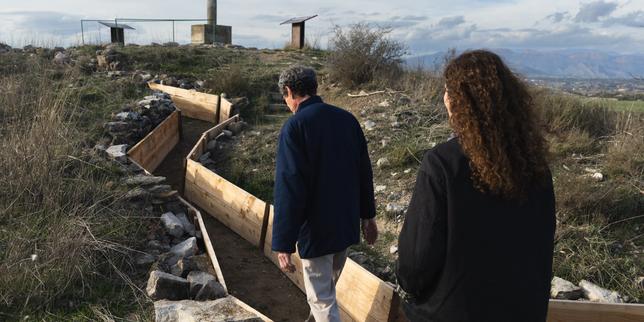
The trail led to the edge of a mass grave outside a quiet town. These sites are not marked with grand monuments. Often, they are hidden beneath modern asphalt, or tucked behind cemetery walls where the church turned its back. Standing there, the wind cutting through my coat, the abstract concept of historical trauma became painfully physical. Thousands of men and women, dumped like trash, their identities stripped away alongside their clothes and their pocket watches.
Excavating these pits requires more than shovels and brushes. It requires science, patience, and an unbearable amount of courage. Forensic anthropologists lean over mud-caked bones, searching for the small anomalies that tell a personal story. A healed collarbone. A specific dental bridge. A wedding band hidden inside a boot lining.
When the DNA match finally came through, it did not sound like a triumph. It sounded like a sob in an empty room.
He had a name. He had a face. He had a lineage that refused to be buried forever.
We talk about historical memory as if it were a political talking point, something debated by pundits in air-conditioned television studios. It is not. It is deeply, violently personal. It is the urgent need of a grandchild to look at a patch of earth and say, you mattered. You were here. You were loved, even when the world tried to turn you into nothing.
Spain is still littered with these invisible scars. Thousands of families are still walking past unmarked ditches, carrying the invisible burden of ancestors who have no graves. The state moves slowly, bogged down by political hesitation and the lingering shadows of a pact of silence that prioritized political convenience over human justice.
But truth has a way of rotting the wood beneath closed doors.
Every time a skeleton is exhumed, every time a DNA sample matches a living descendant, the architecture of impunity crumbles just a little bit more. We are not digging up bones to reopen old wounds. We are digging them up because the wound was never closed in the first place. It was only infected by denial.
My great-grandfather is no longer just a ghost haunting the margins of my family history. He rests now in a designated niche, his name carved clearly into stone, visible to the sun and the rain. He has his history back. And in reclaiming him, a piece of my own footing on this earth felt secure for the very first time.
The earth remembers what politicians try to forget, and eventually, the dead speak louder than the silence built to bury them.