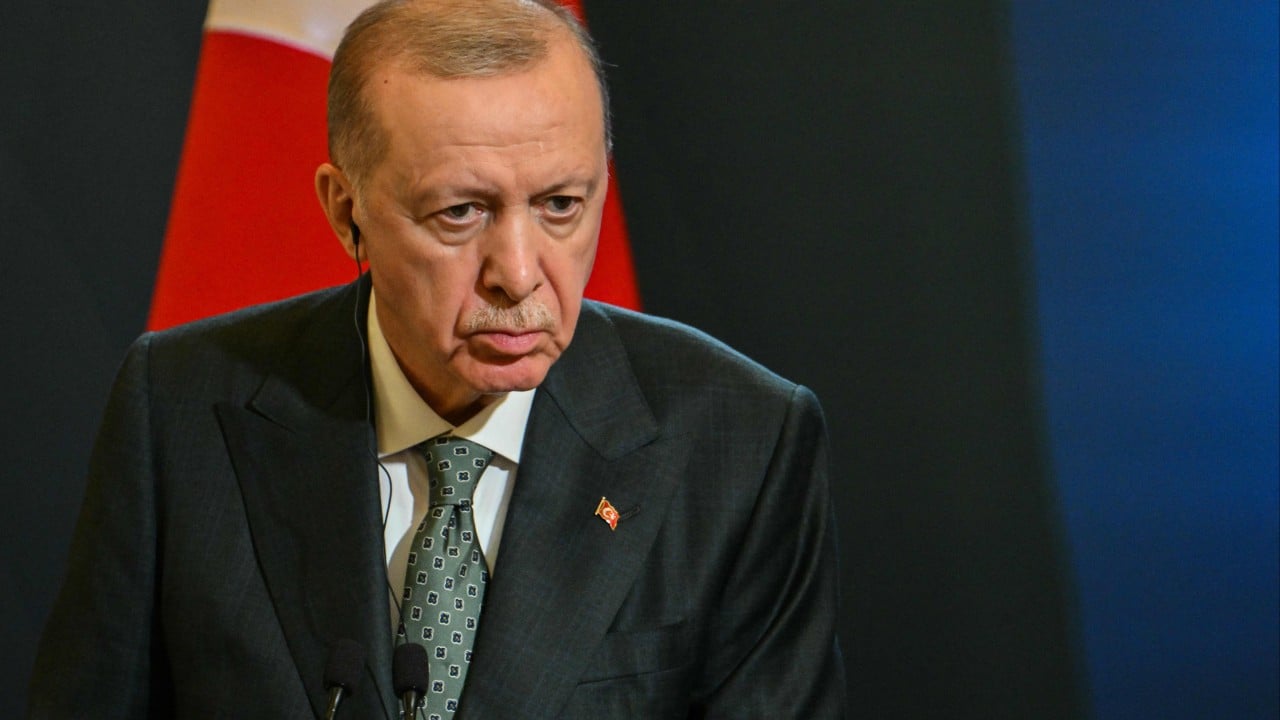
Geopolitical analysts love a good romance novel. For months, the prevailing consensus across Western think tanks and financial columnists has been nothing short of a love letter to Ankara. The narrative is comforting in its simplicity: by refusing to take a hard side in the escalating conflict between Iran and its regional adversaries, Turkey played a masterclass in "strategic ambiguity." The pundits claim Turkey weaponized its neutrality, protected its energy supply lines, and emerged as the ultimate economic victor while its neighbors burned.
It is a beautiful theory. It is also completely wrong.
What the lazy consensus labels "strategic ambiguity" was actually a desperate, reactive paralysis. Turkey did not win the Iran war. It survived it by the skin of its teeth, at the cost of its long-term economic credibility and its standing as a reliable regional hegemon. Sitting on the fence does not make you a mastermind; it just means you get shot at from both sides. While the talking heads marvel at Turkey's short-term GDP blips and temporary trade re-routing, they completely ignore the structural rot underneath.
The Illusion of the Neutrality Dividend
The core argument of the mainstream media relies on a flawed premise: that neutrality in a regional war automatically yields a net positive economic dividend. They point to Turkey’s continued importation of Iranian natural gas and the temporary surge in transit logistics as proof of victory.
Let's look at the actual mechanics of international trade finance during a regional conflict. I have spent years advising multinational firms on sovereign risk assessment in the Eastern Mediterranean. Here is what actually happens when a state tries to play both sides during a hot war on its border:
- Sovereign Risk Premium Spikes: International lenders do not look at strategic ambiguity and see stability. They see unpredictability. Turkey’s credit default swap (CDS) spreads during the peak of the conflict did not shrink; they fluctuated wildly, pricing in the constant threat of secondary Western sanctions.
- Capital Flight Outpaces Trade Gains: For every dollar Turkey made facilitating gray-market trade or re-exporting goods, two dollars of institutional foreign direct investment (FDI) fled the country. Long-term capital demands certainty, not a government playing geopolitical roulette.
- The Energy Stranglehold Tightened: Turkey did not secure its energy future; it deepened its dependency on a highly volatile, sanctioned neighbor. When you rely on a war-torn state for core industrial inputs, your entire manufacturing sector hangs by a thread.
Imagine a scenario where a manufacturing conglomerate decides to source its primary raw materials from two bitter corporate rivals who are currently suing each other into bankruptcy. The conglomerate claims this keeps costs low through competition. In reality, a single injunction or supply chain disruption brings the entire assembly line to a grinding halt. That is Turkey’s energy strategy in a nutshell.
Dismantling the Mainstream Claims
To understand why the "strategic ambiguity" thesis fails, we have to look at the three specific claims made by the competitor piece and dismantle them one by one.
Claim 1: Turkey Maintained Diplomatic Leverage with Both Washington and Tehran
The mainstream view suggests Ankara became the indispensable mediator. This is a delusion. In reality, Turkey lost trust with both camps. Washington viewed Ankara’s back-channel trade with Iran as a direct violation of Allied solidarity, leading to quiet but devastating exclusions from defense technology sharing programs. Tehran, conversely, viewed Turkey's adherence to certain Western financial restrictions as a betrayal.
When you try to be everyone's friend in a war zone, you end up as everyone's operational liability. The moment the conflict reached a critical juncture, both major blocs bypassed Ankara entirely, preferring direct, covert channels or more reliable regional intermediaries like Oman.
Claim 2: The Turkish Lira Benefited from Sanctions Evasion Wealth
This is perhaps the most economically illiterate take in circulation. The argument goes that capital flight from Iran flooded Turkish real estate and banks, stabilizing the Lira.
What actually happened? The influx of unverified, high-risk capital triggered intense scrutiny from the Financial Action Task Force (FATF). The threat of being gray-listed or facing systemic secondary sanctions forced major Turkish banks to freeze international transactions, slowing down legitimate, high-value export sectors. The short-term real estate boom in Istanbul did nothing to fix structural inflation or the central bank’s depleted net foreign reserves. It was a band-aid on a gunshot wound.
Claim 3: Ankara Secured Its Southern Border
The competitor article argues that by maintaining a neutral stance, Turkey prevented the conflict from spilling over into its territory.
This ignores basic geography and proxy dynamics. The power vacuum created by the intense focus on Iran allowed non-state actors and insurgent groups along the Syrian-Iraqi-Turkish borderlands to regroup, rearm, and shift territories. Turkey did not secure its border; it merely deferred a massive security bill that is coming due right now. The containment costs alone have drained billions from the national treasury—money that should have been used to stabilize the domestic economy.
Why "Strategic Ambiguity" Fails as a Corporate or State Doctrine
The obsession with strategic ambiguity isn't limited to geopolitics. You see it in the corporate world every day. CEOs refuse to commit to a specific technology stack, or hedge their bets across three conflicting market strategies because they want to "keep their options open."
I have watched major telecom firms blow through hundreds of millions of dollars trying to execute this exact playbook. They refuse to pick a lane, try to please every regulatory body and consumer segment simultaneously, and end up getting eaten alive by leaner, monomaniacal competitors who picked a side and executed flawlessly.
In high-stakes environments, ambiguity is not a strategy. It is the absence of a strategy. It is a sign that leadership lacks the risk tolerance to make a definitive choice.
| Strategy Metric | Strategic Ambiguity (The Myth) | Strategic Commitment (The Reality) |
|---|---|---|
| Capital Cost | Low (Assumed flexibility) | High upfront, lower over time |
| Partner Trust | High (Available to all) | Deep, structural alliances |
| Risk Profile | Hedged against all outcomes | Exposed to one, protected from others |
| Long-term ROI | Disastrous (Squeezed by both sides) | High (Winner-takes-all dynamics) |
The True Cost of Sitting on the Fence
If Turkey had taken a definitive, principled stance aligned with its long-term institutional frameworks, the immediate shock would have been painful. Energy costs would have spiked. Trade with Iran would have dropped to near zero.
But the long-term payoff would have been profound. Western capital, looking for a stable, secure alternative to the chaotic markets of the Middle East, would have flooded into a committed, rule-of-law aligned Turkey. The country could have leveraged its position to secure massive, permanent energy infrastructure investments from the West, permanently breaking its dependence on hostile regimes.
Instead, Ankara chose the path of immediate gratification and long-term stagnation. It took the quick cash from sanctions-busting and gave up the chance to become the undisputed financial and industrial hub of Europe’s periphery.
Stop reading the glossy analyses that treat geopolitical survival as a strategic masterstroke. Turkey did not win the Iran war; it just managed to survive the fallout while mortgaging its entire economic future to pay for the privilege.
Next time a consultant or an analyst tries to sell you on the virtues of keeping your options open during a crisis, fire them. Commitment has a cost, but ambiguity is an absolute wealth destroyer.