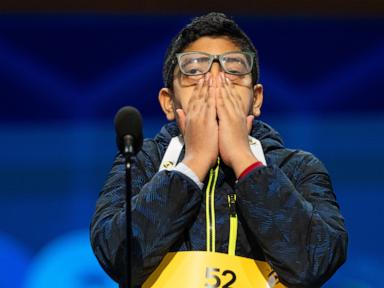
The media loves a good prodigy narrative. Every year, during the national spelling bee season, we are treated to the same tired, romanticized trope: the brilliant young etymologist who has achieved a deep, spiritual "mastery" of language. Journalists fawn over children who supposedly deduce complex Greek roots on the fly, painting a picture of high-level intellectual problem-solving.
It is a beautiful lie.
The lazy consensus among commentators is that rote memorization is a cheap trick used by a few lesser competitors, while the true champions win through structural linguistic understanding. This is fundamentally wrong. In the modern era of competitive spelling, "mastery" is a comforting myth we tell ourselves to feel better about the brutal reality of human memory. The truth is much colder: spelling bees are won by weaponized, high-volume data ingestion. The kids who hoist the trophy are not miniature linguists; they are elite data-processing units who have memorized the dictionary.
The False Dichotomy of Mastery vs. Memorization
Let's dismantle the premise that understanding etymology and memorizing words are two different paths to victory. They are not. Etymology is just a cheat code to help you memorize faster.
When an article claims that a speller succeeds because they understand the rules of Latin or Sanskrit, they ignore how language actually works. Languages are messy, inconsistent, and riddled with historical accidents. For every predictable rule, there are five exceptions born from centuries of regional slang, lazy pronunciation, and scribal errors.
A Thought Experiment: Imagine a speller who relies entirely on "mastery." They receive a word like ptarmigan (a type of bird). If they analyze the Greek root ptermis, they might logicalize the spelling. But the "p" in ptarmigan was actually added by a mistake in the 16th century due to a false belief that the word had Greek origins, when it actually came from Scottish Gaelic. The "mastery" speller loses. The kid who memorized the exact sequence of letters wins.
To trace the real mechanics of this competition, look no further than the official source material: Merriam-Webster’s Unabridged Dictionary. It contains roughly 470,000 words. You cannot logic your way through a dataset that large and irregular. You have to memorize it.
Why "People Also Ask" Questions Are Completely Flawed
If you look at what people search online regarding these competitions, the questions reveal a deep misunderstanding of cognitive science.
"How do spelling bee champions learn all those words?"
The public assumes they read literature, analyze root words, and absorb language naturally. They do not. They use spaced repetition systems (SRS) like Anki, digital flashcards, and custom databases built by private coaches. They treat words like lines of code, stripping away the actual meaning of the word to focus entirely on visual and auditory patterns. They learn via brute-force volume.
"Does winning a spelling bee prove high intelligence?"
It proves an extraordinary capacity for working memory, focus, and pattern recognition. But it does not prove linguistic intelligence in the way people think. A champion might know how to spell schambergite, but they likely cannot use it in a coherent sentence outside of the definition provided by the judges. It is a highly specialized, hyper-focused form of data retrieval, not general language fluency.
The Economics of the Modern Spelling Coach
I have watched families spend tens of thousands of dollars on private spelling coaches—many of whom are former champions themselves. If you talk to these coaches behind closed doors, they will tell you the exact same thing. They do not teach children to appreciate the beauty of language. They teach algorithmic elimination.
Coaches build proprietary software that tracks a student’s forgetting curve. They calculate exactly when a child is about to forget the spelling of bouquiniste and force them to review it precisely at that moment.
Standard Study Method:   Review Word -> Forget -> Re-learn (Inefficient)
Spaced Repetition:       Review Word -> Track Curve -> Review Before Forgetting (Optimal)
This is data engineering, not humanities research. The competitor who spends their time reading books for "contextual mastery" gets absolutely annihilated by the kid who spent eight hours a day clicking through an Anki deck configured by an elite coach.
The Dark Side of the Memorization Machine
To be fair, this contrarian reality has a massive downside. The relentless focus on raw memorization has turned the competition into an arms race that pushes human limits to the brink of psychological exhaustion.
When the competition relied on basic etymology, the word lists were manageable. Today, because the top tier of spellers have mastered the art of high-volume memorization, the organizers have to resort to "killer words"—obscure, highly irregular words that defy linguistic logic. This has changed the nature of the event in three distinct ways:
- The Death of Intuition: A speller can no longer trust their ear. Phonetics are a trap. The judges actively look for words where the pronunciation completely betrays the spelling.
- The Rise of Chronic Burnout: Children as young as ten are studying 40 to 50 hours a week outside of school. When your entire day consists of staring at letter combinations divorced from meaning, the brain rebels.
- Diminishing Utility: The skills acquired do not scale well. Unlike learning a second language, which opens cultural and economic doors, memorizing the spelling of chryselephantine yields zero practical benefits once the trophy is handed over.
Stop Looking for Meaning Where It Doesn't Exist
The media needs to stop trying to turn the national spelling bee into a high-brow intellectual pursuit. It is an extreme sport. It is the cognitive equivalent of a marathon or a high-stakes chess match. We do not ask an Olympic weightlifter if they have a deep philosophical connection to the iron they are lifting; we just measure how much weight they can move.
We should judge competitive spellers by the same standard. They are not young philosophers decoding the secrets of human communication. They are elite mental athletes pushing the absolute limits of human memory retention.
Accept the reality of the stage. The kids are not analyzing roots to find the truth. They are running a script in their heads, hunting for the exact sequence of characters they memorized three months ago at 4:00 AM. Stop looking for linguistic mastery. It’s a data game, and the best database wins.