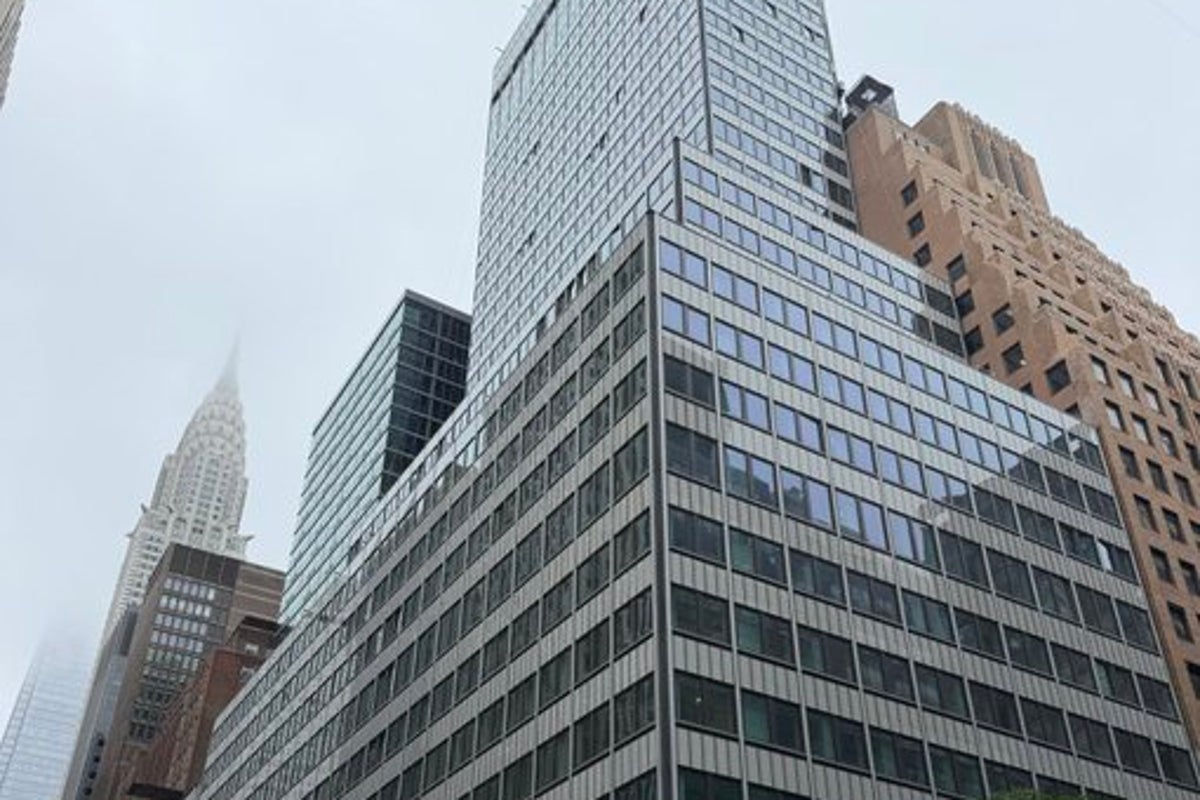
Media coverage of urban structural emergencies follows a predictable, broken script. A building gets evacuated. Sirens wail. The local fire department rushes in, tapes off a massive perimeter, and establishes a "collapse zone." Within minutes, news outlets pump out breathless headlines implying a 50-story skyscraper is about to tip over like a stack of Jenga blocks.
It makes for great television. It is also an engineering absurdity.
The lazy consensus driving these stories relies on a fundamental misunderstanding of modern structural engineering and municipal risk management. When the FDNY establishes a collapse zone around a high-rise, the public assumes the building is on the verge of pancake failure. In reality, the "collapse zone" is a highly conservative, bureaucratic protocol designed to protect personnel from localized facade shedding—not a diagnosis of impending structural doom.
We need to stop treating routine structural precautions as apocalyptic events.
The Mathematical Improbability of Spontaneous Skyscraper Collapse
To understand why the media narrative is flawed, you have to look at the sheer physics of modern high-rise construction. Steel and reinforced concrete structures do not simply give up and fall down because of localized shifting or mechanical failures.
Modern skyscrapers are built with massive redundancy. Under standard structural codes, buildings are engineered to withstand forces far exceeding their actual operational loads. This is achieved through specific design principles:
- Redundant Load Paths: If one structural column is compromised, the surrounding framework is designed to redistribute that weight to adjacent columns.
- Ductility: Modern steel and reinforced concrete possess high ductility, meaning they bend and deform under extreme stress before they break. They do not snap instantly.
- Wind and Seismic Engineering: High-rises are dynamic structures built to sway violently during hurricanes or earthquakes. A structural shift that clears out a building is often just the engineering working exactly as intended to absorb stress.
When a building is evacuated due to structural concerns—such as shifting beams or cracked support slabs—it means the building's monitoring systems are doing their job. It does not mean gravity is winning. In the history of modern engineering, no steel-frame high-rise has ever suffered a spontaneous, total collapse solely due to structural degradation without a massive, catastrophic catalyst like a prolonged, uncontrolled inferno or an explosive impact.
Dismantling the Collapse Zone Panic
Why does the FDNY or any other major metropolitan fire department declare a collapse zone if the building isn't going to fall? Because the term itself is widely misunderstood.
To an insider, a collapse zone is a perimeter established based on the height of the exterior wall. If a 20-story building has a loose piece of decorative concrete or a compromised glass curtain wall on the roof, that debris will fall outward as it descents. The collapse zone is calculated to keep firefighters and apparatus clear of the debris field, not a falling skyscraper.
Imagine a scenario where a piece of architectural cladding weighing 500 pounds detaches from the 30th floor. By the time it hits the pavement, it carries enough kinetic energy to crush a fire engine. The fire department establishes a perimeter to mitigate this exact hazard.
The media, however, hears the word "collapse" and reports it as if the entire steel skeleton is melting. This sensationalism distorts public perception of urban safety and creates unnecessary panic for local businesses and real estate markets.
The Economic Toll of Structural Alarmism
I have spent years analyzing urban infrastructure and municipal response frameworks. The real damage from these overblown incidents isn't physical; it is economic.
When a major high-rise is branded as "collapsing" by the media, the fallout is immediate:
- Massive Valuation Drops: The commercial real estate value of the property, and sometimes the surrounding block, plummets instantly as tenants panic.
- Insurance Premium Spikes: Actuaries rewrite risk profiles based on sensationalized news reports rather than actual engineering assessments, driving up costs for the entire district.
- Regulatory Overcorrection: City councils routinely pass knee-jerk ordinances requiring redundant, multi-million-dollar inspections that do nothing to improve safety but heavily burden property owners.
The contrarian truth is that an evacuated building is often the safest building on the block. It means engineers are actively managing the risk. The buildings you should actually worry about are the ones that haven't been inspected in twenty years because they haven't made the news yet.
Challenging the Premise of Urban Safety Questions
People looking at these incidents frequently ask the wrong questions. They ask: Is the city infrastructure failing? or Are our skyscrapers safe to live in?
These questions are fundamentally flawed because they assume safety is a static state. Infrastructure is constantly degrading and constantly being repaired. A building undergoing an emergency evacuation isn't a sign of a failed system; it is proof of an active, functioning safety apparatus. The system detected an anomaly, triggered an evacuation, and isolated the zone to fix the issue.
Stop looking at fire department perimeters as a sign of imminent catastrophe. They are bureaucratic buffers designed to handle falling glass and concrete flakes while engineers do the real, unglamorous work of reinforcing a structure that was never going to fall down in the first place.
Turn off the breaking news broadcast. Trust the redundancy of the steel beneath your feet.