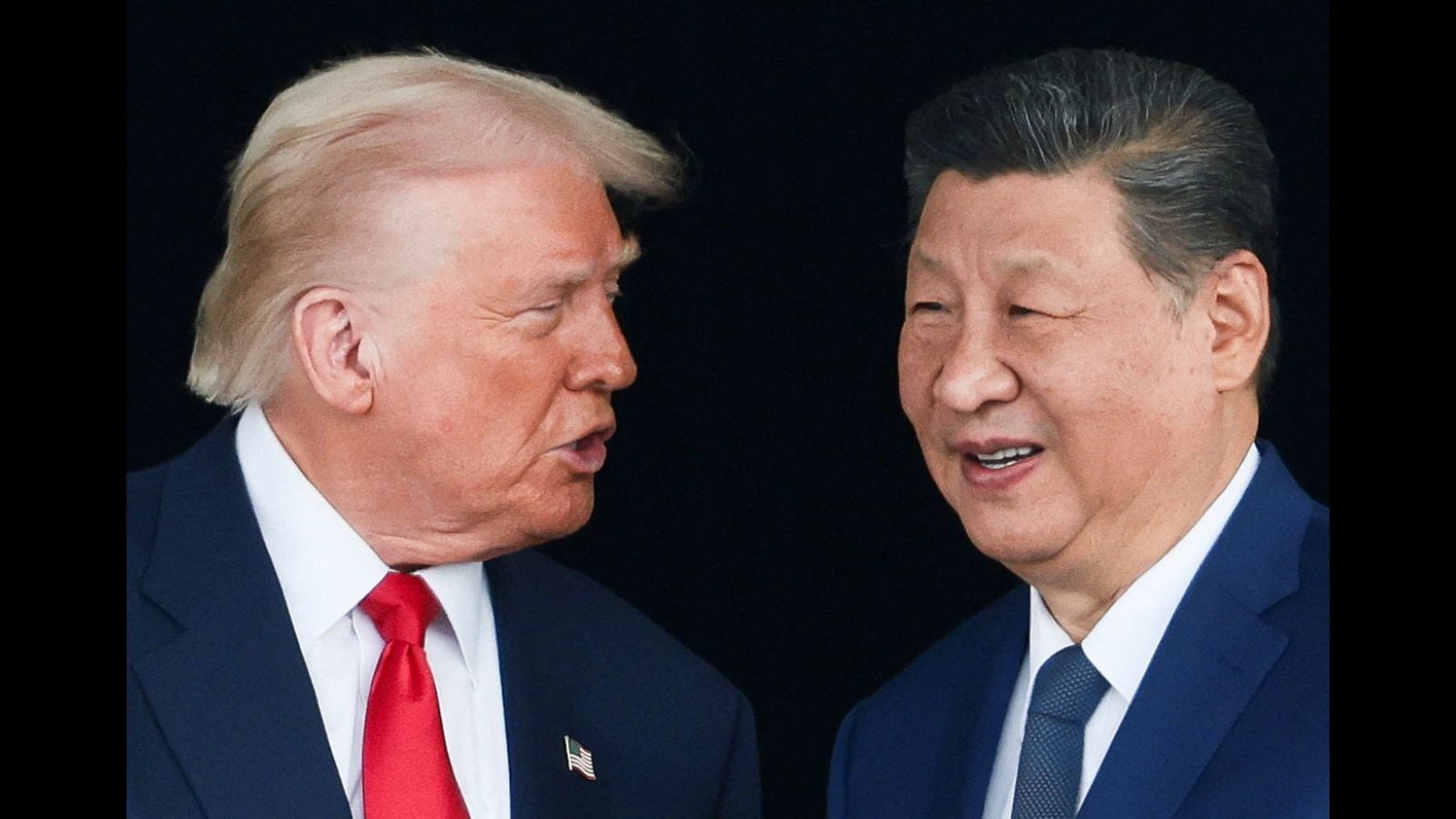
Mainstream media loves a good scoreboard. For years, the lazy consensus among foreign policy pundits has been that global leadership is a giant high school popularity contest. If the United States elects a divisive figure or stumbles domestically, the immediate knee-jerk reaction is to publish a breathless op-ed claiming that China is swooping in to steal the hearts and minds of the world.
It is a comforting, simplistic narrative. It is also entirely wrong.
The obsession with public opinion polls—tracking whether citizens in Germany or Kenya prefer Washington or Beijing—misses the fundamental reality of modern geopolitics. Soft power is a luxury good for fading empires. China does not care about being liked, and the United States does not lose power just because a foreign electorate rolls its eyes at American politics. While Western analysts wring their hands over favorability ratings, the real game is being played on the field of economic integration, supply chain dependencies, and hard infrastructure.
Stop looking at the popularity polls. They are measuring the wrong metric.
The Soft Power Trap
The core flaw in the "China's image is improving" argument is the assumption that global popularity translates directly into geopolitical leverage. It does not.
I have spent years analyzing cross-border capital flows and trade policies, and I can tell you that state actors do not make trillion-dollar infrastructure decisions based on how they feel about a country's leader. They make them out of cold, hard necessity.
Consider the Pew Research Center data that analysts love to cite. When a poll shows that views of the US have dipped in Western Europe during a controversial presidential administration, what is the actual, material consequence?
- Does France stop using the SWIFT banking system? No.
- Does Germany stop buying American defense systems? No.
- Does the UK ban American tech giants? Far from it.
Public opinion is volatile, superficial, and largely decoupled from state behavior. Foreign policy is driven by structural dependencies, not sentiments. When a nation aligns with the US or China, it is doing so because of security guarantees, technology architecture, or debt structures. Calling a bump in favorability a "strategic victory" is like a CEO celebrating Twitter likes while the company hemorrhages cash.
China's True Strategy Has Nothing to Do with Charm
Beijing understands this better than anyone. The Western press frequently misinterprets Chinese foreign policy as an attempt to win a global popularity contest. This is a fundamental misunderstanding of the Belt and Road Initiative (BRI) and China's broader economic statecraft.
China is not investing billions in African ports, South American lithium mines, and Southeast Asian railways to make friends. They are doing it to establish structural asymmetry.
[Target Country] ---> Economically Dependent on China (Debt/Infrastructure) ---> Geopolitical Compliance
When Beijing secures a 99-year lease on a port, it does not matter if 80% of the local population views China unfavorably in a poll. The structural leverage remains identical. This is hard power wrapped in commercial contracts, and it operates completely independent of global PR campaigns.
In fact, China’s domestic goals often deliberately sabotage its international image. The aggressive stance on Taiwan, the crackdowns in Hong Kong, and the "Wolf Warrior" diplomacy of recent years were terrible for China's global favorability ratings in developed nations. Yet, Beijing pursued them ruthlessly. Why? Because domestic control and regime security are paramount, and global PR is a distant, disposable priority. They are playing for keeps, while the West is playing for positive press coverage.
The Illusion of the American Decline
On the flip side, the narrative that American power is collapsing because of domestic political polarization is wildly overstated. The United States possesses structural advantages that a bad news cycle cannot erode.
1. Weaponized Interdependence
The global financial architecture runs on the US dollar. Despite endless talk of "de-dollarization" from BRICS nations, the greenback still dominates global trade, central bank reserves, and international debt. You cannot vote yourself out of the dollar system just because you dislike American foreign policy. The plumbing of global commerce is stickier than public sentiment.
2. The Tech and Defense Monopoly
The world's most critical advanced technologies—from AI infrastructure to foundational software—are overwhelmingly anchored in the US. Combined with a global network of formal military alliances (NATO, ANZUS, bilateral treaties), the US provides a security umbrella that no favorability poll can replace. A European nation might criticize Washington on a Monday, but they will still rely on American intelligence and military deterrence on Tuesday.
Dismantling the "People Also Ask" Delusions
If you look at what people actually ask about this shift, the questions themselves are built on flawed premises. Let's correct them directly.
Is China replacing the US as the global superpower?
No. It is becoming a formidable regional hegemon with global economic reach, but replacing the US requires a level of institutional trust and financial openness that China’s closed capital account prevents. A superpower requires allies; China has customers and debtors. There is a massive structural difference between the two.
Does a drop in US favorability mean fewer business opportunities?
Absolutely not. Multinational corporations do not shift supply chains because of political rhetoric. They shift them based on labor costs, regulatory stability, and infrastructure. American companies continue to expand into markets even when local sentiment toward Washington is hostile, because market incentives trump political opinions every single time.
The Downside of the Hard Truth
Admitting that popularity does not matter comes with a grim realization. It means that ethical alignment, public approval, and democratic consensus are not the primary drivers of global order. It means that foreign policy is inherently cynical, transaction-driven, and mechanical.
If you are a policymaker or business leader trying to navigate this landscape, relying on "improving global images" to predict stability is a recipe for disaster.
Stop reading the polling data. Look at the balance sheets. Look at the port ownership structures. Look at who controls the undersea cables and the semiconductor supply chains. That is where the real war is being won and lost, and it has absolutely nothing to do with who is smiling for the cameras.