Diplomats love signing memorandums of understanding. They provide excellent photo opportunities, fill press releases with grand declarations, and give the illusion of geopolitical momentum. The latest bilateral celebration between India and the Netherlands—promising deep cooperation across green hydrogen, semiconductors, and water management—is a masterclass in this bureaucratic theater.
The mainstream press laps it up, parroting the official line from the Ministry of External Affairs as if signing a document automatically builds a silicon fabrication plant or lowers the cost of clean energy.
It does not.
If you strip away the diplomatic boilerplate, the celebrated Indo-Dutch tech alliance reveals itself to be a structural mismatch. It pairs two nations with fundamentally incompatible industrial strengths, misallocates capital away from immediate economic realities, and ignores the harsh physics of supply chains.
I have spent nearly two decades auditing technology supply chains and advising sovereign wealth funds on infrastructure bets. I have watched billions of dollars vanish into the black hole of "strategic partnerships" that look great on paper but collapse under the weight of commercial reality. This alliance, in its current form, is heading down the exact same path.
Let us dismantle the three pillars of this consensus, piece by piece.
The Semiconductor Fantasy: Buying ASML Machines Does Not Make an Ecosystem
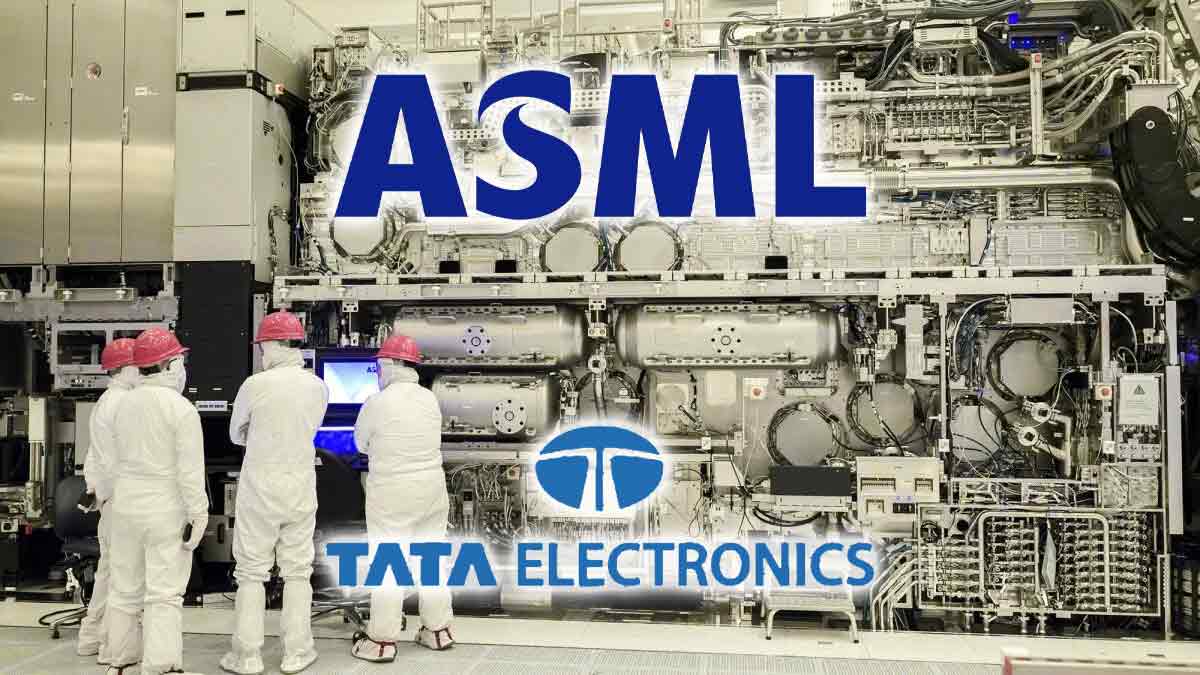
The headline-grabbing core of this bilateral agreement is semiconductor collaboration. The logic seems simple to the uninitiated: the Netherlands controls ASML, the monopoly manufacturer of Extreme Ultraviolet (EUV) lithography machines required for advanced chips. India wants to become a global chip manufacturing powerhouse. Therefore, a partnership is a match made in heaven.
This is a profound misunderstanding of how the semiconductor industry functions.
First, ASML does not hand out lithography machines because of a diplomatic handshake in New Delhi. They have a massive backlog, and their order book is dominated by players who possess the specialized infrastructure to run them: TSMC, Samsung, and Intel.
More importantly, chips are not built by lithography machines alone. A modern semiconductor fabrication plant (fab) requires an ultra-pure, hyper-stable operational environment that India is nowhere near ready to provide at scale.
- The Power Grid Fallacy: An advanced fab cannot tolerate a microsecond of power fluctuation. A single voltage dip can ruin an entire batch of silicon wafers, costing millions of dollars. India’s grid, while improving, still relies heavily on coal and lacks the flawless reliability demanded by leading-edge fabs.
- The Chemical Supply Chain Void: Fabs consume massive quantities of ultra-high-purity gases and specialized chemicals (like photoresists and fluorinated acids). These cannot be shipped easily over long distances; they need to be produced locally. India completely lacks this sub-tier chemical supply chain.
- The Yield Rate Reality: In my years auditing manufacturing lines, the only metric that matters is yield—the percentage of usable chips per wafer. New fabs routinely operate at a loss for years trying to get yields above 80%. Believing that Dutch expertise can magically bypass this brutal learning curve is a fantasy.
India should stop trying to build capital-intensive, leading-edge silicon fabs to compete with Taiwan or South Korea. It is a game they are decades behind in. Instead, the focus must shift to chip design—where India already possesses an elite talent pool—and legacy nodes (28nm and above) that power automotive and industrial applications. Trying to leapfrog straight to advanced manufacturing via a Dutch partnership is a recipe for a multi-billion dollar taxpayer-funded disaster.
Green Hydrogen: The Physics Problem Diplomatists Ignore
The second pillar of the Indo-Dutch agreement is green hydrogen. The Netherlands aims to be the green hydrogen gateway to Europe through the Port of Rotterdam. India wants to become a massive exporter of cheap green hydrogen, leveraging its abundant sunlight.
The arithmetic looks beautiful. The physics is a nightmare.
Green hydrogen is not a drop-in replacement for fossil fuels. It is a highly volatile, notoriously leaky molecule that embrittles steel pipelines and requires immense energy just to compress or liquefy for transport.
Imagine a scenario where India produces green hydrogen in Rajasthan using solar power. To get that hydrogen to the Port of Rotterdam, you must:
- Use electricity to split water via electrolyzers (losing 30-40% of the energy upfront).
- Compress or liquefy the hydrogen at -253 degrees Celsius (consuming another 10-15% of the energy).
- Ship it thousands of miles on specialized cryogenic vessels (losing more energy to boil-off during transit).
- Regasify it in Rotterdam.
By the time the energy reaches a European factory, the round-trip efficiency is catastrophically low. The cost per kilogram becomes completely uncompetitive compared to localized European production or simpler alternatives like green ammonia.
[Solar Power] -> (Electrolysis: -35%) -> (Liquefaction: -15%) -> (Shipping Losses) -> [End User: ~40% Efficiency Left]
The Netherlands is pushing this narrative because they desperately need to secure future energy imports to hit their climate targets. India is playing along because it sounds visionary. But under current economic and physical constraints, exporting liquid green hydrogen across oceans is an exercise in thermodynamic futility.
If India wants to lead in hydrogen, it must ignore the export market entirely. It should use that hydrogen domestically, right next to the production source, to decarbonize its own heavily polluting steel and fertilizer industries. Shipping it to Europe is an expensive geopolitical parlor trick.
Water Management: Exporting Dutch Solutions to Indian Realities Fails
The final leg of the tripod is water management. The Netherlands is legendary for its water engineering. They mastered the art of keeping the sea at bay, managing deltas, and building intricate dyke systems.
Naturally, the consensus view is that India—plagued by alternating cycles of severe droughts and catastrophic urban flooding—should import this Dutch expertise wholesale.
It routinely fails. The reason is a fundamental mismatch in scale, climate, and governance.
Dutch water management is designed for a low-lying, temperate geography with predictable, steady rainfall and a highly centralized, compliant population. India’s water crisis is defined by the monsoon: an absolute deluge of water packed into a few intense months, followed by long periods of bone-dry heat.
- The Scale Mismatch: The entire population of the Netherlands is less than that of Mumbai. The administrative structures that allow Dutch water boards to manage infrastructure seamlessly do not translate to Indian municipal corporations crippled by bureaucratic inertia and political infighting.
- The Maintenance Trap: I have reviewed water infrastructure projects across the global south funded by European development loans. Western engineers design beautiful, high-tech filtration and flood-control systems. Two years later, they are choked with solid waste and abandoned because the local municipality lacks the budget, technical skill, or political will to maintain them.
Importing Dutch delta-management models to fix flooding in Chennai or Bengaluru is trying to cure a systemic lifestyle disease with a localized surgical strike.
India does not need hyper-engineered Dutch dykes or automated sluice gates. It needs radical, low-tech watershed management: restoring ancient urban wetlands that were illegally paved over by real estate developers, enforcing strict rainwater harvesting laws, and cleaning up local lakes so they can act as natural retention basins. This is a political and enforcement problem, not an engineering problem that can be outsourced to Europe.
The Hard Truth About Bilateral Tech Corridors
Why do we keep falling for these announcements? Because they serve the immediate political interests of both governments.
For the Netherlands, partnering with India offers a strategic entry point into the world's most populous market and provides a geopolitical counterweight to China. For India, aligning with an advanced European economy signals to global markets that it is ready to operate at the top tier of technology value chains.
But if you are an investor, a tech executive, or a policy analyst, you must learn to look past the ceremonial handshakes.
True technological capability cannot be imported via a bilateral agreement. It is built through decades of unglamorous domestic reforms: upgrading basic electrical grids, building local chemical supply chains, enforcing contract law so foreign companies feel safe transferring intellectual property, and fixing basic municipal governance.
Stop celebrating the signatures on the treaty. Start watching the capital expenditure on the ground. Until India fixes the foundational infrastructure gaps that make chip fabrication and hydrogen transport economically unviable, these grand announcements are nothing more than expensive diplomatic fiction.
The next time you read a press release about a revolutionary international technology corridor, ask yourself one question: Are they solving a physics problem, or are they just staging a photo op? The answer is almost always the latter. Let the diplomats have their champagne; smart capital looks elsewhere.