The rain in the hills does not fall as drops. It arrives as weight.
You hear it first against the corrugated tin of the roof—a sound like gravel pouring from the bucket of a front-end loader, steady and deafening—and then you smell it. Wet earth, pulverized stone, and the sharp, ferrous tang of exposed iron. In the high valleys of Nepal, monsoon is not a season. It is an occupation.
Ram Maya didn't need the satellites to tell her the world was shifting. She felt it in the soles of her bare feet as she stood on the mud porch of her ancestral home in Sindhupalchok, watching the yellow froth of the Indravati River climb another foot up the stone embankment. Satellites orbiting four hundred miles above the earth see in spectral bands, measuring red-edge reflectance and synthetic aperture radar backscatter. They translate catastrophe into pristine grids of pixelated indigo and ash. They show the scars. They do not show the cardamom plants rotting in the silt, or the sound of an entire hillside letting go in the dark like a tearing sail.
To understand what happened to Nepal during the catastrophic monsoon floods, you have to look past the cold arithmetic of disaster management. You have to look at the ground.
The View from Above
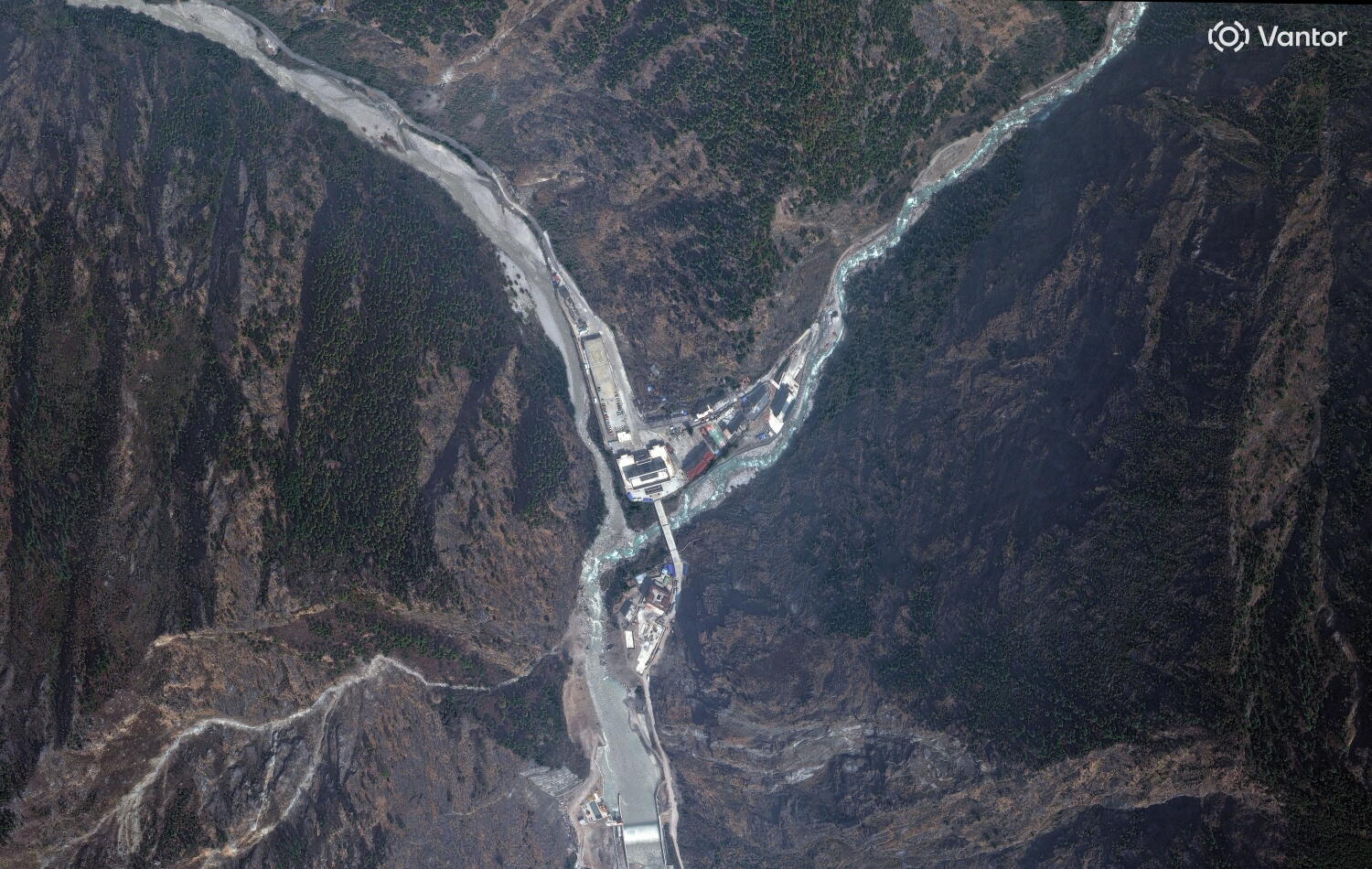
In the orbital imagery released by agencies like Planet Labs and the European Space Agency, the transformation is surgical. Before the rains, the river valleys trace green ribbons through the folds of the Lesser Himalaya, terraced fields stepping down to the water like emerald staircases. After, those same valleys are smeared with charcoal and gray. Entire swaths of forest simply vanished, sloughing off the steep gradients as if the earth had grown tired of holding them.
The mechanics of this destruction are as brutal as they are simple. When unremitting downpours saturate soil beyond its liquid limit, gravity reclaims what took centuries to accumulate. The upper slopes give way first, sending a slurry of boulders, mud, and ancient pine trees hurtling downward at highway speeds. By the time these debris flows reach the alluvial plains and the narrow gorges, they are moving liquid batter capable of snapping reinforced concrete bridges like dry twigs.
Meteorologists noted that rainfall totals in certain districts exceeded historical averages by terrifying margins over a compressed forty-eight-hour window. This is the fingerprint of a warming atmosphere. Warmer air holds more moisture; the Himalayas act as a massive orographic wall, wringing every last drop out of the clouds until the air has nothing left to give.
Yet numbers on a meteorologist's clipboard are frictionless. They slide off the mind.
Imagine standing on a ledge where your kitchen used to be. The floorboards are gone, sheared away cleanly by three thousand tons of mud that now occupies your living room. The family photos you spent decades collecting are somewhere beneath twenty feet of gray sludge, mingling with the neighbor’s corrugated roof and the carcass of a water buffalo. That is what a before-and-after satellite comparison actually signifies on the ground. It is not a geometry problem. It is an erasure.
The Fragility of Stone and Slope
Geography in Nepal is a constant negotiation with verticality. More than eighty percent of the country is mountainous, carved by some of the most dynamic and aggressive tectonic forces on the planet. The Indian tectonic plate continues to grind northward beneath the Eurasian plate, pushing the Himalayas upward by a few millimeters every year. The mountains are literally growing, which means they are inherently unstable. They are crumbling monuments to geological violence.
For generations, communities built their lives along the narrow valley floors because that is where water runs and crops grow. They terraced the hillsides with backbreaking labor, stacking dry-stone walls to hold back the earth. But those traditional systems were calibrated for a predictable rhythm of monsoons—heavy rains, yes, but rains that allowed the soil to drain, breathe, and recover between storms.
The modern climate does not negotiate. It hammers.
When cloudbursts drop a month’s worth of rain in a single afternoon, the terraced walls blow out like dykes under artillery fire. The water finds every weakness, every poorly managed drainage channel, every road cut carved haphazardly into a hillside by heavy machinery during haphazard infrastructure expansion.
Road construction, ironically, has become one of the primary catalysts for rural landslides in the middle hills. To connect isolated mountain hamlets to the national grid of commerce, local governments often use bulldozers to carve unpaved tracks into steep slopes without proper retaining walls or drainage culverts. The loose soil pushed aside by the blades—known locally as spoils—is dumped down the slope. When the first heavy monsoon rains arrive, that loose spoil turns into a lubricated chute for disaster, taking the original road and the houses below it along for the ride.
We are engineering our own vulnerability. We mistake asphalt for security.
The Human Geometry of Loss
Disaster statistics are notoriously bloodless. We read that thousands were displaced, that hundreds of millions of dollars in infrastructure were pulverized, that bridges spanning the Marsyangdi and Trishuli rivers were swept away like toothpicks.
Behind every statistic is a logistical nightmare of survival.
Consider what happens the morning after the mountain falls. The electricity is gone because the transmission towers crumpled like tin foil. The roads are severed in three dozen places by massive plug landslides, cutting off even foot travel. Cell towers rely on backup batteries that die within six hours; after that, the valleys go silent.
In these first critical hours, international satellites are spinning overhead, snapping high-resolution frames of the devastation for aid organizations in Geneva and Washington. Meanwhile, ten miles below, villagers are digging through three feet of wet silt with their bare hands because the shovels were buried in the shed that is now fifty yards downriver.
This is the dissonance of modern catastrophe. We live in an era where we can diagnose a disaster from space before the dust has even settled, yet the immediate rescue relies on the oldest technology known to humanity: neighbors pulling neighbors out of the mire by their wrists.
Ram Maya’s village was luckier than most. The main landslide bypassed the village center by fifty meters, stopping just short of the primary school before halting its terrifying descent. But luck in the Himalayas is a fragile currency. The irrigation canal that fed their rice paddies was obliterated, filled with boulders the size of delivery trucks. Without water, the crop dies. Without the crop, the winter brings hunger.
The true devastation of these floods does not end when the rain stops and the skies clear to reveal the glittering, snow-capped peaks once more. It lingers in the quiet desperation of families who realize their land has lost its legal boundaries—when the property lines etched into government registries are buried under ten feet of new geography, and nobody can tell where one farm ends and another begins.
Living on the Edge
To walk through a post-flood Nepali village is to witness a masterclass in human resilience that borders on the heartbreaking. Within days of the water receding, you see people clearing the muck from doorways with woven baskets. They wash the mud off salvaged plastic chairs. They string temporary lines to car batteries to charge a single mobile phone.
They do this because they have nowhere else to go.
The mountains are not just a backdrop for postcards or a playground for mountaineers; they are home. The soil, for all its terrifying volatility, is the only source of nourishment they have ever known. Abandoning the valleys means joining the swelling ranks of climate migrants in the congested slums of Kathmandu or the Terai plains, trading one form of uncertainty for another.
So they stay. They rebuild the stone walls. They clear the paths. They watch the monsoon clouds gather over the southern horizon every June with a knot in their stomachs, knowing that the satellites are watching, too, waiting to record the next chapter of an ancient, unyielding geography writing itself across the earth in mud and stone.
The river does not hate them. The mountain does not bear a grudge. They are simply acting according to the oldest laws of physics, indifferent to the lives perched upon their flanks.
And somewhere up above, silently gliding through the cold dark of the thermosphere, an unblinking lens waits for the next shift in the light, ready to capture the before, the after, and everything that was lost in between.


