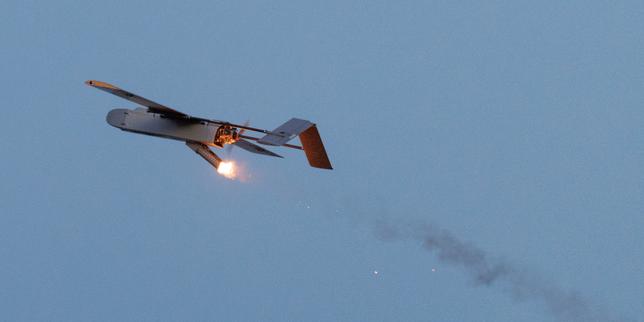
Large-scale strategic aerial operations rely less on absolute kinetic force and more on systematic saturation. When a territorial capital encounters a mass deployment of unmanned aerial vehicles, the primary objective transcends traditional tactical targeting. The operation functions as a stress test for regional air defense networks, electronic warfare command structures, and civilian infrastructure resilience. Deconstructing the mechanics of a multi-directional aerial campaign reveals the underlying economic and operational strain imposed on the defending state.
The Dual Architecture of Saturation Defense
Defending a metropolitan center against dispersed, low-altitude aerial threats forces a asymmetric cost burden onto the state possessing the territory. The defense apparatus must operate continuously across a multi-layered matrix.
[Inbound Threat Vector] ---> [Early Warning Radar] ---> [Electronic Jamming] ---> [Kinetic Interception]
Each layer introduces distinct operational bottlenecks:
- Acoustic and Radar Detection: Low-flying, low-signature systems evade primary long-range radar arrays by exploiting ground clutter and terrain masking. Detecting these vectors requires dense, localized sensor coverage, leaving geographic blind spots that attackers actively exploit.
- Electronic Countermeasures: Signal disruption and GPS spoofing force autonomous navigation systems onto secondary inertial guidance loops. While effective against primitive units, advanced platforms utilize terrain-contour matching and optical navigation, degrading the reliability of purely electronic suppression.
- Kinetic Interception Assets: Deploying high-cost surface-to-air interceptors against low-cost expendable airframes creates an unsustainable economic deficit. The defender faces a severe resource allocation dilemma, where exhausting premium interceptors on secondary targets leaves strategic assets vulnerable to subsequent primary waves.
The Operational Cost Function
Evaluating the efficiency of a mass aerial campaign requires analyzing the input-output ratio of resources. The defending side must maintain perpetual operational readiness across hundreds of potential strike corridors, whereas the initiating side dictates the timing, density, and vector of the deployment.
The defense expenditure scales exponentially relative to the attacker's production costs. Interception missiles frequently cost multiples of the incoming platform, transforming prolonged campaigns into tests of industrial endurance rather than pure tactical supremacy. This economic asymmetry dictates that prolonged aerial pressure degrades regional stability through indirect economic friction—such as temporary airspace closures, emergency infrastructure shutdowns, and psychological strain on civilian populations—even when physical interception rates remain high.
Systemic Vulnerabilities in Metropolitan Airspaces
Dense urban environments present unique topological challenges for air defense management. The proliferation of high-rise structures, industrial complexes, and critical utility nodes creates complex radar shadows.
- Interception Fallout: Kinetic engagements occurring directly above population centers introduce secondary risks from falling debris, unexploded ordnance, and structural impacts. Consequently, engagement zones must be pushed outward, expanding the required perimeter of the defense network.
- Command and Control Latency: High-volume telemetry processing overwhelms local coordination centers. When dozens of vectors converge simultaneously from multiple compass points, the bottleneck shifts from physical weaponry to data processing capacity and human decision-making speed within command bunkers.
- Logistics Replenishment: Sustained high-intensity operations deplete localized ammunition reserves faster than supply chains can replenish them from remote manufacturing and storage hubs.
Strategic Trajectory and Industrial Attrition
The trajectory of modern aerial campaigns points toward automated swarm coordination and advanced onboard targeting that minimizes reliance on external guidance links. As both sides iterate on electronic hardening and interception efficiency, the conflict settles into a contest of supply chain velocity. The side capable of scaling manufacturing output while minimizing unit costs retains the structural advantage over time. Regional defense postures must adapt by shifting from high-end kinetic reliance toward distributed, cost-effective counter-system networks capable of neutralizing high volumes of threats without exhausting national stockpiles.