The coffee was still hot on the counter when the sound arrived. It wasn't the distant rumble of thunder or the heavy, metallic roar of a commercial jet descending toward the coast. It was sharper. A tearing noise, like canvas ripping from horizon to horizon, followed immediately by the concussive thump that rattles teeth in gums and makes windowpanes sing in their frames.
In Khamis Mushait, morning routines are sacred. Bakers pull fresh bread from blazing brick ovens. Shopkeepers sweep the dust from concrete thresholds. Children adjust their school backpacks, arguing over football scores or yesterday's tests. Life carries the steady, reassuring rhythm of a desert city waking up under a pale, relentless sun.
Then came the smoke.
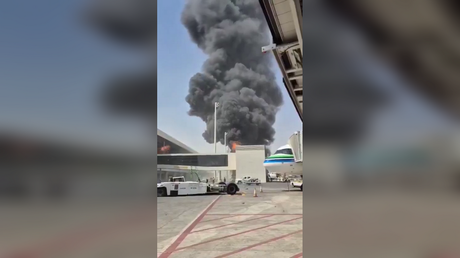
Far across town, billowing plumes of dark, greasy gray began to stain the pristine blue. Sirens woke up next, wailing in overlapping waves that bounced off concrete apartment blocks.
This is what an interception looks like from the ground. To the television screens thousands of miles away, distant reports flash across tickers with clinical detachment: three killed in Houthi-claimed strikes in Saudi Arabia. A brief summary. A casualty count. A statistic wrapped in a geopolitical update, quickly swallowed by the next cycle of global headlines.
Numbers are comfortable. They keep the horror at a safe, abstract distance. Three lives reduced to a trio of digits. But behind those three numbers are kitchen tables that will never be cleared, unfinished phone calls, and boots left standing by doorways that no one will ever fill again.
To understand what happened on that morning, you have to look past the dry wire reports and step into the reality of modern cross-border conflict. You have to trace the arc of a projectile launched from hundreds of miles away in the rugged mountains of Yemen, cutting silently through the stratosphere before plunging toward civilian neighborhoods where ordinary people are simply trying to earn a living.
The Anatomy of a Falling Sky
War used to have a front line. It had trenches, designated battlefields, and visible armies clashing across geographic boundaries. Today's battlefields are folded into the daily lives of bakers, engineers, drivers, and teachers.
Consider the mechanics of the threat. The groups operating out of Yemen have steadily upgraded their arsenals, moving from crude rockets to sophisticated loitering munitions and long-range ballistic systems. These are not artisanal firecrackers. They are engineered weapons of destruction, guided by coordinates designed to maximize panic and infrastructure damage far from any active military garrison.
When a projectile enters Saudi airspace, a complex defensive dance begins in milliseconds. Radar stations paint the trajectory. Batteries track the closing speed. Interceptor missiles launch with a blinding flash and a deafening roar, racing upward to intercept the threat high above residential streets.
Most of the time, the shield holds. The public rarely hears about the dozens of threats intercepted silently in the dark of night or the early hours of dawn. The Patriot batteries and advanced defense networks do their jobs with terrifying efficiency.
Yet, perfection is a myth in warfare. Debris rains down. Shrapnel defies physics, scattering across neighborhoods like iron hail. A successful interception high in the atmosphere can still result in falling fragments weighing dozens of pounds crashing through roofs, cars, and human bodies.
That was the grim reality of the recent strike. The defense systems reacted, but the sheer velocity and unpredictable scatter of falling debris transformed an ordinary street into a zone of devastation. Three human beings—foreign workers striving to support families back home, caught in the gears of a regional conflict they had no voice in shaping—became collateral damage in a war of attrition.
The Invisible Weight of Endurance
Living under the constant hum of a tense border region does something to the human psyche. It rewrites your baseline for anxiety.
Imagine walking out to your car every morning and looking up, not to check if it might rain, but to scan the empty blue for contrails. Imagine teaching your children to listen for the difference between a commercial airliner and the distinct, high-pitched whine of an incoming threat.
It breeds a strange, heavy resilience. People keep working. Markets stay open. Life insists on happening because stopping life feels like letting the threat win. But the emotional toll accumulates silently beneath the surface. Every loud backfire from a truck on the highway makes heads snap around. Every sudden vibration in the earth triggers a split-second evaluation: Was that a truck, or was that the impact?
This psychological pressure is not an accidental byproduct of the strikes; it is the entire point. Asymmetric warfare relies on psychological erosion. When conventional military victory is out of reach, the objective shifts to creating sustainable terror, forcing populations to pressure their governments through sheer exhaustion, and normalizing the targeting of civilian infrastructure.
Oil facilities, desalination plants, civilian airports, and residential neighborhoods have all found themselves in the crosshairs over the years. Each attack is meticulously claimed, broadcasted, and celebrated by factions sitting comfortably in distant command centers, detached from the smoke and blood on the ground.
Beyond the News Ticker
When the smoke cleared in Khamis Mushait, emergency workers moved through the wreckage with practiced, grim efficiency. Ambulances wailed their way toward hospitals. Investigators collected twisted shards of metal, cataloging serial numbers and telemetry fragments to trace the exact pedigree of the ordinance back to its origin workshops.
Diplomats in Geneva, New York, and Riyadh will issue statements. Condemnations will be drafted, debated, and filed away. Analysts on cable news will parse the strategic implications of the escalation, debating whether this signals a breakdown in fragile regional ceasefires or a tactical pivot by insurgent leadership.
These discussions matter. Policy, deterrence, and diplomacy are the levers that ultimately shape whether peace or war prevails.
Yet, as the sun sets over the arid hills of the Asir province, the geopolitical chessboards fade into the background. The street where the strike landed has been washed down. Shards of glass have been swept into piles. The remaining residents sit on their porches in the gathering dusk, speaking in hushed tones, watching the stars emerge in a sky that feels just a little heavier than it did yesterday.
The three lives lost will not make history books. They will not be remembered by name across the globe. But in the quiet spaces where grief settles, their absence is absolute, reminding everyone watching that every political conflict is ultimately paid for in flesh, blood, and the irreplaceable quiet of ordinary mornings shattered without warning.