Bronze does not bleed. Granite does not care. Yet every single time a monument gets splashed with red paint, our entire political ecosystem treats it like an assassination of history itself.
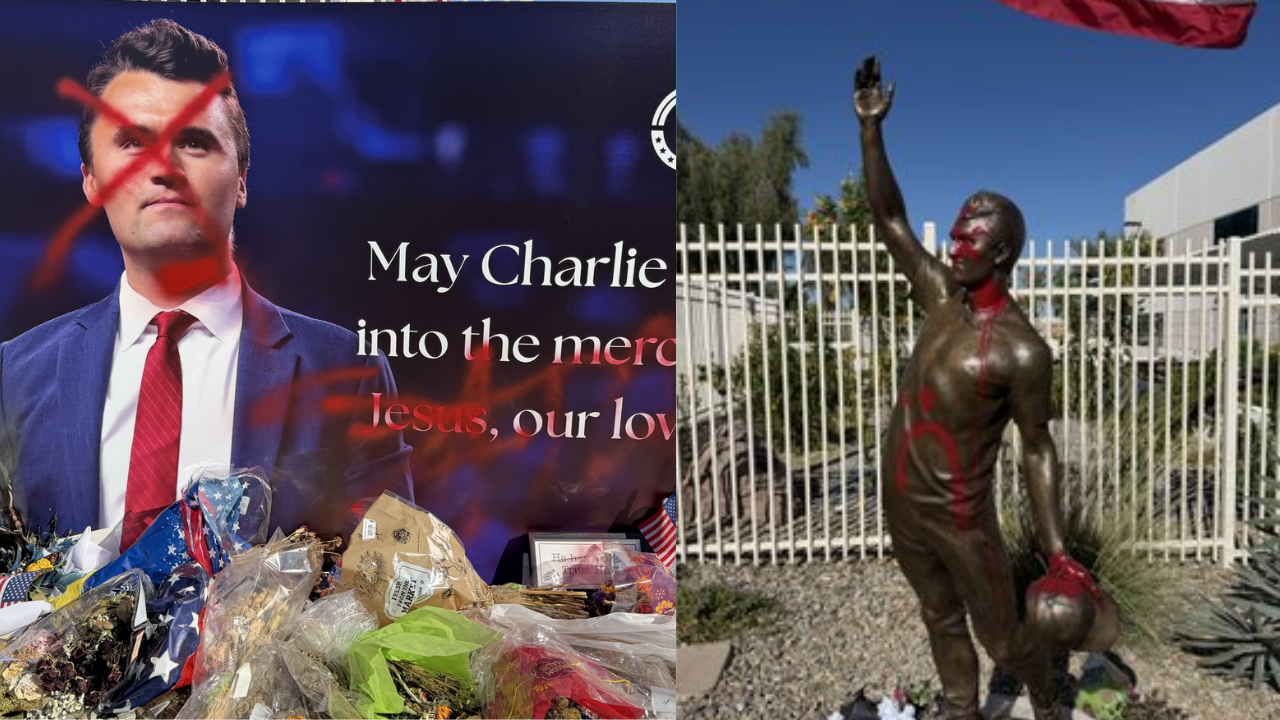
Let us look at the reflexive outrage surrounding the recent vandalism of the Charlie Kirk memorial statue in Phoenix. The narrative writes itself before the ink is dry on the police report. Pundits scream about lawlessness, moral decay, and the death of civil discourse. Social media feeds choke on synchronized gasps of pearl-clutching shock. The lazy consensus is absolute: property destruction of a political figure's statue is a direct assault on democracy, requiring heavier security, harsher penalties, and a redoubling of our tribal trenches. Building on this theme, you can find more in: Why Massive Money Will Completely Break British Politics.
That consensus is a intellectual trap.
I have spent two decades watching political theater from the inside. I have seen millions poured into bronze castings and marble slabs designed not to honor the dead, but to lock down territory in the permanent culture war. The statue in Phoenix was never an invitation to peaceful reflection. It was a lightning rod planted deliberately in the public square to draw a strike. Observers at The Guardian have also weighed in on this situation.
When you erect a monument to a deeply polarizing partisan figure in a contentious urban center, you are not building a historical marker. You are dropping a functional proxy into a war zone and waiting for someone to take the bait.
The Economics of Outrage Architecture
Let us define terms precisely. Public art traditionally serves as a communal anchor—a shared point of reference that transcends immediate factional squabbles. Modern political monuments do the exact opposite. They are manufactured flashpoints.
Consider the mechanics of how these projects get funded and placed. Grassroots enthusiasm rarely builds eight-foot statues of contemporary polemicists. Deep-pocketed advocacy groups, PACs, and algorithmic-driven political entrepreneurs drive them. They want a physical manifestation of their grievance footprint. They want a location that guarantees friction.
When a statue gets vandalized, the outrage machine spins up a compounding return on investment. The original donors get a fresh wave of fundraising material. The counter-protesters get a rallying cry. The media gets a week of easy hits. Everyone wins except the public square itself, which becomes an increasingly hostile landscape of armed guards and surveillance cameras.
Imagine a scenario where cities simply stopped approving permanent monuments to living or recently deceased partisan actors altogether. The immediate objection is that we are erasing history or surrendering to vandals. But that argument relies on a category error. Charlie Kirk was a podcast host and activist, not George Washington or Abraham Lincoln. Conflating contemporary partisan martyrdom with civic heritage is a category mistake designed to manufacture unearned reverence.
Why Harder Penalties Solve Nothing
The standard prescription for statue vandalism is predictable: throw the book at them. Double the prison sentences. Install 4K motion-tracking domes. Turn every piece of civic stone into a heavily fortified bunker.
This is administrative magical thinking.
Deterrence fails when the act of vandalism is symbolic guerrilla theater. The person splashing red paint on a controversial monument is not calculating the misdemeanor fine versus the community service hours. They are performing an act of communicative violence in a society that has lost any other shared language. They know the camera is watching. They know the response will be hysterical and predictable. They are trading paint for attention, and our system happily pays the ransom every single time.
By screaming for draconian crackdowns, we validate their premise. We prove to them that a bucket of acrylic from the local hardware store can paralyze our political discourse for a week.
Admitting the downside of this analysis requires intellectual honesty: ignoring vandalism or treating it as mere youthful indiscretion invites an escalation of physical destruction. No one wants to live in a city where public spaces become lawless free-for-alls. But treating every act of spray paint as an existential threat to the republic gives the vandals exactly what they bought ticket for.
The Real Question We Refuse to Ask
People ask: How do we protect our public monuments from extremists?
That is the wrong question entirely. The question we should be asking is: Why are we treating concrete and bronze as sacred proxies for human lives in the first place?
We have outsourced our collective memory to physical objects because we are terrified of engaging in actual human persuasion. Instead of debating ideas across a table, we erect statues as territorial flags and then act shocked when the opposing tribe tries to tear down our flags.
The solution is not more cameras. The solution is de-escalation through architectural indifference. If we stopped turning every contentious political figure into a permanent fixture of public asphalt, we would starve the outrage machine of its favorite fuel.
Stop feeding the monuments. Stop turning statues into battlegrounds. Let the paint dry, clean it off quietly without a press conference, and go back to arguing about things that actually matter.