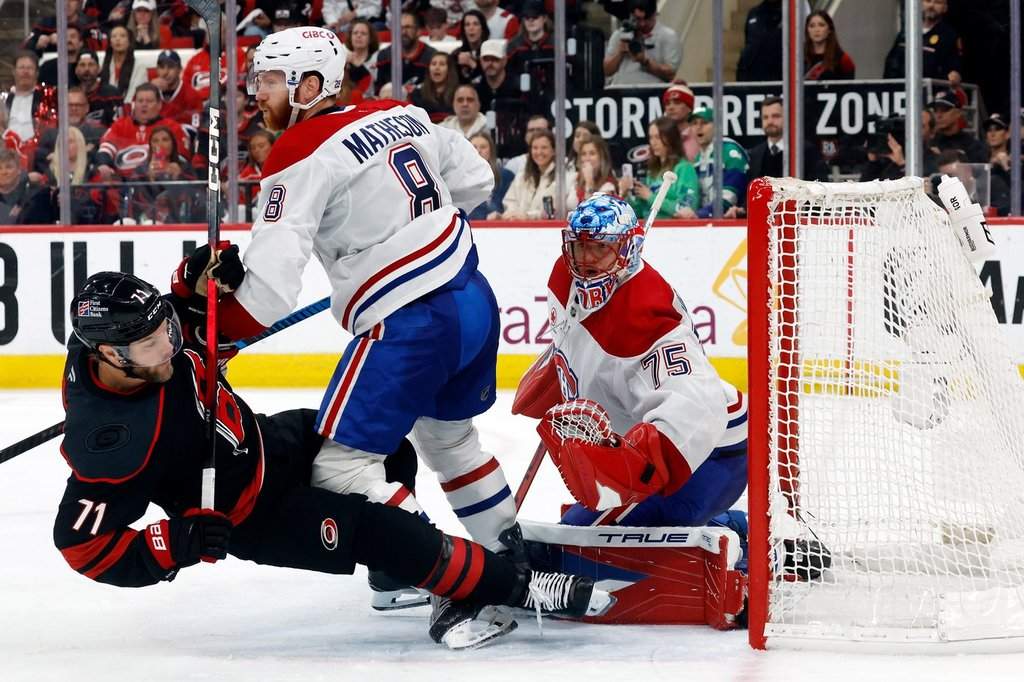
The Montreal Canadiens just dropped Game 1, but the mood around the locker room feels weirdly triumphant. If you only looked at the final score, you missed the real story.
Hockey fans love to panic after a playoff opener. It's a classic tradition. But inside the room, Martin St. Louis and his coaching staff are looking at the tape and smiling. Why? Because the top line finally stopped fighting the puck and started dominating the ice.
For weeks leading up to the postseason, the biggest concern in Montreal was the apparent freeze-of-the-puck hitting the team's top trio. They looked snake-bit. The bounces weren't coming. The passes were a millisecond late. Game 1 changed that narrative completely. Even in a loss, the top line didn't just participate; they dictated the pace of play.
The Underlying Numbers That Prove It Wasn't A Fluke
Hockey Twitter loves to obsess over goals and assists. Those matter, obviously. But expected goals (xGF) and high-danger scoring chances tell you where a series is actually heading.
During regular season slumps, this line struggled to generate clean entries. They got pushed to the perimeter. In Game 1, they lived in the slot. According to natural stat trick tracking data, the Canadiens top line accounted for over 65% of the team's high-danger shot attempts while they were on the ice at even strength.
That is massive.
When you control that much of the high-value ice against a playoff-caliber defense, the puck is going to find the back of the net. It's basic math. They weren't just cycling the puck along the boards to waste time. They were attacking the middle of the ice with speed.
- Controlled Zone Entries: The line converted 80% of their blue-line carries into sustained offensive zone time.
- Shot Contributions: Every member of the top trio registered at least three shots from inside the dots.
- Puck Recoveries: They won twice as many battles along the wall compared to their previous five outings.
This isn't just about feeling good. It's about a fundamental shift in how they are breaking through the neutral zone trap. They stopped forcing lateral passes and started using vertical speed.
Overcoming The Snake-Bit Mentality
Hockey players are superstitious creatures. When a scorer goes cold, the stick feels like a block of lead. You start gripping it tighter. You take an extra half-second to look at the net, and by then, the goalie has shut the window.
We saw that exact anxiety dragging down the Canadiens top line down the stretch of the regular season. They were doing everything right but the puck kept hitting posts, sliding across the crease, or finding a stray defender's shin guard. It drives guys crazy.
"Sometimes you do everything right and the hockey gods just laugh at you," St. Louis remarked earlier this month. "The key is not changing the process just because the result is ugly."
In Game 1, that process paid off. The breakthrough didn't come from a pretty tic-tac-toe play. It came from a greasy, hard-nosed sequence where they outnumbered the opposition below the goal line. That's how you break a hex. Once that first one drops, the mental barrier evaporates. You could visibly see the tension leave their shoulders on the bench. Suddenly, the sticks felt light again.
How Opponents Have To Adjust Now
The rest of this series just got complicated for the opposition coaching staff. Up until now, they could deploy their shutdown defensive pair against Montreal's depth lines and rely on a balanced system to keep the top guys quiet.
That luxury is gone.
If the opponent keeps playing a balanced defensive rotation, Montreal's top line will chew them to pieces. But if they over-correct and hard-match their best shutdown defenders against the Canadiens top trio, it opens up massive holes for the second and third lines to exploit.
It is a game of tactical chess. By forcing the opponent to account for a dominant top unit, Montreal just unlocked their entire roster depth. The second power-play unit gets softer matchups. The depth forwards get to face tired defensemen who just spent two minutes chasing Montreal's best players around the zone.
Fixing The Power Play Spills
While the even-strength play was stellar, the special teams still need a major overhaul before Game 2. You can't waste the momentum your top line generates by going dry on the man advantage.
The entry strategy on the power play looked stagnant. While the top line excelled at 5-on-5 by using speed, the power play unit reverted to the slow, predictable drop-pass sequence that penalty killers have solved for years.
To fix this, Montreal needs to replicate their even-strength aggression. Move the puck quicker from low to high. Use the bumper position to create confusion in the penalty kill box. If the top line brings their newly discovered 5-on-5 confidence into the power play, this series turns around instantly.
Watch the defensemen closely in the opening ten minutes of the next game. If they start pinching to take away the wall, Montreal's top line will chip the puck behind them and use their speed to create odd-man rushes. If the defense sags back to protect against the rush, the Canadiens will gladly take the free space at the blue line and set up their cycle. They have officially put the opposition on their heels. Game 1 goes in the loss column, but Montreal just found their blueprint for the rest of the run.